Fire from a Defective Ceiling Light: Smouldering Hall Roof in Ganderkesee
In Ganderkesee, Germany, the roof of a commercial hall began to smoulder, probably because of a defective ceiling light. How to recognise risks and what LED changes.
A defective luminaire can start a fire. In Ganderkesee, Germany, the roof of a commercial hall began to smoulder at the end of October 2026; the police name a technical defect in a ceiling light as the probable cause. Having old luminaires checked regularly and replacing conspicuous ones lowers the risk.
- Ganderkesee, 29 October 2026: smouldering fire on a hall roof, nobody injured, around €5,000 damage.
- Suspected cause according to the police: a technical defect in a ceiling light.
- Electricity is the most frequent cause of fire in the IFS statistics.
What happened in Ganderkesee
On Thursday 29 October 2026, at around 07:12, an emergency call came in from the commercial area on Güterstraße in Ganderkesee (district of Oldenburg). A smouldering fire had started on the roof of a hall. The people in the hall were able to leave on their own; nobody was injured. The volunteer fire brigades of Ganderkesee and Falkenburg extinguished the fire with 45 firefighters. The police estimate the damage at around €5,000 and name a technical defect in a ceiling light as the suspected cause. The police do not state which type of luminaire it was.

How often electricity starts fires
The German Institute for Loss Prevention and Loss Research (IFS) lists electricity as the cause in around a third of the fires it investigated (32% in the statistics for 2023). The IFS points out that its statistics are not representative of all losses. Luminaires are not listed separately.
How to recognise risks
- Flickering fluorescent lamps or discoloured lamp ends.
- Discoloured, deformed or cracked covers and lamp holders.
- A burning smell or unusually hot housings.
- Thick layers of dust on luminaires in workshops and warehouses.
- Metal halide lamps operated beyond their service life. OSRAM lists lamp rupture as a known failure of these lamps.
In Germany, electrical installations and equipment in businesses must be inspected regularly under DGUV Regulation 3. Lighting is part of that.
What LED changes
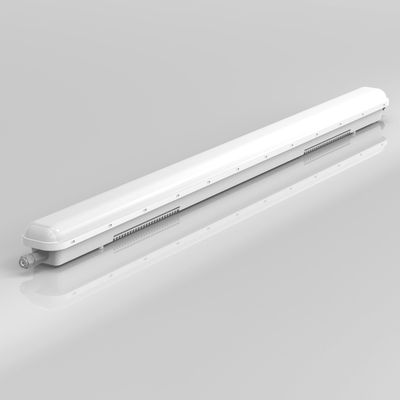
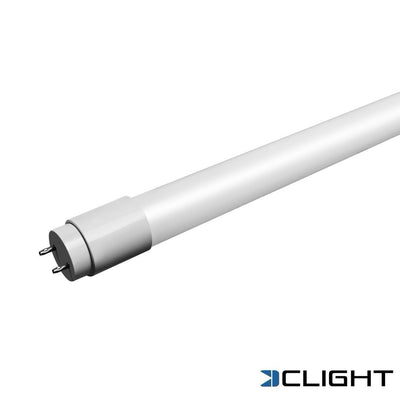
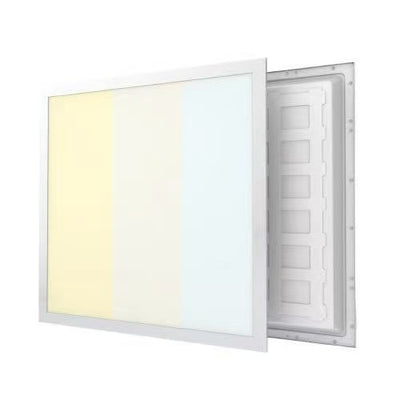
An LED luminaire needs less power for the same light and gives off correspondingly less heat. Starters and conventional ballasts are no longer needed. LED is not automatically safe either: what counts is a high-quality driver, the right protection rating and professional installation.
LED luminaires for halls, workshops and warehouses

Frequently asked questions
Can an LED luminaire start a fire?
The risk is lower because less heat is produced. A low-quality driver or incorrect installation can still overheat.
Are flickering fluorescent tubes dangerous?
Flickering points to a defect. Replace the lamp and the starter promptly.
How often does the lighting have to be inspected?
The business sets the intervals within the framework of DGUV Regulation 3. Your qualified electrician knows the requirements for your installation.
Last checked: 14 November 2026, Nick Cuppens, Clightstore. Sources: Police Delmenhorst / Oldenburg-Land / Wesermarsch, 29 October 2026, IFS, fire cause statistics 2023 and OSRAM, Metal halide lamps – instructions for use and application.
Send us the number and wattage of your old luminaires. You receive a free DIALux lighting study and a no-obligation quote.
Request a quote