Poland's Energy Audit Rules for Businesses: What the Draft Law Changes and What It Means for Lighting
Poland's draft amendment UC77 would tie the energy audit duty to energy use: an audit every 4 years from about 10 TJ, ISO 50001 from about 85 TJ. What changes and what it means for lighting.
The government is working on an amendment to the Polish Energy Efficiency Act (draft UC77). In the version dated 23 October 2026, the energy audit obligation would no longer depend on company size but on energy use: an audit every 4 years from about 10 TJ (2.78 GWh) per year and a certified energy management system from about 85 TJ (23.61 GWh). This is still a draft, not law. Lighting is part of the audit as part of the energy use of buildings and installations.
- Today the 4-yearly audit applies to large enterprises, that is, companies other than micro, small and medium-sized ones.
- Draft UC77 bases the obligation on average annual energy use over the last three years.
- The fine for breaching the obligations can reach 5% of the previous year's revenue.
- The draft still has to pass the European Affairs Committee, the Council of Ministers, the Sejm and the Senate.
- The audit covers at least 90% of a company's energy use, so replacing luminaires with LED does not fulfil the obligation by itself. It does reduce the energy used for lighting.
What changes under the draft
Today the obligation to carry out an enterprise energy audit every 4 years applies to large enterprises, that is, companies other than micro, small and medium-sized ones (Article 36 of the Energy Efficiency Act). Draft UC77 implements Directive (EU) 2023/1791 and replaces this criterion with energy use. The basis is the average annual final energy use over the last three years.
| Average annual energy use | Obligation | Deadline from entry into force |
|---|---|---|
| above about 10 TJ (2.78 GWh), up to about 85 TJ | enterprise energy audit every 4 years | first audit within 12 months |
| above about 85 TJ (23.61 GWh) | certified energy management system (ISO 50001) or certified environmental management system (ISO 14001, EMAS) with a procedure that meets the audit requirements | within 24 months |
The action plan after the audit has to be prepared within 90 days and then published on the company's website by 31 March of the following year. The President of URE (the energy regulator) is to check 5 to 10% of audits at random every year. Audits carried out before the act enters into force remain valid if they are less than 4 years old. According to the ministry, quoted by Gramwzielone.pl, the number of companies covered will more than triple.
The version dated 23 October 2026 (published on the website of the Government Legislation Centre on 28 October) has been sent to the European Affairs Committee. Thresholds and deadlines may still change.

What the audit means for lighting
The audit covers at least 90% of the company's energy use: buildings, installations, industrial processes and transport. It also assesses savings measures in a life-cycle cost analysis. The draft does not mention lighting separately, but halls, warehouses and car parks use energy for it for many hours a year.
Worked example: a hall with 40 metal halide luminaires of 400W (about 440W with ballast), replaced by 40 LED luminaires of 150W, at 4,000 operating hours per year.
| Item | Value |
|---|---|
| Energy saving | (440 − 150) W × 40 × 4,000 h ÷ 1,000 = 46,400 kWh per year |
| Share of the 10 TJ threshold (2,778 MWh) | 46.4 MWh ÷ 2,778 MWh ≈ 1.7% |
| Lower energy cost at PLN 0.60/kWh (example price) | about PLN 27,840 net per year |
The energy price is an example: please use the price from your own contract. The obligation depends on the use of the whole company, not on lighting alone; in this example lighting is about 1.7% of the audit threshold. You can recalculate with your own values in the guide LED Payback Period Calculator. Which LED luminaire replaces which lamp is shown in Replacing HQL, HQI and Sodium Lamps with LED. The general benefits are described in Modernising LED Lighting, and energy costs in 2027 are covered in Poland's Capacity Charge 2027.
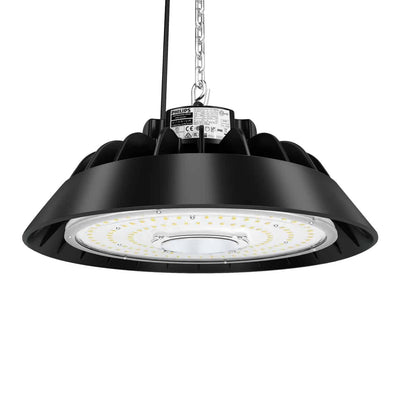
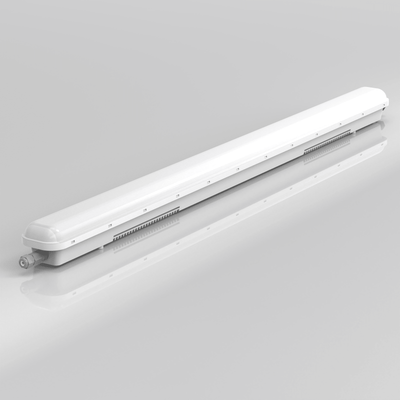
LED luminaires for hall refurbishment


Frequently asked questions
Who is subject to the energy audit obligation?
Today large enterprises, that is, companies other than micro, small and medium-sized ones. Draft UC77 would base the obligation on energy use: an audit from about 10 TJ per year.
How often does the audit have to be carried out?
Every 4 years. That is the case today and the draft provides the same.
Is draft UC77 already law?
No. It is a draft that still has to pass the European Affairs Committee, the Council of Ministers, the Sejm and the Senate.
Is replacing lighting with LED enough to fulfil the obligation?
No. The audit covers at least 90% of the company's energy use. LED reduces the energy used for lighting and can be one of the measures in the action plan.
Last checked: 17 November 2026, Nick Cuppens, Clightstore. Sources: Gramwzielone.pl, 5 November 2026, Polska Miedź Employers' Association, information on the draft and Optimares.pl, 9 June 2026.
Send us the number and wattage of your current luminaires. We prepare a free DIALux lighting study and a no-obligation quote at direct-import prices, 2 to 4 times lower than comparable branded products.
Request a quote