Slovakia: Automatic Lighting Control Duty for Non-Residential Buildings from 2027
From 1 January 2027, Slovak Act 246/2026 requires owners of non-residential buildings to fit automatic control of the built-in lighting where feasible: by 2027 above 290 kW, by 2029 above 70 kW.
From 1 January 2027, an amended Slovak Act on the energy performance of buildings (Act 246/2026 Coll., amending Act 555/2005 Coll.) requires owners of non-residential buildings to fit automatic control of the built-in lighting, where this is technically and economically feasible. The deadline is 31 December 2027 for buildings above 290 kW and 31 December 2029 above 70 kW.
- Act 246/2026 Coll. was published on 8 October 2026 and takes effect on 1 January 2027.
- Owners of non-residential buildings must fit automatic control of the built-in lighting, but only where this is technically and economically feasible.
- The deadline depends on the effective rated output of the building's technical system: 31 December 2027 above 290 kW, 31 December 2029 above 70 kW.
- The fine for failing to meet the duty is €500 to €3,000 for companies and sole traders, imposed by the Regulatory Office for Network Industries (ÚRSO).
- Occupancy and daylight sensors, dimmable luminaires and DALI are the usual ways to meet such a duty. Which exact technical standard the law requires is not stated in the text we read.
What the new rule says
| Item | Value |
|---|---|
| Law | Act 246/2026 Coll., amending Act 555/2005 Coll. on the energy performance of buildings |
| Applies to | Owners of non-residential buildings (§ 8 para. 12) |
| Duty | Fit the building with automatic control of the built-in lighting, if technically and economically feasible |
| Deadline, above 290 kW | 31 December 2027 |
| Deadline, above 70 kW | 31 December 2029 |
| Fine (§ 11) | €500 to €3,000 for companies and sole traders that do not meet a duty under § 8 paras. 3 to 14; imposed by ÚRSO, taking into account the seriousness and duration of the breach |
| In force | 1 January 2027 |
The thresholds refer to the “effective rated output of the building's technical system”. In the definition of a technical building system, built-in lighting is listed next to heating, cooling, ventilation and building automation. The text we read does not explain how the kilowatts are to be added up, so ask your energy specialist or the authority how your building is counted before you plan. The duty is conditional: if automatic control is not technically or economically feasible, the condition for the duty is not met. Who judges feasibility is not stated in the text we read.

What it means for your lighting
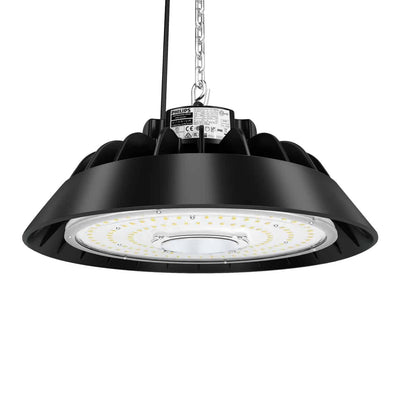
“Automatic control” is not defined in the passage we read. In practice, hall lighting is controlled automatically with occupancy sensors (PIR or high-frequency), daylight sensors that dim the luminaires near skylights, or a DALI system with groups and schedules. Old HQL, HQI or sodium lamps cannot be dimmed or switched on and off freely, so an old installation is usually replaced first. A dimmable LED high bay with 0-10V, DALI or a built-in sensor is the practical starting point.
Ask your supplier or installer to confirm which control type is accepted before you order. The law text we read names no technical standard, and national guidance may follow.
Worked example (illustrative assumptions): a hall with 40 LED high bays of 150W (6 kW of lighting). Sensors and dimming reduce the operating time at full output from 4,000 to 3,000 hours a year.
| Item | Value |
|---|---|
| Energy saving | 40 × 150 W × 1,000 h ÷ 1,000 = 6,000 kWh a year |
| Saving at €0.15/kWh (example price, excl. VAT) | €900 a year |
The 1,000 hours and the electricity price are assumptions: use your own operating hours and contract price. Savings differ per hall, and the lighting is only one part of the technical system counted against the kW thresholds. How sensors and groups work is explained in DALI and Lighting Control and PIR or HF Motion Sensor?. Run your own numbers in LED Payback Period Calculator and see which LED luminaire replaces which lamp in Replacing HQL, HQI and Sodium Lamps with LED.
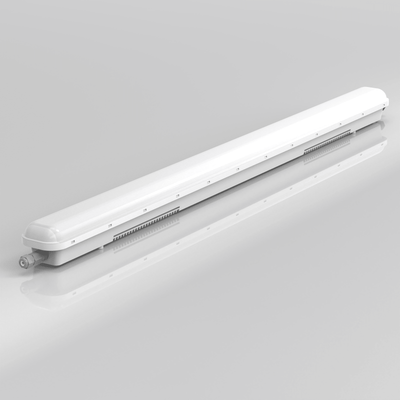
Dimmable luminaires for the retrofit


Frequently asked questions
Who must fit automatic lighting control?
Owners of non-residential buildings, if fitting it is technically and economically feasible (§ 8 para. 12 of Act 555/2005 Coll., as amended by Act 246/2026 Coll.).
When does the duty apply?
By 31 December 2027 if the effective rated output of the building's technical system exceeds 290 kW, and by 31 December 2029 if it exceeds 70 kW. The amended act takes effect on 1 January 2027.
What is the fine?
€500 to €3,000 for companies and sole traders that do not meet a duty under § 8 paras. 3 to 14, imposed by ÚRSO (§ 11).
Does my building exceed 70 kW?
The text we read does not say how the output is calculated. Ask your energy specialist or the authority.
Which sensors or system are accepted?
The passage we read names none. Dimmable LED luminaires with occupancy or daylight sensors, or a DALI system, are the common solutions. Check with your installer.
Last checked: 19 November 2026, Nick Cuppens, Clightstore. Source: Act 555/2005 Coll. in the wording effective from 1 January 2027 on Slov-lex (informative version). The binding text is the PDF version of Act 246/2026 Coll. in the Collection of Laws.
Send us the size of your hall and your current luminaires. We prepare a free lighting study with a no-obligation quote at direct-import prices, 2 to 4 times below comparable branded products.
Request a quote