Poland's Capacity Charge 2027: New Quarterly Rates for Businesses and What LED Saves
From 1 January 2027 Poland's capacity charge for businesses is set per quarter. The new rates, the hours in which it applies and how LED lowers it.
From 1 January 2027 the Polish capacity charge (opłata mocowa) for businesses billed by consumption is set per quarter for the first time: between 0.1925 and 0.2141 zł per kWh net, against 0.2194 zł in 2026. The energy regulator URE published the rates on 30 October 2026. The charge applies on working days from 7:00 to 22:00, exactly the hours in which hall lighting is on.
- All four quarterly rates for 2027 are below the 2026 rate.
- The charge is levied per kWh drawn on working days between 7:00 and 22:00.
- Rates for households stay at the 2026 level.
- Distribution tariffs and energy prices for 2027 are usually approved in December.
- LED cuts lighting consumption by 60–70%, and with it the capacity charge on those kWh.
The 2027 rates
| Period | Rate (zł/kWh, net) | Compared with 2026 |
|---|---|---|
| 2026 (whole year) | 0.2194 | – |
| Q1 2027 | 0.1925 | approx. −12.3% |
| Q2 2027 | 0.2141 | approx. −2.4% |
| Q3 2027 | 0.1984 | approx. −9.6% |
| Q4 2027 | 0.1950 | approx. −11.1% |
VAT is added to these rates. According to URE, the quarterly rates are meant to encourage businesses to manage their consumption in periods of high demand. The actual charge also depends on your consumption profile: the law provides reduced rates for consumers with an even load.

Why lighting matters for this charge
The capacity charge is paid on every kWh drawn in the charged hours. Lighting in a hall or warehouse is on precisely then. Every kWh that LED saves in those hours saves both the energy price and the capacity charge.
Worked example: a hall with 40 metal halide luminaires of 400W (approx. 440W with ballast), replaced by 40 LED high bays of 150W. The lighting is on on working days from 7:00 to 22:00: 250 days × 15 h = 3,750 hours a year.
| Item | Value |
|---|---|
| Energy saving | (440 − 150) W × 40 × 3,750 h ÷ 1,000 = 43,500 kWh a year |
| Capacity charge saved at 0.20 zł/kWh (simple average of the four 2027 rates) | approx. 8,700 zł a year, net |
| Energy saved at 0.60 zł/kWh (example price) | 26,100 zł a year, net |
The energy price is an example: use the one in your contract. The capacity charge in the example assumes the full rate. Run your own numbers in LED Payback Period Calculator.
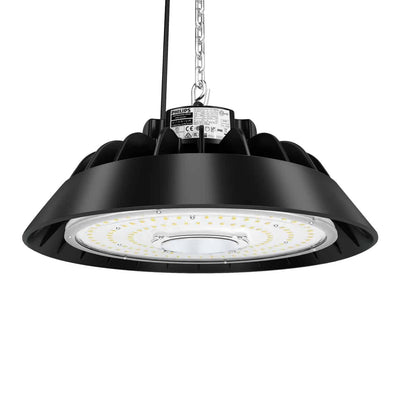
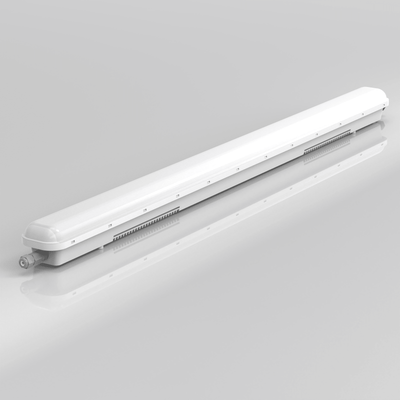
Efficient luminaires for the retrofit


Frequently asked questions
When does the capacity charge apply?
On working days, Monday to Friday excluding public holidays, from 7:00 to 22:00. The hours are the same in all four quarters of 2027.
Will the capacity charge be lower in 2027?
Yes, for businesses billed by consumption: all four quarterly rates are below the 2026 rate of 0.2194 zł/kWh.
Does that mean electricity gets cheaper for businesses?
Not necessarily. The capacity charge is one part of the bill; distribution tariffs and energy prices for 2027 had not been approved in mid-November 2026.
How does LED lower the capacity charge?
By reducing the kWh drawn in the charged hours. An LED retrofit usually cuts lighting consumption by 60–70%.
Last checked: 13 November 2026, Nick Cuppens, Clightstore. Sources: URE, capacity charge rates for 2027 (30 October 2026) and My Company Polska.
Send us the number and wattage of your current luminaires. We calculate the saving and prepare a free lighting study with a no-obligation quote at direct-import prices, 2 to 4 times below comparable branded products.
Request a quote