Denmark: Electricity Prices Doubled in October 2026 – What It Means for Business Lighting Costs
Danish spot prices in October 2026 were about double those of a year earlier (DK1 DKK 1.19/kWh). Electricity tax and the Energinet tariff are falling, so the energy price is what drives the bill. What it means for lig...
In October 2026 the Danish spot price averaged DKK 1.19 per kWh in western Denmark (DK1) and DKK 1.22 in eastern Denmark (DK2), about double the DKK 0.58 and 0.61 of October 2025. In the week to 8 November it reached DKK 1.80 to 2.00 per kWh, the highest level since December 2022. At the same time the Danish electricity tax is at 0.8 øre per kWh and Energinet's tariff is falling, so what drives the bill is the energy price itself. Every kWh that a luminaire does not use has therefore become more valuable.
- October 2026 was the most expensive month of the year for the third month in a row: DK1 DKK 1.19/kWh and DK2 DKK 1.22/kWh, up 104% and 98% on October 2025 (Elberegner.dk).
- In the first nine months of 2026 the average spot price was DKK 0.80 (DK1) and 0.81 (DK2) per kWh, 34% higher than a year earlier (Norlys).
- Prices swing strongly within a day: on 29 October the DK1 average was DKK 2.22/kWh and the peak DKK 4.32 at 17:15, while the cheapest day, 25 October, averaged DKK 0.08.
- The Danish electricity tax is lowered to 0.8 øre per kWh for 2026 and 2027, and Energinet's transmission tariff falls from 11.5 to 10.5 øre per kWh in 2027.
- These are spot prices excluding tariffs, tax and VAT. Your own price depends on your contract and your grid company.
- A lower connected load reduces the kWh you buy in every hour, including the expensive evening hours.
The numbers behind the price rise
| Period | DK1 (west) | DK2 (east) |
|---|---|---|
| October 2025, monthly average | DKK 0.58/kWh | DKK 0.61/kWh |
| October 2026, monthly average | DKK 1.19/kWh (+104%) | DKK 1.22/kWh (+98%) |
| January to September 2026, average | DKK 0.80/kWh | DKK 0.81/kWh |
| Week to 8 November 2026, average | DKK 1.80/kWh | DKK 2.00/kWh |
All figures are the pure electricity price, without tariffs, taxes and VAT. Norlys links the rise mainly to the gas market and, in the week to 8 November, to a spell of little wind and sun across Europe (“dunkelflaute”). Elberegner.dk says Danish customers feel the pressure from the continental market more than before. Note that two of the three sources are press releases from energy suppliers.
What has not gone up
| Cost item | Level |
|---|---|
| Electricity tax (elafgift) | 0.8 øre per kWh from 1 January 2026 to 31 December 2027. VAT-registered businesses can apply for a refund down to the EU minimum of 0.4 øre per kWh (Skat). |
| Energinet transmission tariff | 11.5 øre per kWh in 2026, 10.5 øre in 2027, with a cap of 12.5 øre per kWh until 2030 (Energinet) |
| Grid fee in the peak hours | Since 1 October most grid companies charge more between 17:00 and 21:00 (Elberegner.dk). Check your own grid company's tariff. |
So the rise comes from the energy price and not from taxes. The evening peak is also where the hours of high spot prices and higher grid fees meet: in October the national evening average between 19:00 and 21:00 was about DKK 1.62 per kWh.

What it means for lighting
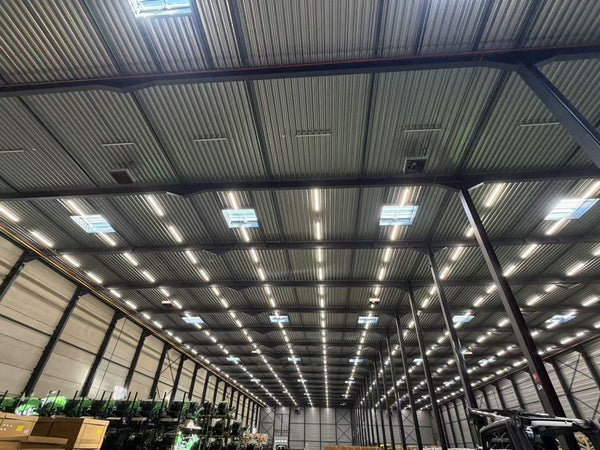
Lighting burns for many hours a year, and in the Danish winter much of it falls in the dark afternoon and evening hours. That the hours of use overlap with the expensive evening peak is our own reasoning: the sources we read do not analyse lighting. What the figures do show is that a kWh saved is now worth more than a year ago. The usual measures are replacing old discharge lamps (HQL, HQI, sodium) and fluorescent fittings with LED, and reducing burning hours with sensors and dimming.
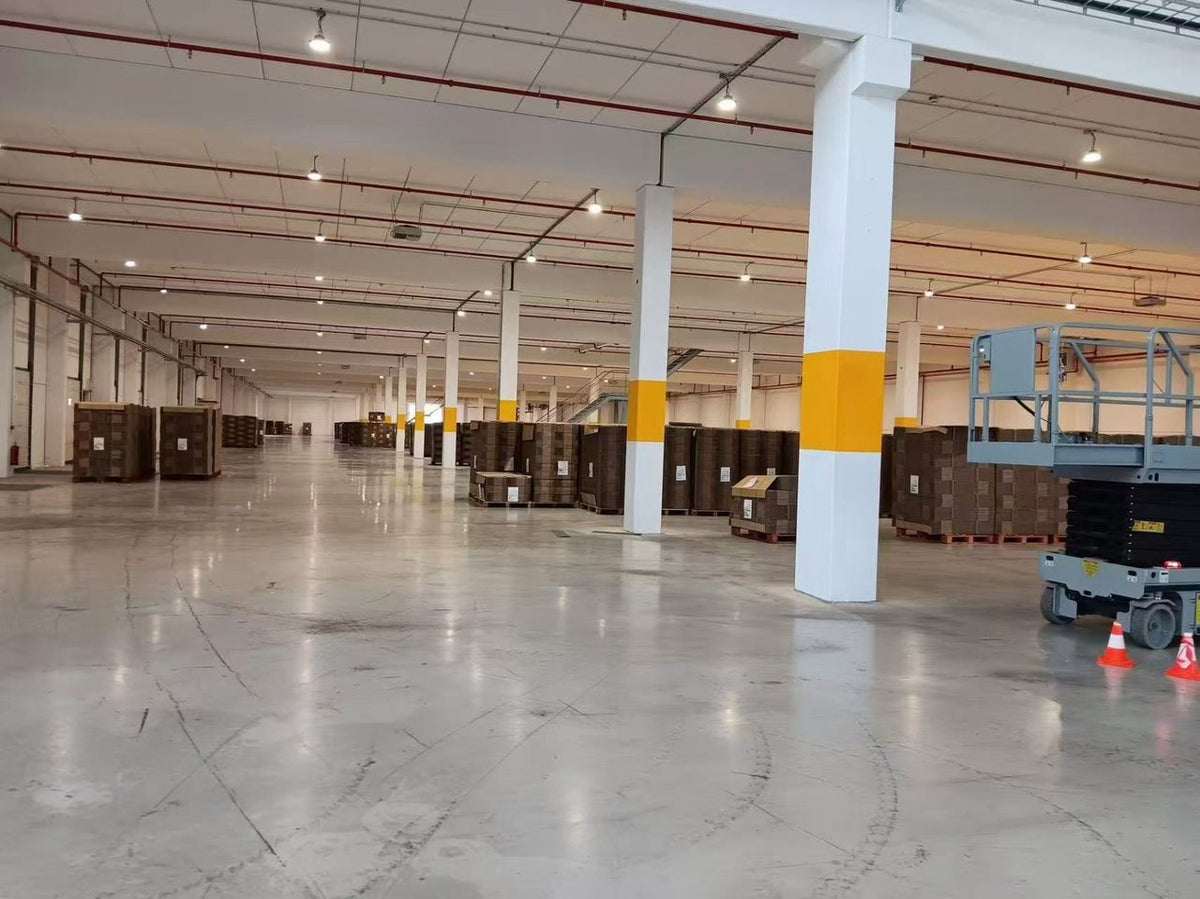
Worked example (illustrative assumptions): a hall with 40 discharge luminaires of 400W (about 440W with ballast), replaced by 40 LED luminaires of 150W, at 4,000 operating hours per year.
| Item | Value |
|---|---|
| Energy saving | (440 − 150) W × 40 × 4,000 h ÷ 1,000 = 46,400 kWh per year |
| Value at DKK 0.80/kWh (January to September 2026 average, DK1) | DKK 37,120 per year |
| Value at DKK 1.20/kWh (about the October 2026 level) | DKK 55,680 per year |
These values use the pure spot price and leave out tariffs, tax and VAT, which depend on your contract. The price will not stay at one level all year and your hours of use are not spread evenly, so please use your own contract price and your own operating hours. You can recalculate in the guide LED Payback Period Calculator. Which LED luminaire replaces which lamp is shown in Replacing HQL, HQI and Sodium Lamps with LED. For planning a hall see LED Lighting for a Commercial Hall, for sensors and dimming DALI and Lighting Control, and the general benefits are summarised in Modernising LED Lighting.
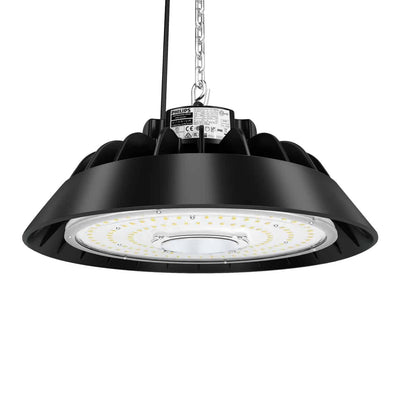
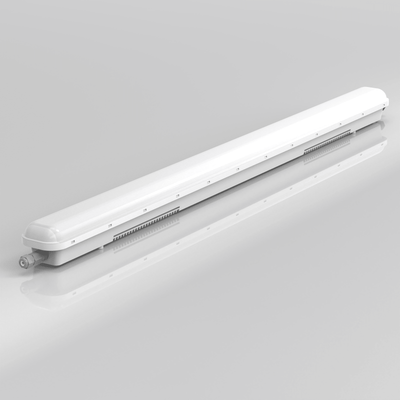
LED luminaires for hall refurbishment


Frequently asked questions
How high is the Danish electricity price for businesses in 2026?
The pure spot price averaged DKK 0.80 (DK1) and 0.81 (DK2) per kWh from January to September 2026, and DKK 1.19 and 1.22 in October. Tariffs, taxes and VAT come on top, and your contract decides how much of the spot price you actually pay.
Is the Danish electricity tax still high?
No. It is lowered to 0.8 øre per kWh for 2026 and 2027. VAT-registered businesses can apply for a refund down to the EU minimum of 0.4 øre per kWh.
Why are evening hours more expensive?
In October the highest prices fell in the morning and evening, and since 1 October most grid companies charge higher transport fees between 17:00 and 21:00. Dansk Erhverv's June 2026 advice to businesses is to shift flexible consumption away from the expensive evening hours where possible.
Does LED lighting help when the price is variable?
A lower connected load reduces the kWh you buy in every hour, so the saving grows with the price. Sensors and dimming additionally reduce the hours at full output. The exact saving depends on your contract, your hours of use and your current luminaires.
Should I choose a fixed or a variable price?
That depends on your risk appetite and consumption pattern, and we cannot advise on it. Dansk Erhverv's expert recommends a simple and transparent hedging of the general electricity price for most businesses. Ask your supplier for the options.
Last checked: 20 November 2026, Nick Cuppens, Clightstore. Sources: Elberegner.dk via Ritzau, 30 October 2026, Norlys via Ritzau, 8 November 2026, Norlys via Ritzau, 10 October 2026, Skat (elafgift 2026 and 2027), Energinet via Ritzau, 4 September 2026 and Dansk Erhverv, 26 June 2026.
Send us the number and wattage of your current luminaires. We prepare a free DIALux lighting study and a no-obligation quote at direct-import prices, 2 to 4 times lower than comparable branded products.
Request a quote