













car parking light
Car Parking Light: Everything You Need to Know About LED Parking Solutions
Car parking facilities are more than just empty spaces where vehicles sit idle. They’re environments that require careful consideration of safety, visibility, and energy efficiency. The lighting in these spaces plays a critical role in preventing accidents, deterring crime, and creating a welcoming atmosphere for users. Whether you manage a multi-story car park, an underground garage, or an open-air parking lot, understanding the nuances of car parking light systems is essential for making informed decisions.
Modern LED technology has transformed how we approach parking facility illumination. Gone are the days when dim, flickering fluorescent tubes cast shadows and created dark corners. Today’s LED parking lights offer superior brightness, exceptional longevity, and significant energy savings that make them the obvious choice for both new installations and retrofit projects.

Why Proper Lighting Matters in Car Parks
Before diving into technical specifications and product types, it’s worth understanding why car parking light quality matters so much. The lighting in a parking facility directly impacts multiple aspects of the user experience and facility management.
Safety stands as the primary concern. Adequate illumination allows drivers to navigate safely, spot pedestrians, and avoid obstacles. Poorly lit parking areas increase the risk of collisions, trips, and falls. Statistics consistently show that well-lit car parks experience fewer accidents than their dimly lit counterparts.
Security is equally important. Criminal activity tends to concentrate in poorly illuminated areas where perpetrators can operate undetected. Bright, uniform lighting eliminates hiding spots and makes surveillance cameras far more effective. Many insurance companies even offer reduced premiums for facilities with proper lighting standards.
The psychological aspect shouldn’t be overlooked either. People naturally feel more comfortable and secure in well-lit environments. A brightly illuminated car park creates a positive impression and encourages repeat visits to commercial establishments. This is particularly relevant for shopping centres, hotels, and entertainment venues where customer experience directly impacts revenue.
Understanding LED Technology for Parking Applications
LED technology represents a fundamental shift in how we approach car parking light design. Unlike traditional lighting sources that waste energy producing heat, LEDs convert electrical energy directly into light with remarkable efficiency.
The benefits extend beyond simple energy consumption. LEDs produce directional light, meaning you can focus illumination exactly where it’s needed without wasting lumens on ceilings or walls. This characteristic makes them ideal for parking applications where targeted lighting improves visibility while reducing light pollution.
Colour rendering is another advantage. LEDs typically offer better colour rendering indexes (CRI) than older technologies, making it easier for drivers to identify vehicle colours, read signage, and spot potential hazards. This enhanced colour accuracy contributes to both safety and security.
The instant-on capability of LEDs eliminates the warm-up period associated with older technologies. When someone enters a car park, the lights reach full brightness immediately, rather than gradually increasing over several minutes. This instant response is particularly valuable in facilities using motion sensors or smart controls.
Lifespan and Maintenance Considerations
One of the most compelling arguments for LED car parking lights is their exceptional lifespan. Quality LED fixtures typically last 50,000 to 100,000 hours of operation. In practical terms, if your parking facility operates 24 hours daily, you’re looking at 5 to 11 years before replacement becomes necessary.
This longevity translates into substantial maintenance savings. Changing bulbs in a large car park is labour-intensive and costly, particularly in facilities with high ceilings or difficult access points. The need for scissor lifts, traffic management, and specialized personnel adds up quickly. Reducing replacement frequency by a factor of five or more dramatically cuts operational expenses.
The reliability of LEDs also means fewer emergency call-outs and less disruption to facility operations. When multiple lights fail simultaneously in a traditional system, it creates immediate safety concerns requiring urgent attention. LED systems typically degrade gradually rather than failing suddenly, allowing for planned maintenance schedules.
Selecting the Right Car Parking Light Configuration
Not all parking facilities have identical lighting requirements. The optimal car parking light solution depends on several factors including ceiling height, layout, usage patterns, and local regulations.
For standard car parks with ceiling heights between 2.5 and 4 meters, you need fixtures that provide adequate horizontal illumination without creating excessive glare. The goal is achieving uniform light distribution that eliminates dark spots while maintaining comfortable visibility for drivers and pedestrians.
Underground car parks present unique challenges. These enclosed spaces require higher illumination levels to compensate for the absence of natural light and to counteract the psychological discomfort some people experience in underground environments. The European standard EN 12464-1 recommends minimum illumination levels of 75 lux for underground parking areas, with higher levels needed for ramps and areas with significant vehicle movement.
Multi-story car parks often combine elements of both covered and open-air environments. The lighting strategy needs to account for varying natural light contributions throughout the day and across different levels. Smart controls that adjust artificial lighting based on ambient conditions can optimize energy use while maintaining consistent visibility.
Our Products
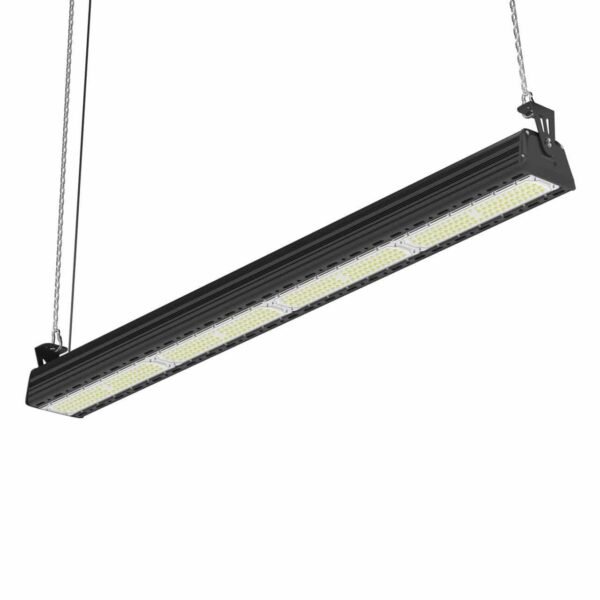
LED High Bay Linear 200W – 6000K – 150LM/W – IP65 – 0-10V Dimmable – Sosen Driver – 5 Year Warranty
In stock
| SKU | 100188-6K |
|---|---|
| Quantity | Per Piece |
| Color temperature | 6000K |
| Dimmable | Sosen Dimmable |
| Driver | Sosen |
| Lumen per Watt | 150lm/w |
| Beam angle | 90° |
| Watt | 200 Watt |
| Model | Linear High Bay |

LED High Bay with Motion Sensor 240W – 6000K – SOSEN-Driver – 120° – 150lm/W – IP65 – 0-10V Dimmable | 5 Year Warranty
In stock
| SKU | 513641-6K |
|---|---|
| Quantity | Per Piece |
| Watt | 240 Watt |
| Replacement wattage | 1200 Watt |
| Luminous flux | 36.000 Lumen |
| Lumen per Watt | 150lm/w |
| Color temperature | 6000K |
| Beam angle | 120° |
| IP-Rating | IP65 |
| Driver | Sosen |
| Dimmable | 0-10V Dimmbar |
| Glare protection | UGR<28 |
| Material | Aluminium |
| Reflectors | Aluminium schwarz, Aluminium silber |
| Why a reflector? | Erzeugt UGR<22 & Abstrahlwinkel 90° |
| Energy label | D |
| Operating hours | 50,000 Hours |
| Operating temperature | -20 to 55°C |
| Voltage | 200-240V |
| Colour rendering index (CRI) | Ra>80 |
| Power factor | >0.95 |
| Certifications | CE, RoHS |
| Colour | Black |
| Warranty | 5 Years |
| Sensor | Yes |
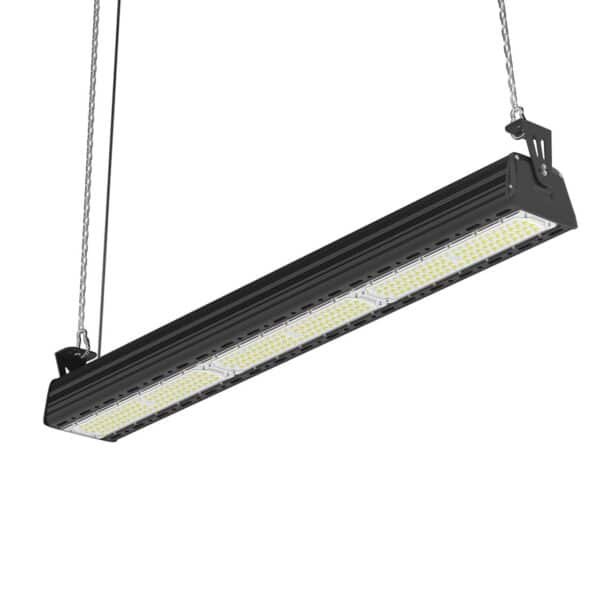
LED High Bay Linear 150W – 4000K – 150LM/W – IP65 – 0-10V Dimmable – Sosen Driver – 5 Year Warranty
In stock
| Quantity | Per Piece |
|---|---|
| Dimmable | Sosen Dimmable |
| Color temperature | 4000K |
| Driver | Sosen |
| Lumen per Watt | 150lm/w |
| Model | Linear High Bay |
| Beam angle | 90° |
| Watt | 150 Watt |

LED High Bay 150W – 4000K – 150LM/W | SOSEN 1-10V Dimmabler Driver + 1m Cable Including
In stock
| SKU | 10102657 |
|---|---|
| Quantity | Per Piece |
| Watt | 150 Watt |
| Replacement wattage | 750 Watt |
| Luminous flux | 22.500 Lumen |
| Lumen per Watt | 150lm/w |
| Color temperature | 4000K |
| Beam angle | 120° |
| IP-Rating | IP65 |
| IK-Rating | IK08 |
| LED-Chips | Philips LED |
| Driver | Sosen |
| Dimmable | 1-10V Dimmable |
| Glare protection | UGR<25 |
| Material | Cast Aluminium |
| Energy label | D |
| Operating hours | 50,000 Hours |
| Operating temperature | -40 to 60°C |
| Cabel Lenght | 100CM Long |
| Voltage | 100-277V, 50/60Hz |
| Colour rendering index (CRI) | Ra>80 |
| Power factor | >0.95 |
| Certifications | CE, RoHS |
| Protection | OCP, OTP, OVP, SCP |
| Colour | Black |
| Warranty | 5 Years |
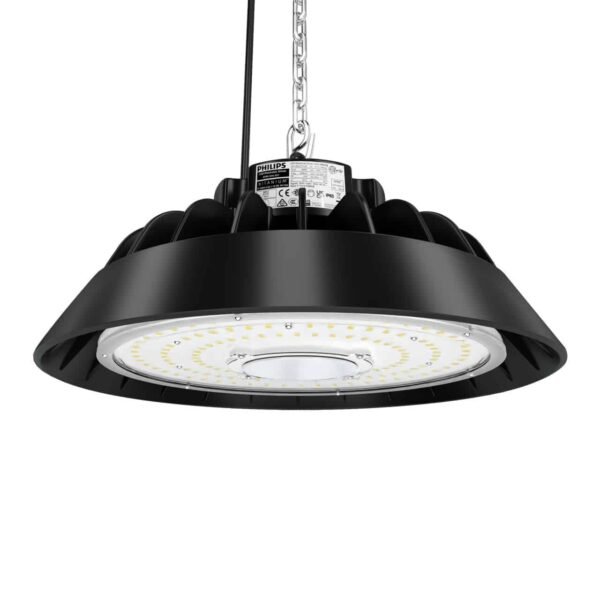
LED High Bay 240W – Philips Driver – 6000K – 120° – 150lm/W – IP65 – 1-10V Dimmable | 5 Year Warranty
In stock
| SKU | 100200-6K |
|---|---|
| Quantity | Per Piece |
| Watt | 240 Watt |
| Replacement wattage | 1200 Watt |
| Luminous flux | 36.000 Lumen |
| Lumen per Watt | 150lm/w |
| Color temperature | 6000K |
| Beam angle | 120° |
| IP-Rating | IP65 |
| Driver | Philips |
| Dimmable | 0-10V Dimmbar |
| Glare protection | UGR<28 |
| Material | Aluminium |
| Reflectors | Aluminium schwarz, Aluminium silber |
| Why a reflector? | Erzeugt UGR<22 & Abstrahlwinkel 90° |
| Energy label | D |
| Operating hours | 50,000 Hours |
| Operating temperature | -20 to 55°C |
| Voltage | 200-240V, AC |
| Colour rendering index (CRI) | Ra>80 |
| Power factor | >0.95 |
| Certifications | CE, RoHS |
| Colour | Black |
| Warranty | 5 Years |

LED High Bay 100W – 4000K – SOSEN Driver – 120° – 190lm/W – IP65 – 0-10V Dimmable | 5 Year Warranty
In stock
| SKU | 100219-4K |
|---|---|
| Quantity | Per Piece |
| Watt | 100 Watt |
| Replacement wattage | 500 Watt |
| Luminous flux | 19.000 Lumen |
| Lumen per Watt | 190lm/w |
| Color temperature | 4000K |
| IP-Rating | IP65 |
| Driver | Sosen |
| Dimmable | 0-10V Dimmbar |
| Glare protection | UGR<28 |
| Material | Aluminium |
| Reflectors | Aluminium schwarz, Aluminium silber |
| Why a reflector? | Erzeugt UGR<22 & Abstrahlwinkel 90° |
| Energy label | B |
| Operating hours | 50,000 Hours |
| Operating temperature | -20 to 55°C |
| Voltage | 200-240V, AC |
| Colour rendering index (CRI) | Ra>80 |
| Power factor | >0.95 |
| Certifications | CE, RoHS |
| Colour | Black |
| Warranty | 5 Years |
Light Distribution and Mounting Options
How you mount and position car parking lights significantly impacts their effectiveness. The mounting height, spacing, and beam angle all work together to create the overall lighting pattern.
For ceiling-mounted applications, fixtures with wide beam angles typically provide the most efficient coverage. A 120-degree beam angle allows for greater spacing between fixtures while maintaining uniform illumination. This reduces the total number of fixtures needed and simplifies installation.
Surface-mounted fixtures are the most common choice for standard car parks. They install directly onto ceilings or beams, offering straightforward installation and easy maintenance access. These fixtures work well for most applications and provide reliable performance in enclosed environments.
Recessed mounting creates a cleaner aesthetic and may be preferred in premium facilities. However, it requires adequate ceiling depth and proper thermal management since the fixture has less exposure to ambient air for cooling. Recessed fixtures also typically cost more due to their additional housing requirements.
Linear LED fixtures have gained popularity in recent years for car park applications. These elongated fixtures can be installed along parking bay rows, providing excellent illumination directly where vehicles park. The linear format also helps guide traffic flow through the facility.
Energy Efficiency and Cost Savings
The financial case for LED car parking lights becomes compelling when you calculate long-term operational costs. While LED fixtures carry higher upfront costs than traditional alternatives, the total cost of ownership typically favours LEDs within two to three years.
Energy consumption represents the largest ongoing expense for parking facility lighting. LEDs consume approximately 60-75% less energy than high-pressure sodium or metal halide fixtures producing equivalent light output. For a medium-sized car park operating continuously, this translates into thousands of pounds in annual savings.
Consider a facility with 100 traditional 150-watt fixtures operating 24/7. That’s 15,000 watts of continuous draw, or 131,400 kWh annually. At typical commercial electricity rates, you’re spending roughly £20,000 per year just on lighting energy. Switching to equivalent 40-watt LED fixtures drops consumption to 35,040 kWh annually, reducing costs to approximately £5,300. The annual saving of £14,700 quickly justifies the LED upgrade investment.
[CALCULATOR_HERE]
Calculating Return on Investment
When evaluating a car parking light upgrade project, calculate the complete financial picture including energy savings, maintenance reduction, and potential regulatory compliance benefits.
Start with the energy savings calculation shown above. Then factor in maintenance cost reduction. If you currently replace bulbs twice yearly at £50 per fixture including labour, that’s £10,000 annually for a 100-fixture installation. LEDs might require zero maintenance for five to ten years, representing substantial additional savings.
Don’t forget to investigate available incentives. Many jurisdictions offer grants, tax credits, or accelerated depreciation for energy-efficient upgrades. These programmes can reduce your initial investment by 20-40%, significantly improving the return on investment timeline.
Some utility companies also offer rebates for LED conversions that reduce grid demand. Check with your electricity provider about available programmes. The combination of reduced energy bills and upfront incentives often creates payback periods under two years.
Smart Controls and Automation
Modern car parking light systems extend beyond simple on/off switching. Integration with smart controls and sensors amplifies the efficiency and functionality of LED installations.
Occupancy sensors detect vehicle and pedestrian movement, automatically adjusting light levels based on activity. In quiet periods, lights can dim to minimum safe levels, then brighten instantly when motion is detected. This approach can reduce energy consumption by an additional 40-60% compared to full-brightness operation.
Daylight harvesting uses photosensors to measure natural light contribution and adjusts artificial lighting accordingly. In car parks with windows or open sides, this technology prevents over-illumination during daylight hours while ensuring adequate lighting as conditions change.
Time-based scheduling allows different lighting levels for peak and off-peak hours. Many facilities maintain higher illumination during busy evening periods and reduce levels during quiet overnight hours. This balances energy efficiency with user comfort and security requirements.
Connected systems enable remote monitoring and management. Facility managers can track energy consumption, receive alerts about fixture failures, and adjust settings from central control systems or even smartphones. This visibility helps optimize operations and supports predictive maintenance strategies.
Installation Best Practices
Proper installation is critical for maximizing the performance and lifespan of car parking lights. Several considerations ensure optimal results.
Spacing calculations should account for mounting height, fixture output, and desired illumination levels. Most LED manufacturers provide photometric data showing light distribution patterns. Use these specifications to design layouts that achieve uniform coverage without over-lighting.
Electrical infrastructure assessment is essential before beginning installation. Verify that existing circuits can handle the new fixtures, even though LEDs draw less current. Consider whether circuit consolidation or redistribution would improve system efficiency and future maintenance access.
Thermal management matters even though LEDs run much cooler than traditional sources. Ensure fixtures have adequate ventilation, particularly in enclosed fixtures or recessed installations. Excessive heat shortens LED lifespan and reduces light output.
Professional installation by qualified electricians ensures compliance with building codes and safety standards. While LED fixtures are generally simpler to install than older technologies, proper grounding, secure mounting, and appropriate wiring practices prevent future problems.
Compliance and Standards
Car parking lighting must meet various regulations and standards depending on location and facility type. Familiarize yourself with applicable requirements during the planning phase to ensure compliance and avoid costly modifications later.
Building regulations in the UK typically reference British Standards for parking facility lighting. BS 5489-1 provides recommendations for road lighting, which often applies to outdoor car parks. For indoor facilities, BS EN 12464-1 specifies lighting requirements for workplaces including car parks.
These standards define minimum illumination levels, uniformity ratios, and glare limitations. They also address emergency lighting requirements, which are critical for safety during power outages. LED technology makes it easier to meet these standards while improving energy efficiency.
Disability discrimination legislation requires adequate lighting to support users with visual impairments. Proper illumination levels and good colour rendering help create accessible environments that comply with equality regulations.
Environmental regulations increasingly impact lighting choices. Light pollution restrictions may limit spillage beyond facility boundaries. LEDs’ directional nature and controllability make compliance easier than with older technologies that scatter light more broadly.
Common Mistakes to Avoid
Even with excellent technology, poor planning or implementation can undermine a car parking light installation. Be aware of these frequent pitfalls.
Under-lighting is perhaps the most common error. In an effort to minimize costs or energy consumption, some facilities install insufficient fixtures or choose lower output options. This compromises safety and security, ultimately defeating the purpose of the investment. Always design to meet or exceed recommended illumination standards.
Ignoring uniformity creates bright spots and dark zones that reduce visibility and create uncomfortable visual environments. Proper fixture spacing and selection ensures even light distribution throughout the facility. Computer lighting design software helps predict and optimize uniformity before installation begins.
Choosing fixtures solely based on initial cost often leads to regret. Low-quality LEDs may use inferior components that fail prematurely or degrade rapidly. Reputable manufacturers back their products with warranties of five years or longer, reflecting confidence in quality and longevity.
Failing to plan for maintenance access complicates future servicing. Even long-lasting LEDs eventually require attention. Ensure fixtures can be reached safely with available equipment, or incorporate design features like lowering mechanisms in high-ceiling applications.
The Future of Car Park Lighting
Technology continues advancing, bringing new capabilities to car parking light systems. Staying informed about emerging trends helps you make future-ready decisions.
Integration with building management systems allows parking lighting to communicate with other facility systems. This coordination can improve overall building efficiency and user experience through synchronized operations.
Data analytics derived from connected lighting systems provides insights into facility usage patterns. This information supports better space management, maintenance planning, and even revenue optimization in commercial facilities.
Human-centric lighting considers the biological effects of light on people. Future car park installations may adjust colour temperature throughout the day to support alertness and comfort, enhancing the user experience beyond simple visibility.
Advanced sensor technologies including radar and AI-enabled vision systems will enable even more sophisticated control strategies. These systems can distinguish between vehicles and pedestrians, adjust lighting for weather conditions, and integrate with parking guidance systems for seamless user experiences.
Making the Switch to LED Parking Lights
If you’re considering upgrading your car parking light installation, now is an excellent time to make the transition. LED technology has matured to the point where performance is proven, costs are reasonable, and the benefits are undeniable.
Start by conducting a lighting audit of your current facility. Document existing fixture types, locations, operational hours, and maintenance costs. This baseline information helps calculate potential savings and design an optimal replacement strategy.
Consider whether a complete replacement or phased approach makes sense for your situation. Large facilities might benefit from staged implementation that spreads costs over multiple budget cycles. However, complete replacements often provide better overall value through consistent technology and simplified maintenance.
Work with experienced lighting professionals who understand car park applications specifically. The right partner will conduct proper photometric analysis, recommend appropriate fixtures, and ensure your installation meets all relevant standards while achieving your operational goals.
Quality LED car parking lights represent an investment that pays dividends through reduced energy costs, lower maintenance expenses, improved safety, and enhanced user experience. The technology has proven itself across thousands of installations worldwide, from small private garages to massive multi-story facilities.
Ready to transform your parking facility with modern LED lighting? Visit Clightstore to explore professional-grade lighting solutions designed specifically for demanding car park environments. Our team of LED lighting specialists can help you design a system that meets your requirements while maximizing efficiency and return on investment. Take the first step toward better parking facility lighting today.
Frequently Asked Questions
Getting Started
Upgrading to LED car parking lights offers numerous advantages for vehicle owners seeking improved safety, efficiency, and longevity. These modern lighting solutions provide superior visibility while consuming minimal power, making them an excellent investment for any vehicle. With their extended lifespan and reduced maintenance requirements, LED parking lights eliminate frequent bulb replacements and associated costs. Whether you drive in urban environments or rural areas, LED parking lights enhance your vehicle presence during low-light conditions. Making the switch to LED technology ensures your vehicle remains visible and compliant with safety standards for years to come.