












LED vs HQI hallenstralers
LED vs HQI High Bay Lighting: Complete Comparison Guide
When it comes to illuminating industrial spaces, warehouses, and sports facilities, the choice between LED and HQI (Metal Halide) high bay lighting represents one of the most significant decisions facility managers face. This comprehensive comparison examines both technologies across crucial factors including energy efficiency, operational costs, light quality, and environmental impact.
Understanding the Technologies
HQI (Hydrargyrum Quartz Iodide) lighting, commonly known as metal halide, has served as the standard for high bay applications for decades. These fixtures generate light by creating an electric arc through a mixture of mercury vapor and metal halides. While reliable and familiar to many facility managers, HQI technology comes with inherent limitations related to energy consumption and maintenance requirements.
LED (Light Emitting Diode) high bay lighting represents the modern alternative, utilizing semiconductor technology to produce light with exceptional efficiency. LEDs generate photons directly through electroluminescence, eliminating much of the energy waste associated with traditional lighting methods. This fundamental difference in operation creates substantial advantages across multiple performance metrics.
Energy Consumption: The Cost Reality
The energy consumption difference between LED and HQI high bay lighting is substantial and immediately impacts operational budgets. A typical 400W HQI fixture, once ballast losses are factored in, actually consumes approximately 450-460W. The LED equivalent delivering similar or superior illumination requires only 150-180W.
This represents a 60-65% reduction in energy consumption. For a facility operating 50 high bay fixtures for 12 hours daily, this translates to approximately 1,500 kWh saved per day, or 45,000 kWh monthly. At average industrial electricity rates, this generates annual savings exceeding €15,000-20,000 for this single facility.
[CALCULATOR_HERE]
The energy efficiency extends beyond simple wattage comparison. LED fixtures maintain consistent light output throughout their operational life, whereas HQI lamps experience significant lumen depreciation, often losing 30-40% of initial output before requiring replacement. This depreciation forces facilities to either accept reduced illumination levels or replace lamps prematurely, further increasing costs.
Lifespan and Maintenance Considerations
Operational lifespan represents another critical differentiator. HQI lamps typically provide 10,000-15,000 hours of operation before requiring replacement. LED high bay fixtures routinely deliver 50,000-100,000 hours, representing 5-10 times longer service life.
The maintenance implications extend far beyond lamp replacement costs. In industrial environments with high ceilings, accessing fixtures requires specialized equipment, safety protocols, and often production interruptions. Each HQI lamp replacement incurs costs for the lamp itself, labor, equipment rental, and potential downtime. Over a 10-year period, LED fixtures require a fraction of the maintenance interventions compared to HQI alternatives.
Additionally, LED fixtures eliminate the concerns associated with HQI end-of-life behavior. Metal halide lamps can experience catastrophic failure, including violent ruptures that pose safety risks and create cleanup challenges. LED technology degrades gradually and predictably, allowing planned replacement without safety concerns.
Light Quality and Performance Characteristics
Modern LED high bay fixtures deliver superior light quality compared to HQI alternatives. Color rendering index (CRI) values typically exceed 80 for quality LED products, with many achieving CRI >90. This improved color rendering enhances workplace safety, productivity, and quality control processes where accurate color perception matters.
HQI lamps generally provide CRI values between 65-75, with noticeable color shift throughout their operational life. The metal halide arc tube degrades over time, causing both reduced output and altered spectral characteristics. This necessitates group relamping strategies in applications where consistent color appearance matters.
Instant-on capability gives LED technology another practical advantage. LED fixtures reach full brightness immediately upon activation, whereas HQI lamps require 5-15 minutes warm-up time and cannot restart immediately after being extinguished. This limitation prevents effective integration with motion sensors or daylight harvesting systems that could generate additional energy savings.
Dimming and Control Capabilities
LED high bay lighting integrates seamlessly with modern control systems, supporting smooth dimming, occupancy sensing, and daylight harvesting strategies. These control capabilities enable additional energy savings of 20-40% beyond the baseline efficiency improvements.
HQI technology offers limited dimming capability, typically restricted to 50-60% of full output with specialized ballasts. The dimming process affects lamp life and requires expensive dimming ballasts. Most HQI installations operate at full output continuously, missing opportunities for intelligent energy management.
Our Products
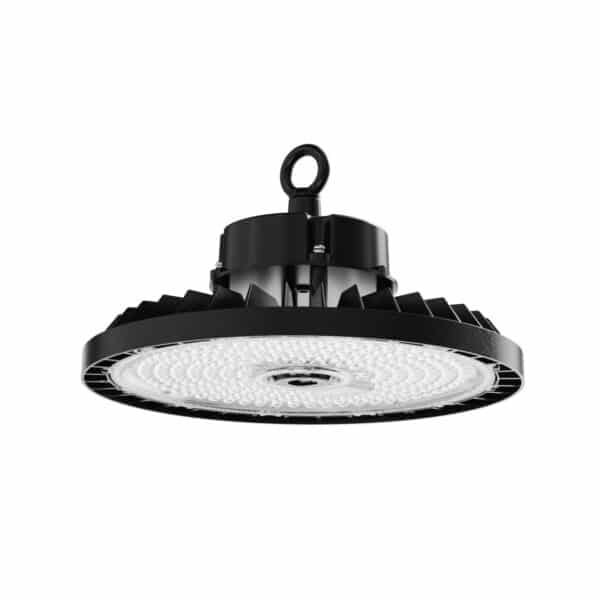
LED High Bay 200W 4000K – Sosen Driver – 90° – 185LM/W – IP65 – DALI Dimmable | 5 Year Warranty
In stock
| SKU | 100273 |
|---|---|
| Quantity | Per Piece |
| Watt | 200 Watt |
| Replacement wattage | 1000 Watt |
| Luminous flux | 37.000 Lumen |
| Lumen per Watt | 185lm/w |
| Color temperature | 4000K |
| Beam angle | 90° |
| IP-Rating | IP65 |
| Driver | Sosen |
| Dimmable | DALI-Dimmbar |
| Glare protection | UGR<22 |
| Material | Cast Aluminium |
| Energy label | B |
| Operating hours | 100.000 Stunde |
| Operating temperature | -40 Bis 50°C |
| Voltage | 100-277V |
| Colour rendering index (CRI) | Ra>80 |
| Power factor | >0.95 |
| Certifications | CE, ENEC, RoHS |
| Verpackung | Biologisch abbaubar verpackt |
| Colour | Black |
| Warranty | 5 Years |

LED High Bay Linear 50W – 4000K – 150LM/W – IP65 – 0-10V Dimmable – Sosen Driver – 5 Year Warranty
In stock
| Quantity | Per Piece |
|---|---|
| Dimmable | Sosen Dimmable |
| Color temperature | 4000K |
| Driver | Sosen |
| Lumen per Watt | 150lm/w |
| Model | Linear High Bay |
| Beam angle | 90° |
| Watt | 50 Watt |

LED High Bay 90W-120W-150W – 210LM/W – 6000K – Philips Driver – 90° – IP65 – 0-10V Dimmable | 5 Year Warranty
In stock
| SKU | 5164353-6K |
|---|---|
| Quantity | Per Piece |
| Watt | DIP-Schalter 90W–120W–150W |
| Replacement wattage | 1200 Watt |
| Luminous flux | 31.500 Lumen |
| Lumen per Watt | 210lm/w |
| Color temperature | 6000K |
| Beam angle | 90° |
| IP-Rating | IP65 |
| Driver | Philips |
| Dimmable | 0-10V Dimmbar |
| Glare protection | UGR<28 |
| Material | Aluminium |
| Energy label | A |
| Operating hours | 50,000 Hours |
| Operating temperature | -20 to 55°C |
| Voltage | 200-240V, AC |
| Colour rendering index (CRI) | Ra>70 |
| Power factor | >0.95 |
| Certifications | CE, RoHS |
| Colour | Black |
| Warranty | 5 Years |
LED High Bay 120W-160W-200W – 210LM/W – 5000K – Philips Driver – 90° – IP65 – 0-10V Dimmable | 5 Year Warranty
In stock
| SKU | 9475163-5K |
|---|---|
| Quantity | Per Piece |
| Watt | DIP-Schalter 120W–160W–200W |
| Replacement wattage | 1200 Watt |
| Luminous flux | 42.000 Lumen |
| Lumen per Watt | 210lm/w |
| Color temperature | 5000K |
| Beam angle | 90° |
| IP-Rating | IP65 |
| Driver | Philips |
| Dimmable | 0-10V Dimmbar |
| Glare protection | UGR<28 |
| Material | Aluminium |
| Energy label | A |
| Operating hours | 50,000 Hours |
| Operating temperature | -20 to 55°C |
| Voltage | 200-240V, AC |
| Colour rendering index (CRI) | Ra>70 |
| Power factor | >0.95 |
| Certifications | CE, RoHS |
| Colour | Black |
| Warranty | 5 Years |
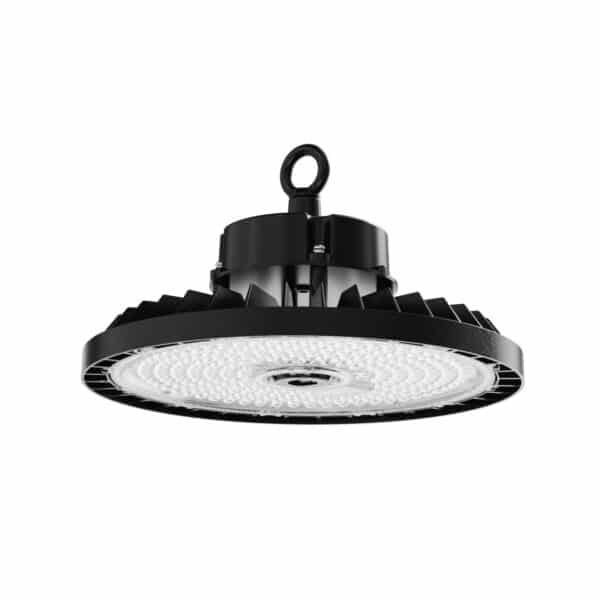
LED High Bay 200W – SOSEN Driver – 90° Strahlwinkel – 185LM/W – IP65 – 4000K | 5 Year Warranty
In stock
| SKU | 100270 |
|---|---|
| Quantity | Per Piece |
| Watt | 200 Watt |
| Replacement wattage | 1000 Watt |
| Luminous flux | 37.000 Lumen |
| Lumen per Watt | 185lm/w |
| Color temperature | 4000K |
| Beam angle | 90° |
| IP-Rating | IP65 |
| Driver | Sosen |
| Dimmable | Not Dimmable |
| Glare protection | UGR<22 |
| Material | Cast Aluminium |
| Energy label | B |
| Operating hours | 100.000 Stunde |
| Operating temperature | -40 Bis 50°C |
| Voltage | 220-240V |
| Colour rendering index (CRI) | Ra>80 |
| Power factor | >0.95 |
| Certifications | CE, ENEC, RoHS |
| Verpackung | Biologisch abbaubar verpackt |
| Colour | Black |
| Warranty | 5 Years |
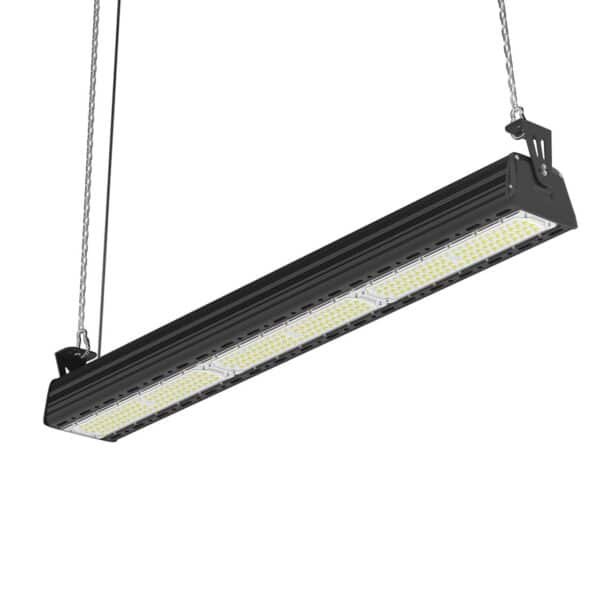
LED High Bay Linear 150W – 6000K – 150LM/W – IP65 – 0-10V Dimmable – Sosen Driver – 5 Year Warranty
In stock
| Quantity | Per Piece |
|---|---|
| Watt | 150 Watt |
| Color temperature | 6000K |
| Dimmable | Sosen Dimmable |
| Driver | Sosen |
| Lumen per Watt | 150lm/w |
| Model | Linear High Bay |
| Beam angle | 90° |
Thermal Management and Operating Environment
Heat generation differs significantly between the technologies. HQI fixtures convert approximately 70% of input energy to heat, creating substantial thermal loads. The lamp surface temperatures exceed 400°C during operation, creating fire hazards and uncomfortable working conditions. In climate-controlled facilities, this waste heat increases HVAC loads, creating hidden costs beyond direct lighting energy consumption.
LED fixtures generate significantly less heat and incorporate thermal management systems directing heat away from the work environment. Surface temperatures remain substantially lower, improving safety and reducing HVAC demands. In summer months, reduced heat gain from LED lighting can decrease cooling costs by 10-15% in industrial facilities.
Cold weather performance also favors LED technology. HQI lamps struggle in low-temperature environments, requiring extended warm-up periods and potentially failing to start in extreme cold. LED fixtures operate reliably across wide temperature ranges without performance degradation.
Environmental Impact and Sustainability
Environmental considerations increasingly influence facility management decisions. HQI lamps contain mercury, requiring specialized disposal procedures and creating environmental hazards if improperly handled. The regulatory burden surrounding mercury-containing lamps continues increasing, with disposal costs rising accordingly.
LED fixtures contain no hazardous materials and qualify as standard electronic waste for disposal purposes. The reduced replacement frequency further minimizes waste generation and disposal requirements.
The carbon footprint difference proves substantial. Over a typical 10-year operating period, switching from HQI to LED high bay lighting reduces CO2 emissions by approximately 30-40 tons per fixture. For organizations pursuing sustainability goals or carbon neutrality commitments, lighting upgrades represent one of the most effective intervention strategies.
Total Cost of Ownership Analysis
Initial acquisition costs for LED high bay fixtures exceed HQI alternatives, typically representing 2-3 times the upfront investment. However, total cost of ownership calculations consistently favor LED technology when evaluated over reasonable timeframes.
A typical ROI analysis reveals payback periods of 18-36 months when replacing HQI with LED high bay lighting. This calculation incorporates energy savings, reduced maintenance costs, and extended operational life. Facilities with higher operating hours or elevated electricity costs experience shorter payback periods, often under 18 months.
The financial advantages compound over time. After the initial payback period, the ongoing savings continue accruing throughout the extended LED fixture life. Additionally, many utilities and government programs offer incentives for LED upgrades, further improving project economics.
Application-Specific Considerations
Certain applications reveal particularly dramatic advantages for LED technology. Sports facilities benefit from instant-on capability and superior color rendering. Manufacturing operations appreciate the reduced maintenance interruptions and improved visibility for quality control processes. Cold storage facilities gain from reliable low-temperature operation and reduced thermal load.
Distribution centers and logistics operations find particular value in the control capabilities of LED systems. Integration with warehouse management systems enables zone-based lighting control, occupancy sensing in pick aisles, and daylight harvesting near loading docks. These intelligent strategies generate energy savings exceeding 50% compared to continuously-operating HQI systems.
Making the Transition
Transitioning from HQI to LED high bay lighting requires careful planning but delivers substantial returns. Professional lighting design ensures appropriate fixture selection, optimal placement, and proper light levels for specific applications. While retrofit projects are possible, new installations benefit from optimized layouts taking advantage of LED distribution characteristics.
For facilities with large HQI installations, phased conversion strategies balance capital expenditure with operational improvements. Priority areas might include high-visibility zones, locations with difficult access, or areas with extended operating hours where energy savings accumulate most rapidly.
Conclusion
The comparison between LED and HQI high bay lighting reveals clear advantages for LED technology across virtually every performance metric. Superior energy efficiency, extended operational life, reduced maintenance requirements, better light quality, and enhanced control capabilities combine to deliver substantial total cost of ownership advantages.
While HQI technology served industrial lighting needs effectively for decades, LED has matured into the superior solution for high bay applications. Facilities continuing to operate HQI lighting are missing significant opportunities for cost reduction, operational improvement, and environmental responsibility. The question is no longer whether to transition to LED high bay lighting, but rather how quickly to implement the upgrade to begin capturing the substantial benefits this technology delivers.
class=”faq-schema” style=”max-width:800px;margin:40px auto;”>
Frequently Asked Questions
Getting Started
Transitioning from HQI to LED high bay lighting represents a strategic investment for modern industrial facilities. The combination of dramatic energy savings, minimal maintenance requirements, and superior lighting quality makes LED technology the clear choice for warehouse and production environments. Beyond immediate cost benefits, LED fixtures contribute to sustainability goals while enhancing workplace safety through flicker-free illumination and instant operation. As energy costs continue rising and environmental regulations tighten, upgrading to LED high bay fixtures ensures your facility remains competitive and compliant for decades to come.