Sports Hall Lighting: Lux Levels, Ball-Proof Luminaires and Planning for Basketball, Handball and Gyms
How to light sports halls, basketball and handball courts and gyms: EN 12193 lux classes, glare-free layout, ball impact resistance, flicker, controls and a retrofit example.
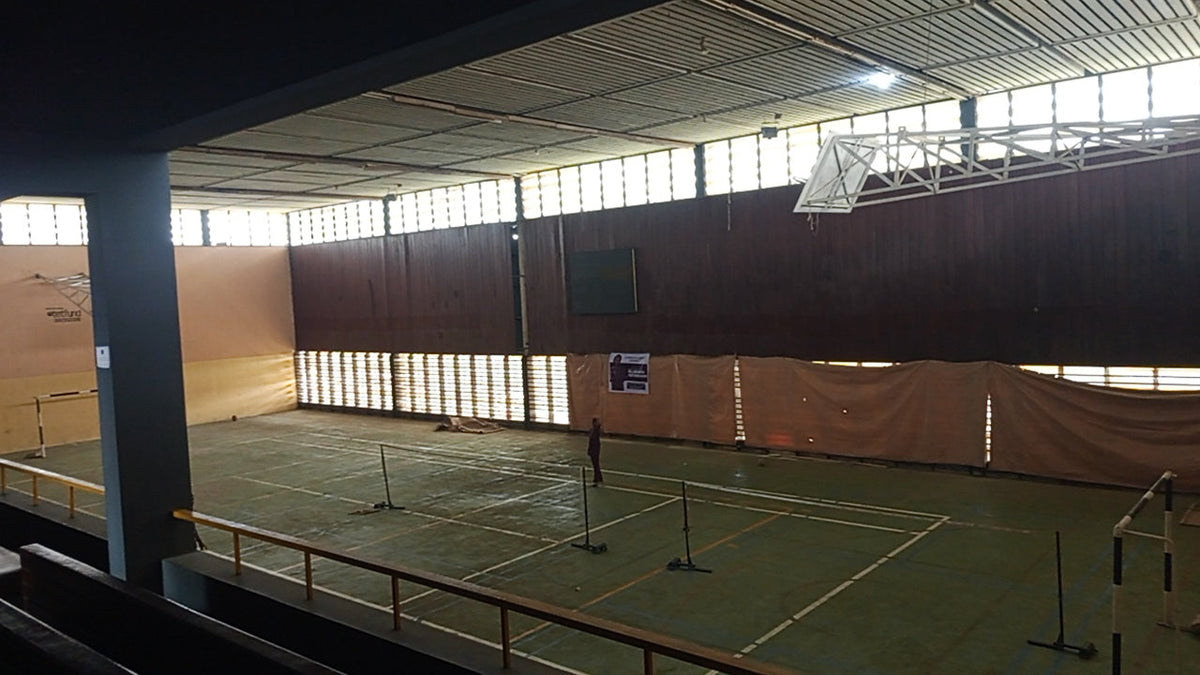
In a sports hall, lighting has to do more than in a warehouse: balls fly upwards, players look at the ceiling, and handball, basketball or volleyball need even light across the whole court. This guide shows what illuminance EN 12193 requires, how luminaires are arranged and why ball impact resistance and glare control make the difference between a good hall and constant complaints.
- Multi-sport hall (handball, basketball, volleyball, futsal): Class III approx. 200 lux, Class II approx. 500 lux, Class I approx. 750 lux.
- School and club halls usually manage with Class III or II. If you host league matches, plan for Class II.
- Luminaires must be ball-proof: IK08 as a minimum, better IK10 or a protective grille.
- Linear luminaires in rows parallel to the court length cause less glare than single round high bays above the centre of the court.
- Gyms are not competition halls: 300–500 lux with low glare (UGR) and a pleasant colour temperature matter most there.
Illuminance to EN 12193
The standard distinguishes three classes by level of play. The values are maintained values, i.e. for the installation after years in service, not when new.
| Sport | Class III | Class II | Class I |
|---|---|---|---|
| Handball, basketball, volleyball, futsal | approx. 200 lux | approx. 500 lux | approx. 750 lux |
| Badminton | approx. 300 lux | approx. 600 lux | approx. 750 lux |
| Gymnastics | approx. 200 lux | approx. 300 lux | approx. 500 lux |
| Ice rink (ice hockey, skating) | approx. 300 lux | approx. 500 lux | approx. 750 lux |
| Uniformity (min/average) | approx. 0.5 | approx. 0.6–0.7 | approx. 0.7 |
Class III covers school sport and recreation, Class II training and regional competition, Class I national and international competition. Halls with TV coverage add requirements for vertical illuminance and flicker. How the standard defines light distribution and uniformity is covered in our guide Light Distribution on Sports Fields.
Luminaire layout: light without glare
In ball sports, players constantly look up. That is why:
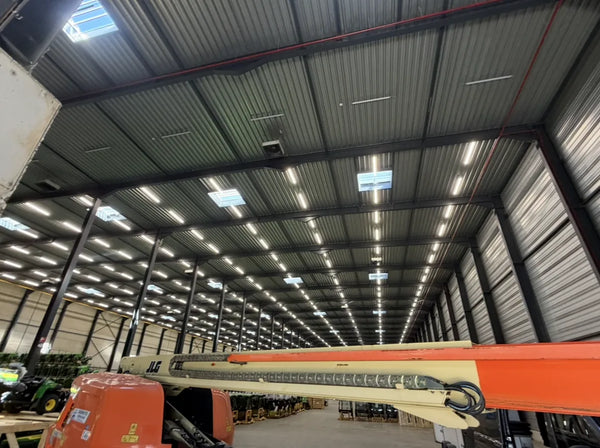
- Rows rather than single points: Linear luminaires in rows parallel to the long axis spread the light evenly and create fewer harsh bright spots than single UFO high bays.
- Not above basket or net: Directly above a basketball hoop or volleyball net, any luminaire dazzles when shooting or blocking. Place luminaires to the side.
- Wide optics in low halls: At 6–8 m height, 90–120° gives even light; at 10 m and above, 60–90° is enough.
- Light ceiling and walls: A bright background reduces the contrast with the luminaire and therefore glare.
Rule of thumb for a triple sports hall (approx. 45 × 27 m, 7–9 m high) at Class II: around 40–50 luminaires of 150–200W each. The exact number depends on height, optics and reflectance and is set by a lighting calculation. How to work out the number of luminaires and spacing is shown in our guide LED High Bay Lighting.

Ball impact resistance and protection rating
In sports halls, mechanical strength matters more than water tightness. A handball or volleyball hits the ceiling with considerable energy. A ball-proof luminaire to DIN 18032-3 is required, in practice at least IK08, better IK10 or a luminaire with a protective grille. The IP rating is secondary; IP44 to IP65 is enough for dry halls. More in our guide IK Protection Rating Explained.
Luminaires for sports halls

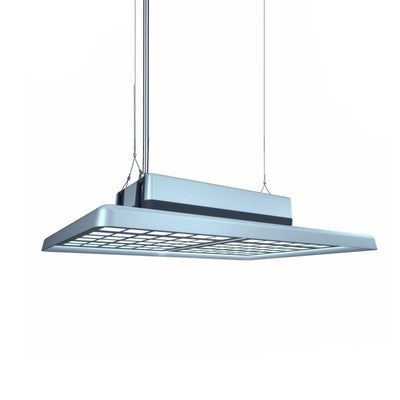
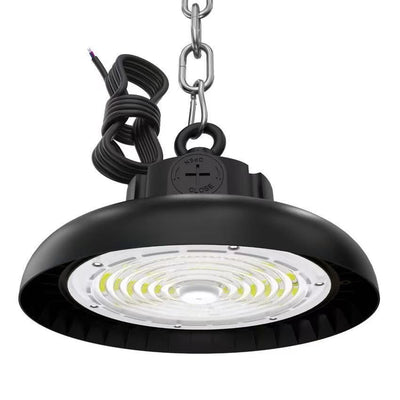
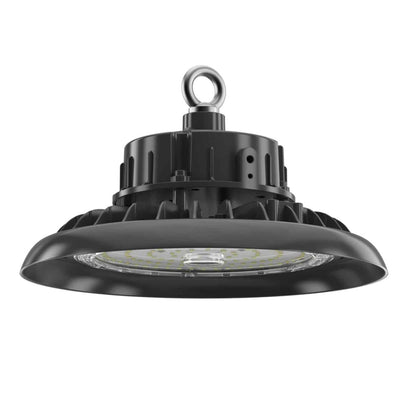
Flicker, colour temperature and controls
Flicker: With fast balls, flicker shows as a stroboscopic effect: the ball seems to jump. Drivers with low ripple are therefore essential, and requirements are even stricter for TV broadcasts.
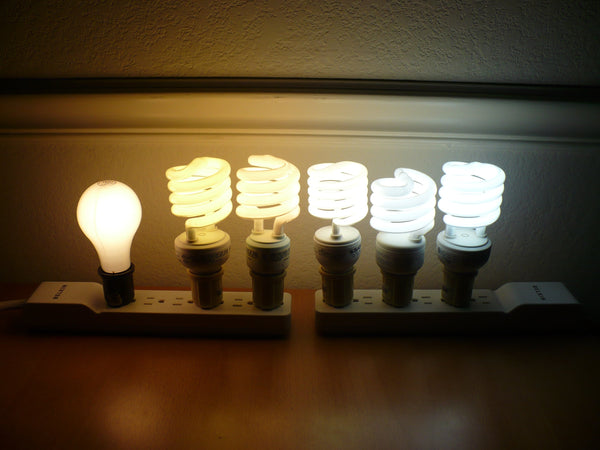
Colour temperature: 4000K to 5000K has proven itself. Neutral white feels comfortable; 5000K gives more contrast for fast ball sports (see LED Colour Temperature).
Controls: A hall is rarely used at competition level all the time. With dimmable drivers and two or three scenes (school sport, training, competition), the installation usually runs dimmed. Daylight sensors along window sides save even more. The differences between dimming systems are explained in our guide 0-10V, 1-10V and TRIAC.
Gyms: different requirements
A gym is not a competition hall. People often lie on their back (bench press, core training) and look straight at the ceiling. What matters:
- 300–500 lux in training areas, 200–300 lux in changing rooms and corridors.
- Luminaires with low glare (UGR below 22) or an indirect light share, no bare light points above benches.
- 4000K for training floors, warmer tones for reception and wellness.
How glare is assessed is explained in our guide UGR Value Explained.
Worked example: retrofitting a school sports hall
A single sports hall with 24 fittings of 2 × 58W fluorescent (approx. 140W incl. ballast) is replaced by 24 LED luminaires of 100W. 2,000 operating hours a year, €0.28/kWh:
- Before: 24 × 140W = 3.36 kW · After: 24 × 100W = 2.4 kW
- Without dimming: 0.96 kW × 2,000 h = 1,920 kWh, around €540 a year
- With dimming to 70% during school use, consumption drops by roughly another 25%
- On top, illuminance usually rises noticeably, because old tubes only deliver part of their light after years
For your own calculation: LED Payback Period Calculator.
Common mistakes
- Industrial high bays without ball protection: One volleyball is enough to dislodge a cover. Always check the IK rating.
- Round high bays directly above the basket: Dazzles when shooting.
- Planning on lux only: Uniformity and glare decide whether the hall is pleasant to play in.
- No scenes: Full competition lighting during school sport wastes electricity.
- Forgetting emergency lighting: Sports halls are places of assembly; safety lighting is planned along with the retrofit.
Frequently asked questions
How many lux does a sports hall need?
For school sport and recreation (Class III) around 200 lux, for training and regional competition (Class II) around 500 lux, for national competition (Class I) around 750 lux. Badminton is slightly higher.
What does ball-proof mean?
The luminaire withstands ball impacts without parts falling down. It is tested to DIN 18032-3. In practice that means IK08 or higher, or a protective grille.
Are UFO high bays suitable for sports halls?
Yes, if they are ball-proof and hang to the side of the play. For even, low-glare light, linear or square luminaires with wide optics are usually the better choice.
Which colour temperature is best for sports halls?
4000K to 5000K. Neutral white is comfortable for long training sessions; 5000K gives more contrast for fast ball sports.
How many luminaires does a triple sports hall need?
As a rough guide, around 40–50 luminaires of 150–200W for Class II, depending on height and optics. A DIALux calculation, which we prepare free of charge, gives the exact number.
Do the same values apply to outdoor basketball?
Outdoors the values are lower and planning is done with masts and floodlights. Suitable luminaires can be found under Basketball Court Lighting.
Send us the hall size, height and the class you need. We prepare a free DIALux lighting plan with number of luminaires, layout and uniformity, plus a no-obligation quote at direct-import prices 2–4× below comparable branded products. 5-year warranty.
Request a lighting plan