ATEX & Ex-Proof LED Lighting: Zones 1, 2, 21, 22 Explained
Zone classification, equipment categories and luminaire selection for hazardous areas – the complete B2B guide to ATEX & ex-proof LED lighting.
In hazardous areas, the use of certified ex-proof luminaires is a legal requirement – a standard LED luminaire is simply not an option. This guide explains which ATEX zone applies to your facility, which equipment category and ignition protection type are required, and how to select the correct luminaire.
- ATEX distinguishes gas zones (0, 1, 2) and dust zones (20, 21, 22) – the frequency of the explosive atmosphere determines the zone.
- Zone 1/21 requires at least equipment category 2G or 2D respectively; Zone 2/22 requires at least category 3G or 3D.
- Zone classification is determined by the operator on the basis of EN/IEC 60079-10-1/-10-2 – not by the luminaire supplier.
- Ignition protection types such as Ex e (increased safety) or Ex d (flameproof enclosure) define how the luminaire prevents ignition.
- Installation and connection of ex-proof luminaires to 230 V/400 V must be carried out exclusively by qualified electricians, in accordance with EN 60079-14 and national wiring regulations.
What is ATEX and what is the legal basis?
ATEX stands for Atmosphères Explosibles and refers to two EU directives: the Equipment Directive 2014/34/EU (requirements for equipment) and the Workplace Directive 1999/92/EC (minimum requirements for worker protection). Each EU member state has transposed the Workplace Directive into national law, for example through its workplace safety and hazardous substances regulations.
Every luminaire used in a hazardous zone must be certified in accordance with 2014/34/EU and marked accordingly. A CE mark alone is not sufficient. Anyone using non-certified luminaires not only risks fines but also bears full liability in the event of an incident.
Alongside ATEX certification, the international equivalent IECEx (IEC 60079 series of standards) exists. IECEx-certified products are recognised outside the EU; within the EU, ATEX is the applicable requirement. Many manufacturers hold both certifications simultaneously.
ATEX Zone Classification: Gas and Dust at a Glance
Zone classification describes how frequently and for how long an explosive atmosphere occurs at a given location. It is the basis for every luminaire selection. Under Directive 1999/92/EC, the employer is obliged to define and document the zones in an explosion protection document.
| Zone | Medium | Frequency of explosive atmosphere | Typical examples | Minimum equipment category |
|---|---|---|---|---|
| Zone 0 | Gas / Vapour | Continuously or for long periods | Interior of tanks, pipelines | Category 1G (EPL Ga) |
| Zone 1 | Gas / Vapour | Occasionally | Spray booths, pump rooms, chemical stores | Category 2G (EPL Gb) |
| Zone 2 | Gas / Vapour | Rarely, for short periods | Areas surrounding Zone 1, petrol station forecourts | Category 3G (EPL Gc) |
| Zone 20 | Dust | Continuously or for long periods | Interior of silos, mills | Category 1D (EPL Da) |
| Zone 21 | Dust | Occasionally | Powder coating plants, grain mills, wood dust stores | Category 2D (EPL Db) |
| Zone 22 | Dust | Rarely, for short periods | Areas surrounding Zone 21, packaging plants | Category 3D (EPL Dc) |
Important: A category 2G luminaire may also be used in Zone 2 (a higher category is always permissible). Conversely, a category 3G luminaire is not permitted in Zone 1.
Who Determines the Zone Classification?
Zone classification is exclusively the responsibility of the operator of the facility – not the luminaire supplier and not the electrician. The technical basis is provided by EN/IEC 60079-10-1 (gases and vapours) and EN/IEC 60079-10-2 (dusts), supplemented by any national technical rules.
In practice, zone classification is frequently carried out by a safety engineer, an approved inspection body or the operational safety officer. The result must be recorded in writing in the explosion protection document and updated whenever changes are made to the facility.
As a buyer or facility manager, you should know the zone classification of your facility before requesting a luminaire. If no explosion protection document yet exists, a competent expert must be consulted first.
Ignition Protection Types: How Does an Ex-Proof Luminaire Prevent Ignition?
The ignition protection type describes the technical principle by which a luminaire prevents it from igniting an explosive atmosphere. It forms part of the ATEX marking and is governed normatively by the IEC 60079 series.
| Ignition protection type | Code | Standard | Principle | Typical application |
|---|---|---|---|---|
| Flameproof enclosure | Ex d | EN IEC 60079-1 | Ignition is contained within the enclosure | Zone 1, heavy industrial environments |
| Increased safety | Ex e / Ex eb | EN IEC 60079-7 | Ignition sources are eliminated by design | Zone 1 and 2, LED luminaires |
| Intrinsic safety | Ex i / Ex ia | EN IEC 60079-11 | Energy is limited so ignition cannot occur | Sensors, controls |
| Type of protection "n" / Non-sparking equipment | Ex nA / Ex ec | EN IEC 60079-15 | No sparks during normal operation | Zone 2 / Zone 22 only |
| Pressurised enclosure | Ex p | EN IEC 60079-2 | Protective gas prevents the atmosphere from entering | Control cabinets, special installations |
For LED luminaires in Zone 1 and Zone 2, Ex eb (increased safety, equipment) is today a widely used ignition protection type. It permits compact, lightweight enclosures and combines well with modern LED drivers.
Reading and Understanding the ATEX Marking
Every certified ex-proof luminaire carries a standardised marking. A practical example:
II 2G Ex eb IIC T5 Gb
- II – Equipment group II (surface installations, not mining)
- 2G – Equipment category 2, gas (suitable for Zone 1 and Zone 2)
- Ex eb – Ignition protection type: increased safety, equipment
- IIC – Explosion group C (e.g. hydrogen; highest requirement; IIA = e.g. propane, IIB = e.g. ethylene)
- T5 – Temperature class: maximum surface temperature 100 °C
- Gb – Equipment Protection Level: suitable for Zone 1 (Gb = gas, high level of protection)
For dust zones, a typical example reads: II 2D Ex tb IIIC T80°C Db IP66. Here "D" stands for dust, "tb" for the ignition protection type enclosure protection, and "IIIC" for conductive dusts (highest requirement in the dust group).
Application Cases by Industry: Which Luminaire for Which Zone?
Spray Booth (Zone 1)
In spray booths, solvent vapours regularly create explosive atmospheres. The zone classification for the interior of the booth is frequently Zone 1; the precise classification must be determined by the operator on the basis of the substances used and the ventilation conditions. At minimum, equipment category 2G with ignition protection type Ex eb or Ex d is required.
Under EN 12464-1, at least 750 lux is recommended for the working area; specialists recommend higher values for the detection of coating defects. Plastic trough luminaires are unsuitable for spray booths, as paint residues cannot be removed without leaving traces. Suitable luminaires have smooth, solvent-resistant enclosures made from aluminium or stainless steel and an IP66 rating.
For spray finishing operations, a silicone-free design is frequently required, as silicone residues can cause coating defects (cratering, fisheyes). Request an explicit silicone-free declaration from the manufacturer.
Chemical Stores and Pump Rooms (Zone 1 / Zone 2)
In chemical stores, zone classification depends on the substances stored and the ventilation conditions. Zone 2 frequently applies to the general storage area, while Zone 1 applies in the vicinity of filling stations or pumps. Suitable luminaires are robust LED high bays with Ex eb certification, IP66 and IK10.
For illuminance, EN 12464-1 specifies a maintained illuminance (Em) of at least 200 lux on racking surfaces and 300 lux in packing and despatch areas. Our ATEX explosion-proof LED luminaires are available for both zones.
Powder Coating Plant (Zone 21)
Powder coating plants generate combustible dust clouds. The spray booth area typically constitutes Zone 21; the surrounding area may be Zone 22. Equipment category 2D with ignition protection type Ex tb and IP6X (dustproof) is required. The temperature class must be below the minimum ignition temperature of the powder in use.
Refinery and Petrol Station Forecourt (Zone 2)
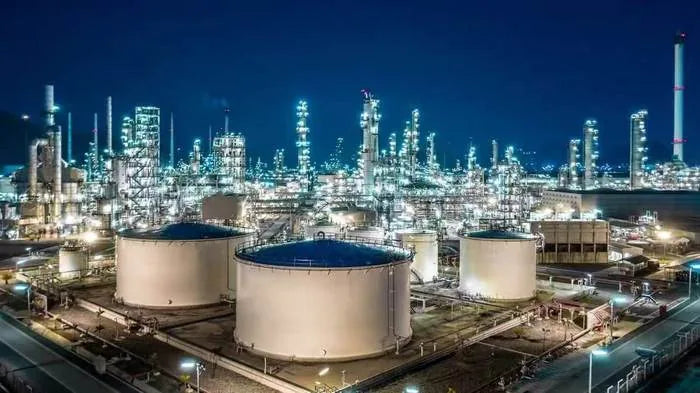
In the outdoor areas of refineries and around petrol station dispensers, Zone 2 frequently applies. Category 3G luminaires with a suitable ignition protection type (e.g. Ex ec) are permissible here. For outdoor areas, UV resistance and corrosion protection (e.g. stainless steel enclosures or coated aluminium) are additionally important. Our EX floodlights are designed for such outdoor applications.

ATEX Luminaires for Zones 1, 2, 21 and 22 at Clightstore
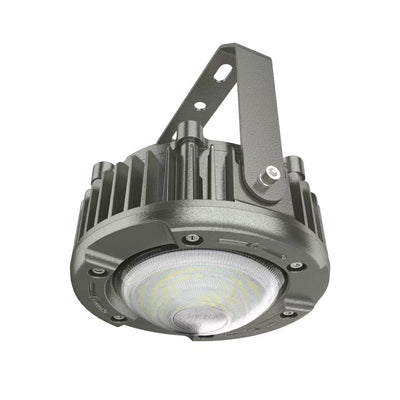
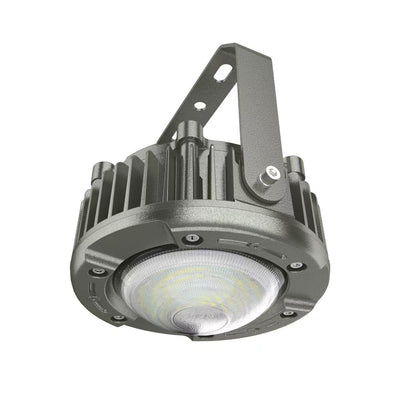
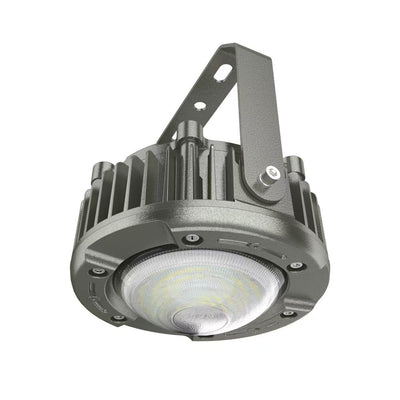
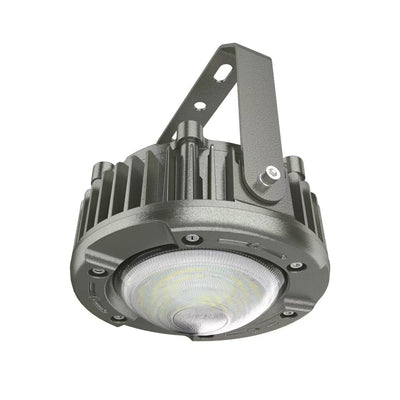
Our ATEX-certified LED high bays are approved for all four zones (1, 2, 21, 22), with IP66 protection and a 5-year warranty – available directly from stock or to order within 14 working days.
Compliance Checklist for Operators and Buyers
Before ordering an ex-proof luminaire, the following points should be clarified. This list does not replace legal advice, but provides structured guidance for the procurement process.
- Explosion protection document in place? Mandatory under Directive 1999/92/EC – without this document, no legally sound zone classification is possible.
- Zone correctly determined? Gas (Zone 0/1/2) or dust (Zone 20/21/22) – basis: EN/IEC 60079-10-1 or -10-2.
- Equipment category appropriate? Zone 1/21 → min. Cat. 2G/2D; Zone 2/22 → min. Cat. 3G/3D.
- Explosion group verified? IIC (e.g. hydrogen) is the most stringent requirement and also covers IIA and IIB.
- Temperature class sufficient? The maximum surface temperature of the luminaire must be below the minimum ignition temperature of the gas or dust.
- IP rating sufficient? At least IP65 for indoor areas, IP66 for areas subject to water jets and outdoor installations; IP6X for dust zones. Further information in our guide IP Protection Ratings Explained.
- Silicone-free for spray finishing operations? Obtain written confirmation from the manufacturer.
- Installation by a qualified electrician? Connection and installation at 230 V/400 V must be carried out exclusively by qualified electricians in accordance with EN 60079-14 and national wiring regulations – the five safety rules must be observed.
- Periodic inspection planned? Ex-proof equipment must be inspected regularly (initial inspection before commissioning, periodic inspection in accordance with EN 60079-17 and manufacturer specifications).
- Light planning completed? For spray booths (min. 750 lux) and warehouses (maintained illuminance values per EN 12464-1), we recommend a DIALux calculation.
ATEX vs IECEx: What is the Difference?
ATEX (2014/34/EU) is the binding EU directive for the European market. Every product used in hazardous areas within the EU must be ATEX-compliant.
IECEx is an international certification system based on the IEC 60079 series of standards, recognised outside the EU (e.g. Australia, South Africa, the Middle East). Many manufacturers hold both certifications in parallel, as the technical requirements are largely identical.
For facilities in the EU, ATEX is the applicable requirement. IECEx is a quality indicator, but not a substitute for the ATEX marking.
Illuminance in Ex Zones: Reference Values per Standard
Illuminance requirements apply independently of ex-proof protection and must be met in addition. The applicable standard is EN 12464-1 (lighting of indoor workplaces), together with any national workplace rules. The values stated in EN 12464-1 are maintained illuminance values (Em).
For a detailed overview of all reference values, we recommend our guide How Much Lux Do You Need?. For ex zones, the key values are as follows:
- Spray booth (working area): at least 750 lux
- Warehouse (traffic routes): Em = 100 lux
- Warehouse (racking surfaces): Em = 200 lux
- Packing and despatch area: Em = 300 lux
- Chemical laboratory / inspection area: Em = 500 lux
Professional DIALux light planning ensures that reference values are met throughout – even with unfavourable room geometries or high mounting heights. We provide this light planning free of charge for your project.
Luminaires for Adjacent Areas Without Ex-Proof Requirements
Not every area in an industrial facility is an ex zone. In warehouses, workshops and production areas without an explosive atmosphere, high-quality LED tri-proof lights with IP65 or higher are the more cost-effective choice. For linear applications in warehouses, our LED tri-proof lights 150 cm or LED tri-proof lights 120 cm are recommended.
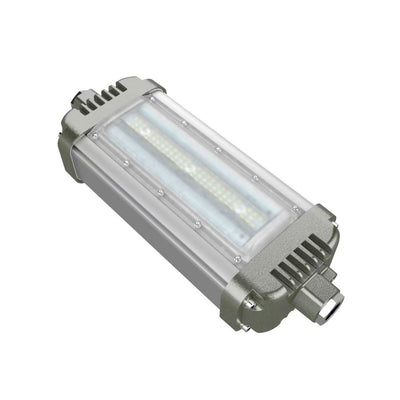
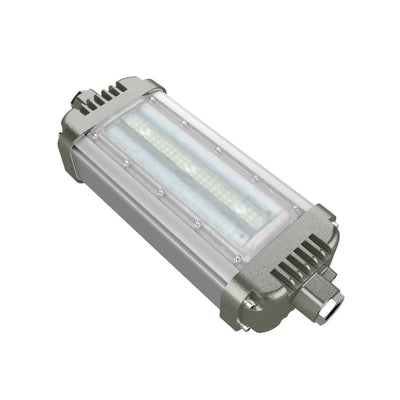
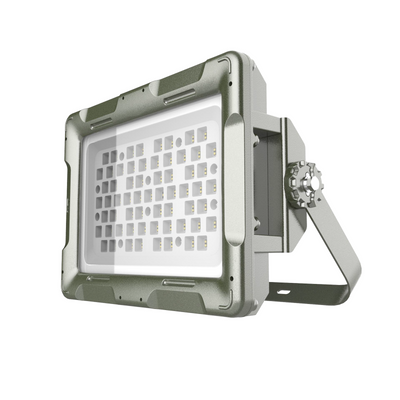
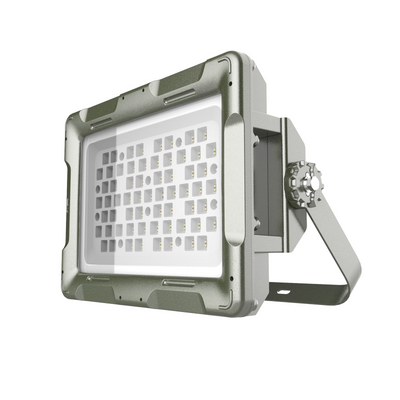
Compact Ex luminaires and Ex floodlights for technical rooms, corridors and outdoor areas in classified zones – with a 5-year warranty:

Frequently Asked Questions about ATEX & Ex-Proof LED Lighting
May I use a standard LED luminaire in Zone 2?
No. In Zone 2, only ATEX-certified luminaires of equipment category 3G (or higher) are permitted. Standard LED luminaires without ex-proof certification are not permitted in any ex zone – regardless of IP rating or construction. The use of non-certified equipment is an offence and, in the event of an incident, may result in the operator bearing full liability.
Which ATEX zone applies in my spray booth?
The interior of a spray booth is frequently classified as Zone 1, as solvent vapours can occasionally be present in ignitable concentrations. However, the precise zone classification must be determined by the operator on the basis of the substances used, the ventilation conditions and the standard EN/IEC 60079-10-1, and documented in the explosion protection document. In cases of doubt, a competent expert should be consulted.
What is the difference between Zone 1 and Zone 2?
Zone 1 refers to areas in which an explosive gas or vapour atmosphere can occasionally be present. Zone 2 refers to areas in which this occurs only rarely and for short periods. Zone 1 requires equipment category 2G; Zone 2 requires at least category 3G. A category 2G luminaire is also permissible in Zone 2.
What does the ATEX marking "II 2G Ex eb IIC T5 Gb" mean?
"II" denotes equipment group II (surface installations). "2G" means equipment category 2, gas – suitable for Zone 1 and Zone 2. "Ex eb" is the ignition protection type increased safety (equipment). "IIC" is explosion group C (highest requirement, e.g. hydrogen). "T5" is the temperature class with a maximum surface temperature of 100 °C. "Gb" is the Equipment Protection Level for Zone 1.
What IP rating does an ex-proof luminaire require?
For ex-proof luminaires in indoor areas, at least IP65 is standard. In areas subject to water jets, cleaning installations or outdoor mounting, IP66 or IP67 is recommended. For dust zones (Zone 21/22), IP6X (complete dust protection) is required. Further information on IP ratings can be found in our guide IP Protection Ratings Explained.
What is the difference between ATEX and IECEx?
ATEX (2014/34/EU) is the binding EU directive for the European market. IECEx is an international certification system based on the IEC 60079 series of standards, recognised outside the EU. Both systems are based on similar technical requirements. For use in the EU, ATEX is mandatory; IECEx is an additional quality indicator, but not a substitute.
Who may connect and install ex-proof luminaires?
Connection and installation of ex-proof luminaires at 230 V or 400 V may only be carried out by qualified electricians. EN 60079-14, the national wiring regulations and the five safety rules apply (isolate, secure against re-energisation, verify absence of voltage, earth and short-circuit, cover or barrier adjacent live parts). This work must not be carried out by unqualified persons.
Are silicone-free luminaires mandatory in spray finishing operations?
There is no statutory requirement for silicone-free equipment; however, many spray finishing operations and automotive manufacturers (OEM specifications) require silicone-free equipment. Silicone residues can cause coating defects such as cratering or fisheyes. For spray booths, we recommend requesting a written silicone-free declaration from the manufacturer.
Clightstore provides free DIALux light planning for your hazardous areas – including zone consideration, lux verification per EN 12464-1, and luminaire recommendations with ATEX marking. EU-wide delivery in 2–5 working days, up to 5 years' warranty.
Request a free quote