Hungary: The Energy Audit Duty from 10 TJ – Deadlines, Fines and What It Means for Lighting
Since 1 January 2026 Hungarian companies with an average annual energy use above 10 TJ must have an energy audit every four years. Fine up to HUF 10 million. What it means for lighting.
Since 1 January 2026 the energy audit duty in Hungary no longer depends on company size but on energy use: an organisation whose average annual energy consumption over the three preceding years exceeds 10 TJ (about 2,778 MWh) must have a mandatory energy audit carried out every four years. For organisations that had to register in 2026, the first audit was due by 10 October 2026, so that date has passed. Lighting is part of the energy use of a building, but the sources we read do not name it as a separate subject of the audit.
- Under the Hungarian Energy Efficiency Act (Act LVII of 2015, “Ehat. tv.”) the audit duty applies to organisations whose average annual energy consumption over the three preceding years exceeds 10 TJ.
- The audit must be repeated every four years, counted from the previous audit (Section 22 of the Act).
- For organisations that had to register by 30 June 2026, the first audit was due by 10 October 2026.
- The regulator (MEKH) may first require the audit to be completed within 180 days and may impose a fine of up to HUF 10 million; a repeat fine is at least 150% of the previous one, up to HUF 15 million (Section 25).
- Organisations with an accredited ISO 50001 energy management system are exempt from the audit.
- Replacing luminaires with LED does not replace the audit. It does reduce the electricity used for lighting, and it can be one of the measures an audit recommends.
What applies since 1 January 2026
| Item | Value |
|---|---|
| Law | Act LVII of 2015 on energy efficiency (Ehat. tv.) |
| Who must have an audit | Organisations whose average annual energy consumption over the three years before the reporting year exceeds 10 TJ (Section 1) |
| 10 TJ in other units | 10,000 GJ, which is about 2,778 MWh |
| Frequency | Every four years, counted from the date of the previous audit (Section 22) |
| First deadline | 10 October 2026 for organisations that had to register by 30 June 2026 |
| Exemption | An accredited ISO 50001 energy management system; the valid certificate must be sent to the authority every four years (Section 22) |
| Sanction (Section 25) | First a demand to complete the audit within 180 days; a fine of up to HUF 10 million; a repeat fine of at least 150% of the previous one, up to HUF 15 million |
| Who carries out the audit | An energy auditor or energy audit organisation licensed by the authority |
The consumption of all energy carriers is added up, but only final energy counts: energy used to produce district heat or electricity does not. Energy passed on without metering counts as consumption of the party passing it on. For newly founded organisations, a shorter averaging period applies. The 4-year period starts when the previous audit was completed, and the Act ties the yearly deadline to 10 October. Please confirm your own deadline with an energy specialist or the regulator, because the dates depend on when your obligation arose.
If the deadline has already passed
The Act lets the regulator first demand that the audit is completed within 180 days (Section 25(1)a) and only then fine you (Section 25(1)b). The fine is up to HUF 10 million; repeat fines start at 150% of the previous one and are capped at HUF 15 million. We do not know how the regulator applies these provisions to the first 2026 audits in practice. If you have not yet commissioned an audit, the practical step is to contact a licensed auditor now and ask the regulator how it treats your situation.
According to the business daily Világgazdaság, organisations whose 2023–2025 average also exceeds 400,000 kWh of electricity, 100,000 m³ of natural gas or 3,400 GJ of heat must in addition engage an energy specialist (energetikai szakreferens). We could not confirm these thresholds in the text of the Act, which leaves them to a government decree, so check them with your auditor.

What this means for lighting
The Hungarian chamber FAQ describes the audit as a complex assessment of the losses in buildings, processes and transport, based on measured operating data and including a detailed review of the energy consumption of buildings and industrial operations. Lighting is part of that consumption in halls, offices and warehouses. None of the sources we read lists lighting as a separate item, so how an auditor treats it is a matter for the auditor. In practice a lighting review looks at the inventory of luminaires, their wattage and age, operating hours and the saving potential of LED and lighting control.
Worked example (illustrative assumptions): a hall with 40 discharge luminaires of 400W (about 440W with ballast), replaced by 40 LED luminaires of 150W, at 4,000 operating hours per year.
| Item | Value |
|---|---|
| Energy saving | (440 − 150) W × 40 × 4,000 h ÷ 1,000 = 46,400 kWh per year |
| Share of the 10 TJ threshold | 46.4 MWh ÷ 2,778 MWh ≈ 1.7% |
| Lower electricity cost at HUF 60/kWh (example price, excl. VAT) | about HUF 2,784,000 per year |
The electricity price is an example: please use the price from your own contract. The duty depends on the consumption of the whole organisation, not on lighting alone; in this example the saving is about 1.7% of the threshold. You can recalculate with your own values in the guide LED Payback Period Calculator. Which LED luminaire replaces which lamp is shown in Replacing HQL, HQI and Sodium Lamps with LED. For planning a hall see LED Lighting for a Commercial Hall, for controls DALI and Lighting Control, and the general benefits are summarised in Modernising LED Lighting.
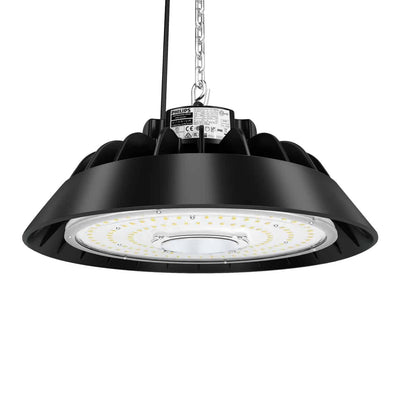
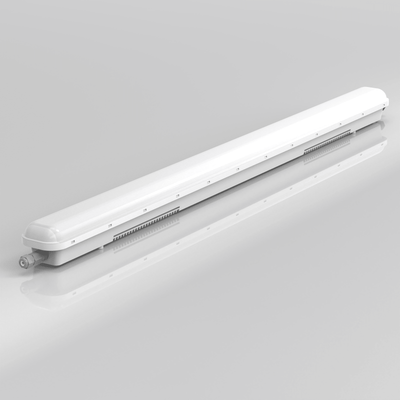
LED luminaires for hall refurbishment


Frequently asked questions
Who must have a mandatory energy audit in Hungary?
Organisations whose average annual energy consumption over the three years before the reporting year exceeds 10 TJ (about 2,778 MWh). The test is based on energy use, not on company size.
How often must the audit be repeated?
Every four years, counted from the date of the previous audit (Section 22 of the Act).
What fine is possible?
The regulator may first require the audit to be completed within 180 days and may impose a fine of up to HUF 10 million. A repeat fine is at least 150% of the previous fine, up to HUF 15 million (Section 25).
Can I avoid the audit with ISO 50001?
Yes. Organisations operating an energy management system certified under EN ISO 50001 by an accredited body are exempt from the mandatory audit. The valid certificate must be sent to the authority every four years.
Does replacing luminaires with LED replace the energy audit?
No. The audit covers the total energy consumption of the organisation and is carried out by a licensed auditor. LED reduces the consumption for lighting and can be one of the recommended measures.
Last checked: 20 November 2026, Nick Cuppens, Clightstore. Sources: Act LVII of 2015 on energy efficiency (net.jogtar.hu, wording in force from 20 August 2026), Világgazdaság, 20 May 2026 and Veszprém Chamber FAQ on energy auditing, 12 March 2026 (guidance only, not binding).
Send us the number and wattage of your current luminaires. We prepare a free DIALux lighting study and a no-obligation quote at direct-import prices, 2 to 4 times lower than comparable branded products.
Request a quote