Backlit vs. Edge-Lit LED Panel: Which Is Better?
Backlit or edge-lit LED panel? This guide explains the technical differences, standard requirements and gives clear purchasing recommendations for industry, offices and logistics.
Backlit LED panels emit light directly from behind the diffuser; edge-lit panels feed it in from the side via a light guide plate. For most commercial and industrial applications, backlit panels offer higher efficiency, better heat distribution and lower ageing risk – edge-lit panels excel where minimal depth and a slim design are the priority.
- Backlit panels can exceed 160 lm/W, because the direct light path needs no light guide plate.
- Edge-lit panels are slimmer (often under 15 mm) and suit design requirements in reception areas or showrooms.
- The polystyrene light guide plate (LGP) of budget edge-lit models can yellow; backlit panels are unaffected.
- For workplace lighting to EN 12464-1 (UGR, illuminance, Ra), backlit panels with UGR<19 are the more reliable choice.
- Backlit panels spread heat across the whole surface; in edge-lit panels heat concentrates at the edges, which can affect lifetime.
How do the two technologies differ?
Backlit: direct light from behind
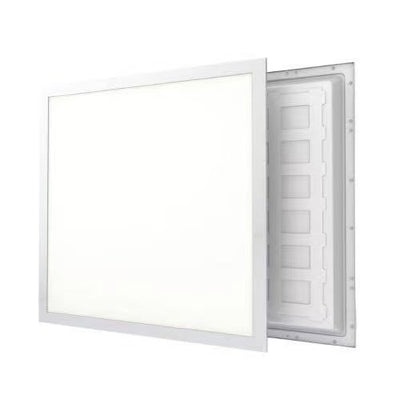
In a backlit panel, the LEDs are spread evenly across the rear. The light strikes a diffuser directly, which spreads it across the emitting surface. This short, direct light path is the key efficiency factor: there is no light guide plate absorbing or scattering energy.
Edge-lit: indirect light via a light guide plate
Edge-lit panels place the LEDs along one or more sides of the frame. The light is coupled into a transparent light guide plate and redirected forwards by microstructures. This detour costs light and limits efficiency. The advantage is depth: edge-lit panels can be extremely slim, attractive for design ceilings or very shallow plenums.

Technical comparison
| Criterion | Backlit LED panel | Edge-lit LED panel |
|---|---|---|
| Luminous efficacy | typically 130–180 lm/W | typically 80–130 lm/W |
| Depth | 25–50 mm | 8–15 mm |
| Heat distribution | even across the surface | concentrated at the edges |
| Ageing risk | low (no LGP) | polystyrene LGP can yellow |
| UGR | UGR<19 achievable | UGR<19 achievable, but more complex |
| Uniformity | very high | high, depends on LGP quality |
| Price (comparable output) | lower | usually higher |
| Design | standard to good | very good (ultra-slim) |
| Damp locations | possible with IP rating | LGP more sensitive to moisture |
| Typical lifetime (L70) | 50,000–70,000 h | 40,000–60,000 h |
Requirements under EN 12464-1
EN 12464-1 sets requirements for maintained illuminance Em, glare (UGR), colour rendering (Ra) and uniformity. All criteria count together – one lux value is not enough. Choosing between backlit and edge-lit is therefore always a compliance decision too.
| Application | Em | UGR max. | Ra min. | Recommended technology |
|---|---|---|---|---|
| Office / screen workstation | 500 lx | 19 | 80 | Backlit UGR<19 |
| Production hall | 300–500 lx | 22 | 80 | Backlit |
| Warehouse / racking faces | 200 lx | 25 | 60 | Backlit or tri-proof light |
| Fine assembly / inspection | 750 lx | 19 | 80 | Backlit UGR<19 |
| Precision assembly | 1,000 lx | 19 | 80 | Backlit UGR<19 + task lighting |
| Reception / foyer | 300 lx | 22 | 80 | Edge-lit or backlit |
| Classroom | 300 lx (evening classes 500 lx) | 19 | 80 | Backlit UGR<19 |
More lux values in How Much Lux Do You Need? and on glare in UGR Value Explained.
Heat and lifetime
In backlit panels heat spreads evenly across the rear, protecting the LED chips and extending life. In edge-lit panels the whole thermal load sits at the edges; without good heat dissipation the junction temperature rises and lumen depreciation accelerates – a clear drawback in shift or 24/7 operation (see LED Lifetime Explained).
Ageing: yellowing and colour temperature
Budget edge-lit panels use polystyrene light guide plates, which can yellow under UV and heat: the colour shifts and luminous flux drops visibly. PMMA plates are more stable but more expensive. Backlit panels have no light guide plate; the PMMA or PC diffuser is more UV-stable and keeps its colour temperature.
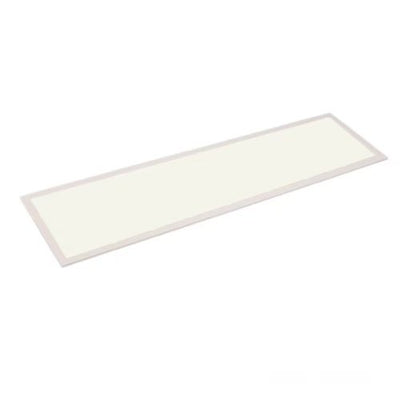
Backlit LED panels with high efficacy and UGR<19 – for compliant office, school and industrial lighting:

Recommendations by sector
Office and screen workstations
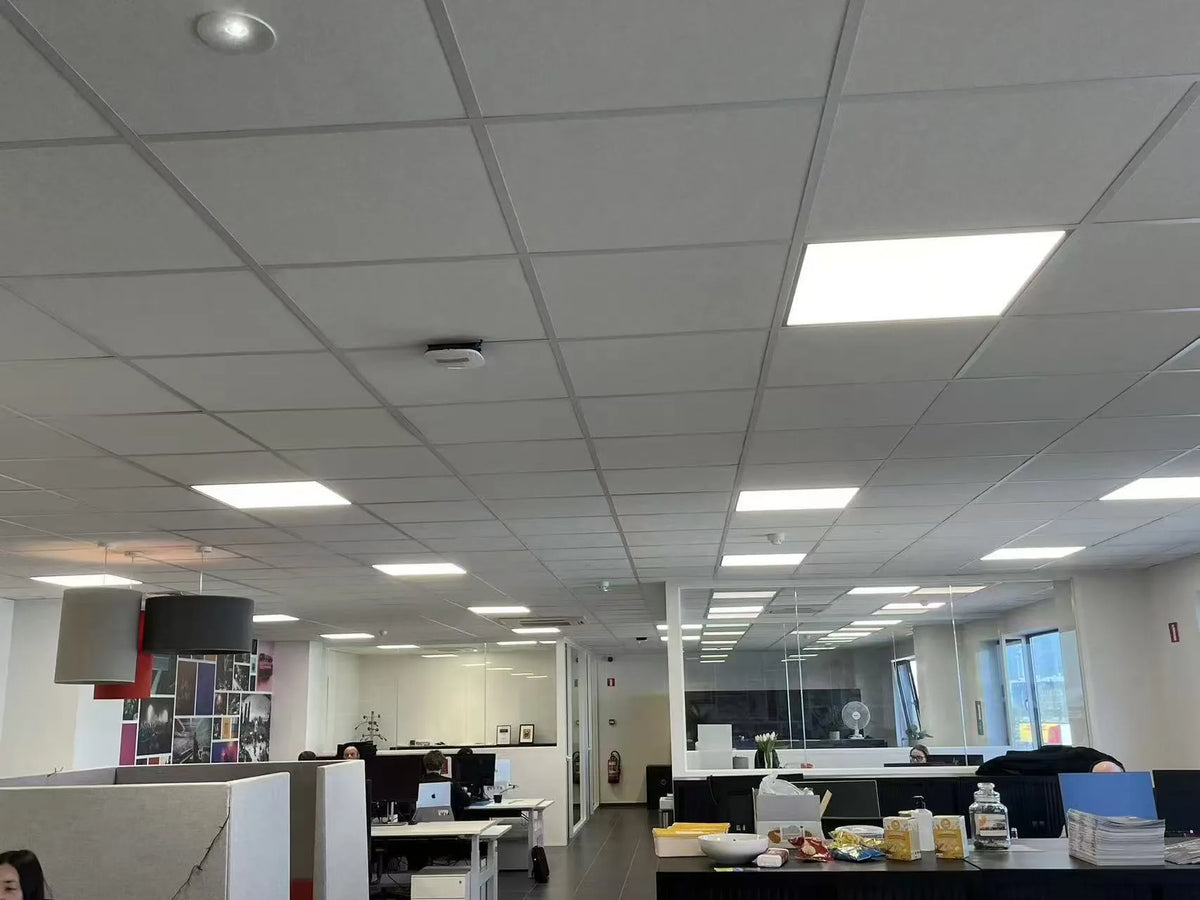
EN 12464-1 requires UGR ≤ 19 here. Backlit panels with certified UGR<19 are the safe choice; edge-lit can achieve it too but is usually more expensive for lower efficiency. Our LED panels include backlit models in all standard formats (see Office Lighting).
Industry and production
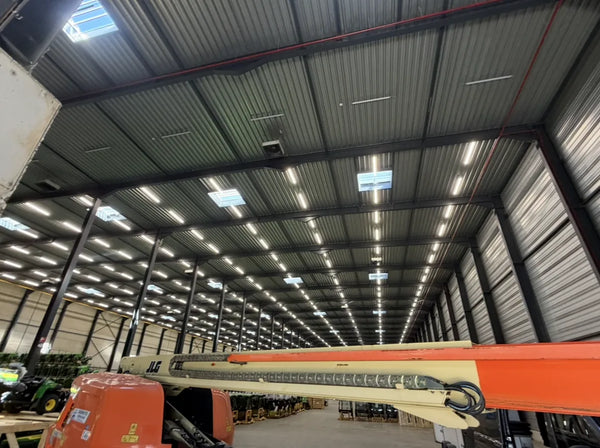
Production halls need 300–500 lx depending on the task, UGR 22 and Ra 80. Backlit panels meet this reliably. With dust, moisture or vibration, choose LED tri-proof lights with IP65 instead.
Logistics and warehouses
Backlit panels suit ceiling heights up to about 5 m; higher up, LED high bays or linear systems are better (see Warehouse Lighting). The yellowing risk of edge-lit technology matters here, as ceiling installations are hard to reach.

Schools, hospitals and public buildings
Flicker-free light, UGR<19 and Ra ≥ 80 are the planning requirements. Backlit panels with quality drivers meet them and lower running costs (see School Lighting and Healthcare Lighting).
Reception, showroom and design areas
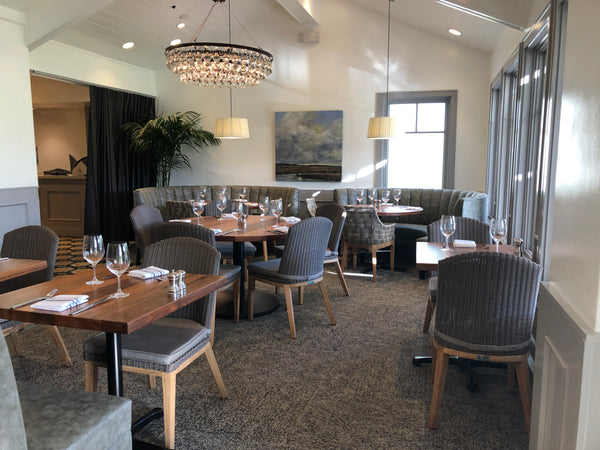
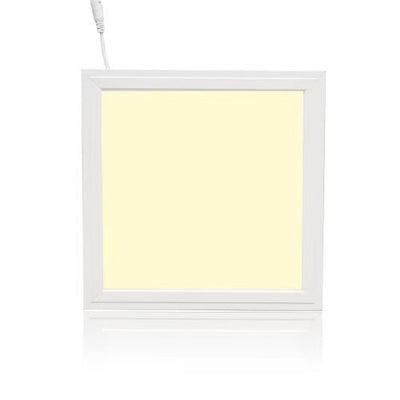
Here edge-lit plays to its strengths: the ultra-slim build allows elegant ceiling integration. With few operating hours and high design demands, edge-lit is a valid choice. Colour temperature advice: LED Colour Temperature.
Damp locations and outdoors
Neither backlit nor edge-lit panels are designed for damp locations or outdoor use. These need luminaires with at least IP65 (see IP Ratings Explained), such as tri-proof lights 150 cm.
LED panels for reception and design applications – compact, slim, 5-year warranty:

TCO: what does operation really cost?
Backlit panels with high efficacy use noticeably less electricity for the same light. Example: 50 panels of 36W (backlit) vs. 50 of 40W (edge-lit) for the same output, 3,000 hours a year and €0.30/kWh: around €180 saved per year, €1,800 over 10 years – before yellowing-related replacements. Backlit panels of comparable quality are also usually cheaper to buy.
Installation and safety
LED panels are recessed (grid ceilings), surface-mounted (with a frame) or suspended. The 230V connection must be made by a qualified electrician (see Connecting an LED Light Fitting).
Frequently asked questions
What is the main difference between backlit and edge-lit?
Backlit: LEDs behind the diffuser shining straight forward. Edge-lit: LEDs at the side, with a light guide plate redirecting the light. Backlit is more efficient, edge-lit slimmer.
Why are backlit panels more efficient?
The direct light path without a light guide plate avoids scatter losses, so they use less electricity for the same light.
Can edge-lit panels yellow?
Yes, budget models with polystyrene light guide plates can yellow under heat and UV. PMMA is more stable but costlier. Backlit panels are unaffected.
Which panel meets UGR<19 under EN 12464-1?
Both technologies can. Backlit panels with optimised optics are more widely and cheaply available in this class. Check for an explicit UGR<19 statement in the data sheet.
Are backlit panels suitable for grid ceilings?
Yes, in all standard formats (60×60, 62×62, 120×30, 120×60 cm). For ceilings without a grid, surface frames or suspension kits are available.
Which panel suits industrial halls and warehouses?
Backlit panels up to about 5 m. Higher up or in damp areas, LED high bays or tri-proof lights.
How long do backlit panels last compared with edge-lit?
Backlit typically 50,000–70,000 hours (L70), edge-lit 40,000–60,000 hours, with LGP quality further affecting perceived light quality.
Can backlit panels be dimmed?
Yes, if the driver supports it (DALI, 0–10V or TRIAC). Many Clightstore panels have power-adjustable drivers. See 0-10V, 1-10V and TRIAC.
Clightstore prepares a free DIALux light plan with EN 12464-1 compliance check, product recommendation and quotation. EU-wide delivery in 2–5 working days, up to 5 years' warranty.
Request free light planning