LED Drivers Explained: Specifications, Flicker and Brand Comparison
LED drivers explained: key specifications, flicker and surge protection, inrush current per breaker and a comparison of Philips, Mean Well, Osram, Tridonic and Sosen.
The driver is the component that decides the lifetime, flicker and failure rate of an LED luminaire. The LEDs themselves often last 50,000 hours and more; in practice, the driver usually fails first. When comparing luminaires, look not only at watts and lumens but at the driver behind them. This guide explains what makes a good LED driver and how brands such as Philips, Mean Well, Osram, Tridonic and Sosen differ.
- The driver converts mains voltage into the constant current the LEDs need.
- Key values: power factor above 0.9, low ripple (flicker-free), surge protection, permitted temperature and lifetime.
- Outdoor luminaires need high surge protection (typically 6–10 kV), because lightning and switching surges destroy drivers.
- Inrush current determines how many luminaires may be connected to one circuit breaker.
- Branded drivers cost more but significantly reduce failure rate and flicker.
What does an LED driver do?
LEDs need a constant current at low DC voltage. The driver produces this from 230V AC, regulates it as temperature changes and, for dimmable luminaires, provides the interface (1-10V, 0-10V, DALI). Industrial and outdoor luminaires almost always use constant-current drivers; constant-voltage power supplies (12V/24V) are used for LED strips.
The key specifications
| Specification | Good value | Why it matters |
|---|---|---|
| Power factor (PF) | above 0.9 | Less reactive power and grid load |
| Harmonics (THD) | below 15–20% | Less interference in the grid |
| Ripple / flicker | as low as possible | No stroboscopic effect, no fatigue |
| Surge protection | indoor 2–4 kV, outdoor 6–10 kV | Protection against lightning and switching surges |
| Ambient temperature | e.g. -30 to +50 °C | Hall ceilings and outdoor areas get hot or cold |
| Efficiency | above 90% | Less heat, longer lifetime |
| Lifetime | 50,000 h and more at rated temperature | Often determines the lifetime of the whole luminaire |
How to read lifetime figures such as L80 or B10 is explained in LED Lifetime Explained.

Brand comparison: Philips, Mean Well, Osram, Tridonic, Sosen
| Manufacturer | Strengths | Typical use |
|---|---|---|
| Philips (Signify) | Very low failure rate, good dimming, DALI | Halls, sports, demanding projects |
| Mean Well | Robust, widespread, good value for money | Street and outdoor luminaires, industry |
| Osram / Inventronics | High surge protection, made for outdoors | Street lighting, floodlights |
| Tridonic | Precise control, DALI specialist | Offices, tri-proof, building control |
| Sosen | Industrial grade, 1-10V dimmable, lower cost | High bays, warehouses |
All these manufacturers deliver good quality. More important than the name is that the driver suits the application: temperature, surge, dimming and power.
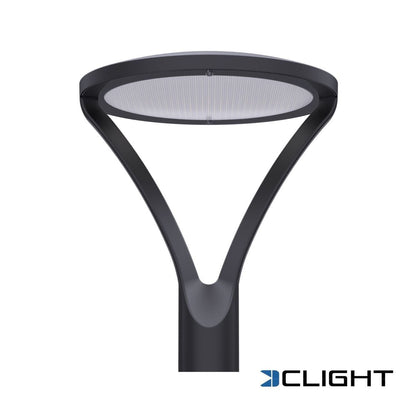
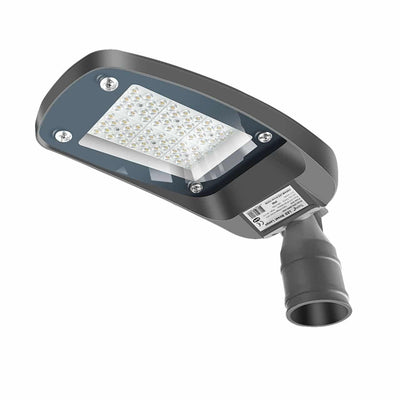
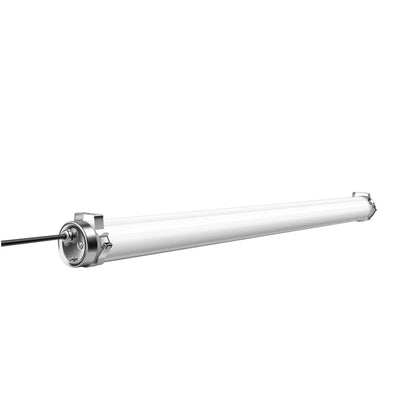
Luminaires with branded drivers
Inrush current: how many luminaires per breaker?
When switched on, LED drivers briefly charge their capacitors and draw a high inrush current. If too many luminaires are connected to one circuit breaker, it trips on switch-on even though the continuous load is far below its rating. Driver data sheets state how many units may be run on a B16 or C16 breaker. In large halls, inrush current limiters or splitting across several circuits help.
Flicker: the underrated quality factor
Cheap drivers smooth the current poorly. The light then flickers at 100 Hz, often invisible to the eye but measurable and visible on cameras. The results are fatigue, headaches and, at machines, dangerous stroboscopic effects. In sports halls with TV coverage and in production areas, a low-flicker driver is a must (see Production and Food Industry Lighting).
Frequently asked questions
Why is the driver often the first part of an LED luminaire to fail?
Electrolytic capacitors age with heat. High ambient temperature, poor cooling and surges shorten lifetime. Branded drivers use better components and are designed for higher temperatures.
Philips or Mean Well: which driver is better?
Both are high quality. Philips is especially common in high bay and sports lighting; Mean Well scores on robustness and price outdoors. What matters is suitability for temperature, surge and dimming.
Can an LED driver be replaced?
On many industrial luminaires, yes, if the replacement delivers the same output current and voltage. That is an advantage of luminaires with a separate driver.
What does 10 kV surge protection mean?
The driver withstands voltage spikes up to 10 kV, such as those from nearby lightning strikes or switching in the grid. For street and outdoor luminaires, this is an important value.
How can I tell if a driver is flicker-free?
From the data sheet (low ripple, flicker metrics) or simply with a phone camera: flickering luminaires show dark stripes on the screen.
We advise on the right luminaire and driver for your application and prepare a no-obligation quote at direct-import prices 2–4× below comparable branded products. 5-year warranty.
Request a quote