Car Park Lighting: Lux Levels, Pole Height and LED Planning
How to light car parks: EN 12464-2 lux values by traffic, pole height and spacing, street lights or floodlights, sensors, night dimming and colour temperature.
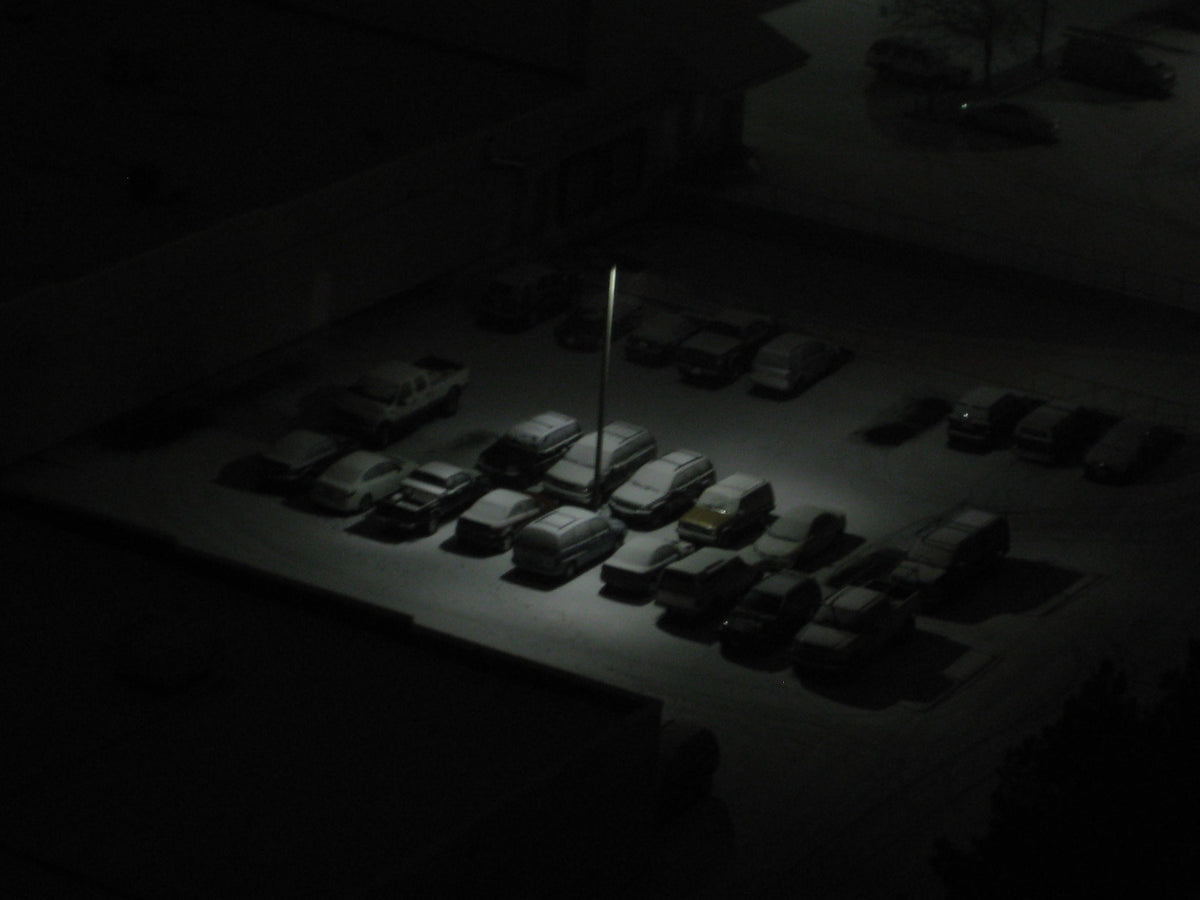
A well-lit car park is safer, more popular and deters thieves and vandals. For company car parks, supermarkets, hotels and business premises, EN 12464-2 sets guide values that are surprisingly low. What matters is therefore not maximum brightness but even light without dark corners and without glare for drivers and neighbours.
- Car park with light traffic: approx. 5 lux, medium traffic: approx. 10 lux, heavy traffic (supermarket, shopping centre): approx. 20 lux.
- Uniformity matters more than the average: dark zones between poles are the biggest safety risk.
- Typical pole height 6–8 m, pole spacing about 3 to 4 times the pole height.
- LED street lights with daylight sensor and motion dimming cut night-time consumption significantly.
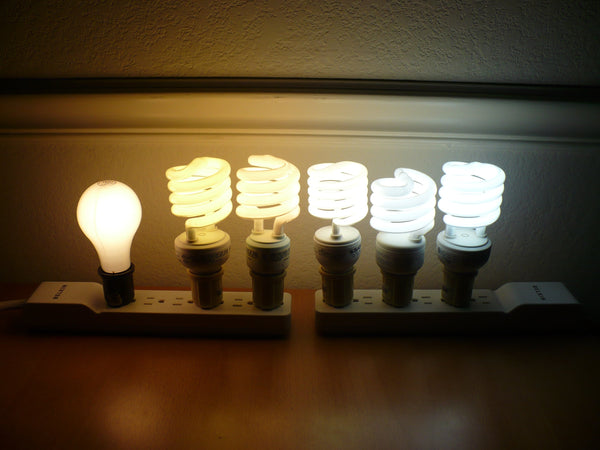
- 3000K to 4000K: neutral white improves face recognition, warmer tones disturb residents and insects less.
How many lux does a car park need?
| Car park type | Illuminance | Uniformity | Examples |
|---|---|---|---|
| Light traffic | approx. 5 lux | approx. 0.25 | Staff car park, small company yard |
| Medium traffic | approx. 10 lux | approx. 0.25 | Hotel, office complex, sports facility |
| Heavy traffic | approx. 20 lux | approx. 0.25 | Supermarket, shopping centre, venue |
| Pay stations and entrances | approx. 30–50 lux | higher | Entry and exit, barriers, pay machines |
The values come from EN 12464-2 for outdoor workplaces and are maintained values. Many operators deliberately plan a little more, especially along paths to entrances. Higher values apply to loading and work areas on business premises (see How Much Lux Do You Need?).

Pole height and spacing
| Pole height | Pole spacing (guide) | Luminaire power |
|---|---|---|
| 4–5 m | 12–18 m | 30–60W |
| 6 m | 18–24 m | 60–100W |
| 8 m | 24–32 m | 100–150W |
| 10–12 m | 30–45 m | 150–200W or floodlights |
Taller poles save foundations and cable runs but need more powerful luminaires with well-shielded optics. Existing poles can almost always be reused: LED street lights fit the usual 60 mm spigot diameter.
Luminaires for car parks
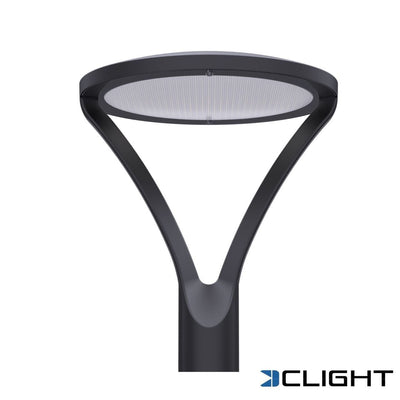
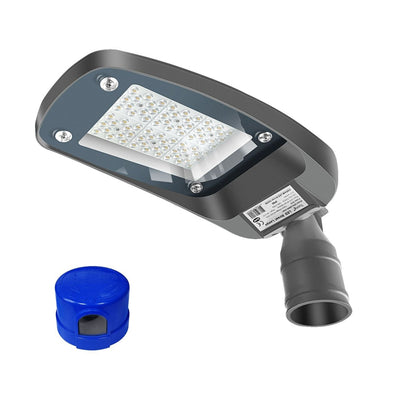
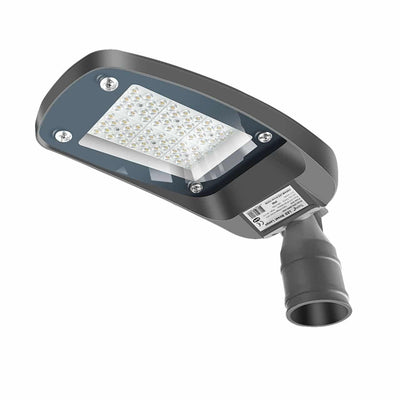
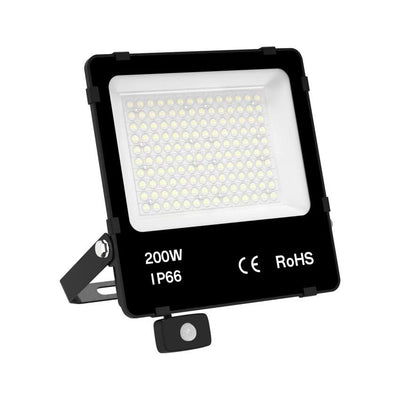
Street light or floodlight?
LED street lights have a wide, flat light distribution tailored to roadways and parking bays. They cause little glare and suit the classic car park with poles. LED floodlights make sense on building walls, on tall single poles or for adjacent loading and storage areas. If you use floodlights, aim them low so no light enters neighbours' windows or drivers' eyes.
Controls: save at night without going dark
- Daylight sensor: Lights switch on at dusk and off in the morning without resetting timers.
- Night dimming: Dim to 30–50% between 11 pm and 5 am when there is little traffic.
- Motion sensor: Briefly 100% on movement, then dimmed again. Ideal for staff car parks.
How dimming systems work is explained in our guide 0-10V, 1-10V and TRIAC.
Colour temperature and neighbours
4000K neutral white improves contrast and face recognition on cameras and is therefore common on company and supermarket car parks. In residential areas or near green spaces, 3000K or warmer is increasingly required, because warm light disturbs residents and nocturnal insects less. Choose luminaires with no upward light (upward light ratio close to 0%).
Worked example
Company car park with 10 poles: old 150W sodium lamps (approx. 170W with ballast) are replaced by 60W LED street lights, 4,000 operating hours a year, €0.28/kWh: saving 10 × 110W × 4,000 h = 4,400 kWh, around €1,230 a year. Night dimming adds another 20–30%. See LED Payback Period Calculator.
Frequently asked questions
How many lux does a car park need?
Depending on traffic, around 5, 10 or 20 lux under EN 12464-2. Entrances, exits and pay stations are lit more brightly.
How far apart can the poles be?
As a guide, 3 to 4 times the pole height, so around 18–24 m for 6 m poles. A lighting calculation gives the exact answer.
Can I reuse existing poles?
Almost always. LED street lights fit the usual 60 mm spigot and are lighter than old luminaires.
Which colour temperature is best for car parks?
4000K for company and supermarket car parks for better visibility, 3000K in residential and natural areas.
Is a motion sensor worthwhile in a car park?
Yes, especially in staff car parks with little traffic at night. The luminaires stay on dimmed and only ramp up on movement.
Send us a site plan with pole positions. We prepare a free DIALux calculation with luminaire selection and uniformity, plus a no-obligation quote at direct-import prices 2–4× below comparable branded products.
Request a lighting plan