IP Ratings Explained: IP44, IP54, IP65, IP66 – Which Rating for Which Luminaire?
What IP44, IP54, IP65 and IP66 really mean, how they are tested and which IP rating you need for warehouses, damp rooms, car parks, sports fields and facades.
The IP code according to IEC 60529 indicates how well a piece of equipment is protected against the ingress of foreign bodies, dust, and water – two digits that determine the service life and safety of your LED luminaires. As a rule of thumb: the harsher the environment, the higher both digits must be – for covered outdoor areas, IP44/IP54 is common in practice, whilst IP65 is the recommended standard for exposed outdoor and wet areas.
- The first IP digit (0–6) describes protection against foreign bodies and dust; the second digit (0–9K) describes protection against water.
- IP65 means complete dust protection and protection against water jets – in practice the standard for industrial and outdoor luminaires in exposed locations.
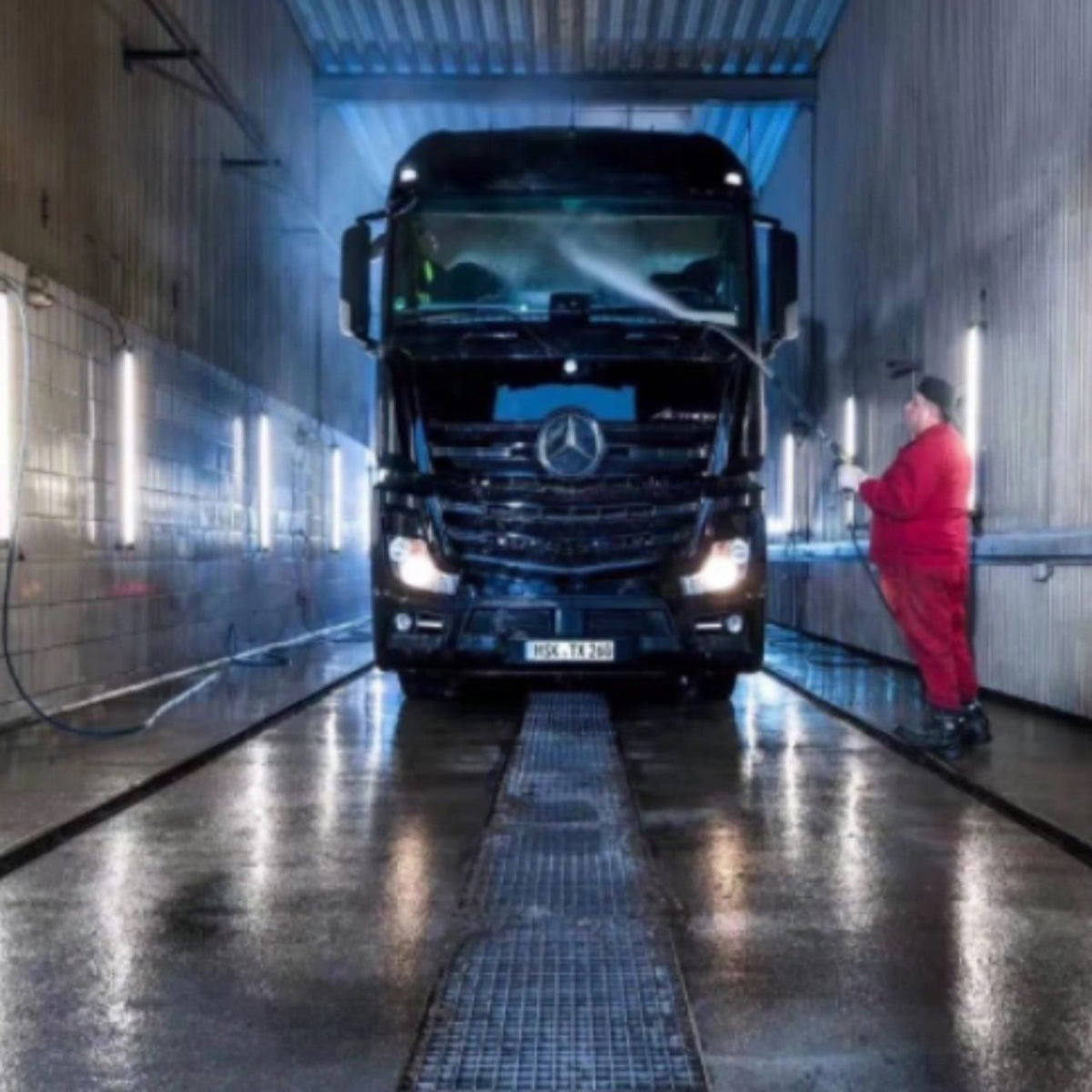
- IP66 additionally offers protection against powerful water jets (nozzle 12.5 mm, 100 l/min) and is in practice the standard in car washes, the food industry, and agriculture, where luminaires are regularly cleaned with powerful water jets.
- IPX7 (submersion) does not automatically include IPX5/IPX6 – for combined requirements there are dual ratings such as IP66/IP67.
- IP is not explosion protection: Ex zones additionally require ATEX or IECEx certification.
How to read the IP code
1st digit: solids & dust (0–6)
6 = dust-tight
2nd digit: water (0–9K)
5 = water jets, 6 = powerful water jets
- IP44objects > 1 mmsplashing water
- IP54dust-protectedsplashing water
- IP65dust-tightwater jets
- IP66dust-tightpowerful water jets
- IP67dust-tighttemporary immersion
How to Read the IP Code
The IP code consists of the letters "IP" followed by two digits. If a digit is omitted, it is replaced by "X" (e.g. IPX5 = no information on dust protection). The complete classifications according to IEC 60529 are set out below.
First Digit – Protection Against Foreign Bodies and Dust
| Digit | Degree of Protection | Test Condition (simplified) |
|---|---|---|
| 0 | No protection | – |
| 1 | Protection against foreign bodies ≥ 50 mm | Sphere Ø 50 mm must not penetrate |
| 2 | Protection against foreign bodies ≥ 12.5 mm | Sphere Ø 12.5 mm must not penetrate |
| 3 | Protection against foreign bodies ≥ 2.5 mm | Test probe Ø 2.5 mm |
| 4 | Protection against foreign bodies ≥ 1 mm | Test probe Ø 1 mm |
| 5 | Dust protected | Ingress of dust not fully prevented, but no harmful deposit; negative pressure test |
| 6 | Dust tight | No ingress of dust; vacuum test at 2 kPa negative pressure for 8 h |
Second Digit – Protection Against Water
| Digit | Degree of Protection | Test Condition (IEC 60529) |
|---|---|---|
| 0 | No protection | – |
| 1 | Protection against vertically dripping water | 1 mm/min for 10 min |
| 2 | Protection against diagonally dripping water (up to 15°) | 3 mm/min, tilt up to 15° |
| 3 | Protection against spraying water (up to 60°) | Spray head, 0.7 l/min, angle up to 60° |
| 4 | Protection against splashing water from all directions | Spray head, 10 l/min, from all directions |
| 5 | Protection against water jets | Nozzle Ø 6.3 mm, 12.5 l/min, distance 3 m, from all directions |
| 6 | Protection against powerful water jets | Nozzle Ø 12.5 mm, 100 l/min, distance 3 m, from all directions |
| 7 | Protection against temporary submersion | 1 m water depth for 30 min |
| 8 | Protection against continuous submersion | Manufacturer defines depth and duration (more stringent than IPX7) |
| 9K | Protection against high-pressure/steam jet cleaning | 80 bar, 80 °C, distance 0.1–0.15 m, 14–16 l/min |
IP44, IP54, IP65, and IP66 Compared Directly
| IP Rating | Dust Protection | Water Protection (Test) | Typical Application for Luminaires |
|---|---|---|---|
| IP44 | Foreign bodies ≥ 1 mm | Splashing water from all directions, 10 l/min | Stairwells, covered entrances, sanitary rooms without showers |
| IP54 | Dust protected (no harmful ingress) | Splashing water from all directions, 10 l/min | Workshops, low-dust production facilities, underground car parks |
| IP65 | Dust tight (vacuum test) | Water jets, nozzle Ø 6.3 mm, 12.5 l/min | Industry, warehouses, external facades, cold stores, car parks |
| IP66 | Dust tight (vacuum test) | Powerful water jets, nozzle Ø 12.5 mm, 100 l/min | Car washes, food production, agriculture, external masts |
IP44 – Splash Protection for Indoor Areas with Moisture
IP44 protects against foreign bodies from 1 mm and against splashing water from all directions. For purely office or dry warehouse environments this class is sufficient; however, as soon as cleaning water, steam, or dust come into play, IP44 is inadequate. In commercial projects, IP44 is today used almost exclusively in dry interior spaces with occasional moisture.
IP54 – Dust Protected and Splash Resistant
IP54 is the entry point for commercial applications: dust ingress is reliably limited, and the luminaire withstands splashing water from all directions. Typical applications include automotive workshops, woodworking businesses, and underground car parks where no direct water jet strikes the luminaire.
IP65 – The Industrial Standard
IP65 is completely dust tight and withstands a water jet from a 6.3 mm nozzle at 12.5 l/min from a distance of 3 m. This makes IP65 suitable for the majority of industrial and commercial applications: LED tri-proof lights in cold stores, outdoor luminaires on facades and car parks, and high bays in dust-intensive production environments.
IP66 – For Powerful Water Jets and Aggressive Environments
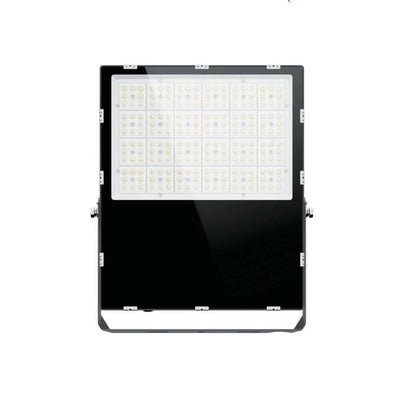
IP66 increases the flow rate compared to IP65 to 100 l/min through a 12.5 mm nozzle. In practice, this class is standard wherever luminaires are regularly cleaned with powerful water jets: car washes, abattoirs, dairies, poultry farms, and external masts for sports ground lighting. For cleaning with high-pressure washers or steam jets, IPX9K (to DIN 40050-9 / ISO 20653) is required. Our LED floodlights with IP66 are specifically designed for these requirements.
Which IP Rating for Which Application?
| Area | Recommended IP Rating | Note |
|---|---|---|
| Office & Retail | IP20 – IP40 | Dry interiors, no special requirements |
| Dry Warehouse | IP44 – IP54 | IP54 recommended where forklift trucks generate dust clouds |
| Dusty Production (Wood, Metal, Cement) | IP65 | Dust-tight design prevents fire risk from dust accumulation inside the housing |
| Workshop & Automotive | IP54 – IP65 | IP65 for wet cleaning of the facility |
| Underground Car Park | IP54 – IP65 | IK08 or IK10 additionally recommended (vandalism, vehicle contact) |
| Wet Room & Cold Store | IP65 | Check pressure equalisation element; consider condensation |
| Car Wash, Food Industry, Agriculture | IP66 | Regular cleaning with powerful water jets; check food-grade approval if applicable |
| Outdoor: Covered (Entrance, Canopy) | IP44 – IP54 | Check UV resistance of housing separately |
| Outdoor: Exposed (Facade, Car Park) | IP65 | Check UV resistance of housing separately |
| Sports Ground & Mast | IP66 | High mounting, weather exposure, IK10 recommended |
| Ex Zones (Zone 1/2/21/22) | IP66 + ATEX/IECEx | IP alone is insufficient; ATEX marking is a legal requirement |
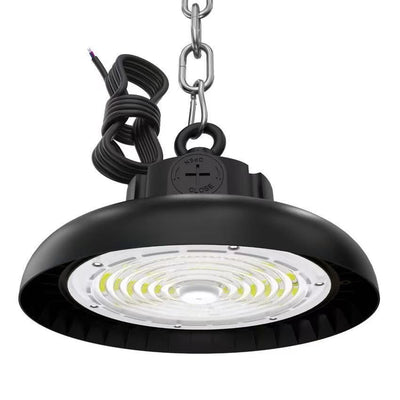
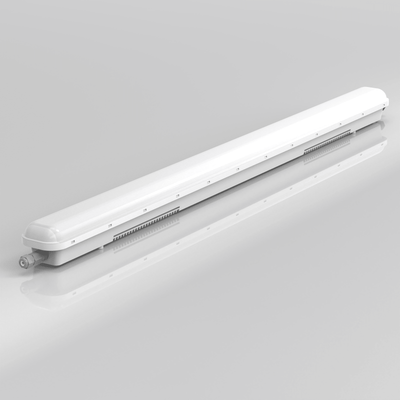
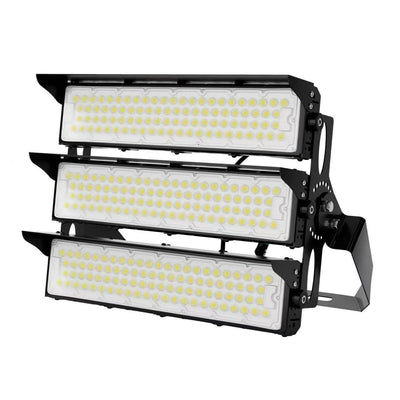
Suitable LED Luminaires for These Applications

Higher Is Not Automatically Better
A common misconception in planning: IPX7 (submersion to 1 m for 30 min) is not automatically better than IPX6. The tests are fundamentally different – a luminaire that passes the submersion test need not withstand the 100 l/min water jet test, and vice versa. Anyone who needs to cover both requirements needs a dual rating such as IP66/IP67.
Furthermore: higher IP classes mean denser housings that impede heat dissipation. An unnecessarily high IP class can raise the operating temperature of the LED driver and shorten its service life. Choose the IP rating to match the actual environmental conditions – not as high as possible across the board.
The 5 Most Common Installation Mistakes
- Incorrect cable glands: The IP class applies only to the closed housing. If cable entries are fitted with non-matching glands or without a locknut, the protection is void. Use only cable glands approved for the relevant IP class and cable diameter.
- Incorrect mounting position: Some luminaires are tested for the stated IP class only in a specific mounting orientation (e.g. ceiling, not wall). Check the datasheet for permissible mounting orientations before installing the luminaire sideways or with a downward-opening aperture.
- Condensation inside the housing: Temperature fluctuations create pressure differentials that pump moisture into the housing – even with IP65. High-quality luminaires feature a pressure equalisation element (membrane vent) that allows pressure equalisation without admitting water. Without this element, condensation accumulates and damages the driver and LED board.
- Damaged seals during installation: EPDM or silicone seals can tear or shift when screws are tightened. After installation, check that the seal sits evenly and replace any damaged seals immediately.
- Confusing IP class with ATEX: In potentially explosive atmospheres (spray booths, grain silos, petrol stations), IP protects against dust and water – not against ignition sources. Without ATEX certification to Directive 2014/34/EU, operating a luminaire in Ex zones is illegal and life-threatening.
IP Rating and IK Impact Resistance
The IP code says nothing about mechanical resistance. For this purpose, the IK designation exists according to IEC 62262, which specifies the impact energy in joules that a housing can withstand:
- IK07: 2 Joules – sufficient for lightly used interior spaces without elevated vandalism risk.
- IK08: 5 Joules – sufficient for underground car parks and industrial facilities under normal operation.
- IK10: 20 Joules – recommended for sports grounds, public areas, and wherever vandalism or ball contact is possible.
For sports ground lighting and underground car parks, you should therefore always check both the IP class and the IK value in the datasheet. Our LED high bays are available in various IK ratings.
Our LED Luminaires by IP Rating
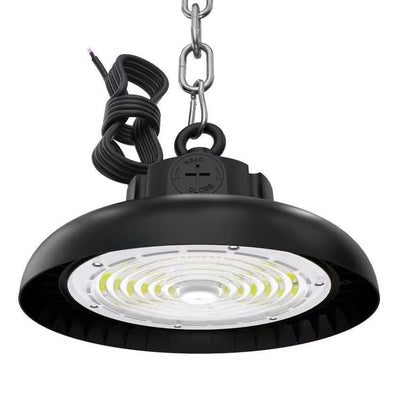
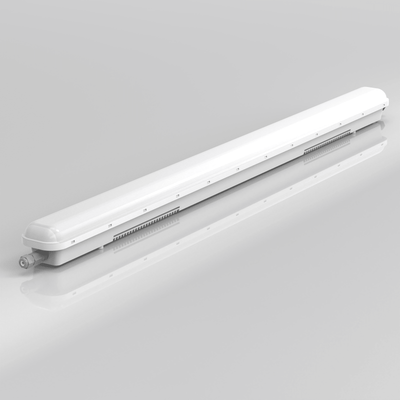
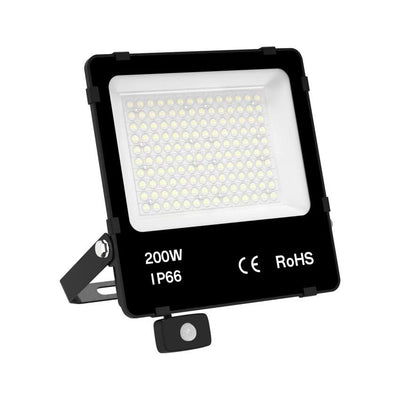
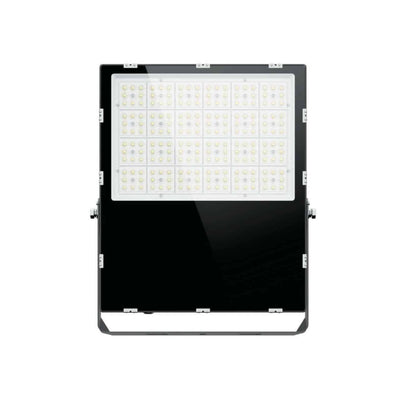
Below you will find a selection of our luminaires covering the protection classes described in this article – from IP65 high bays to ATEX-certified industrial luminaires for Ex zones. All products are directly imported and are available with up to 5 years' warranty.
High Bay, Workshop & Tri-Proof (IP65)

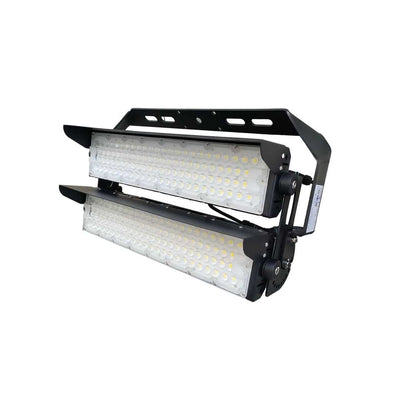
Outdoor, Car Park & Sports Ground (IP66)
Extreme Environments: IP69K and ATEX
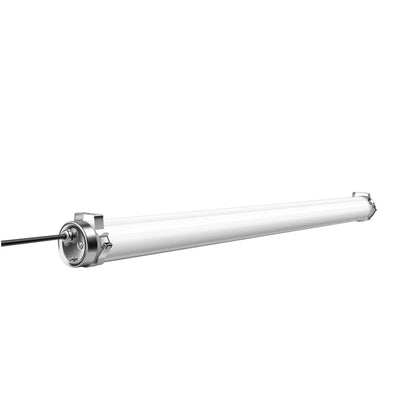
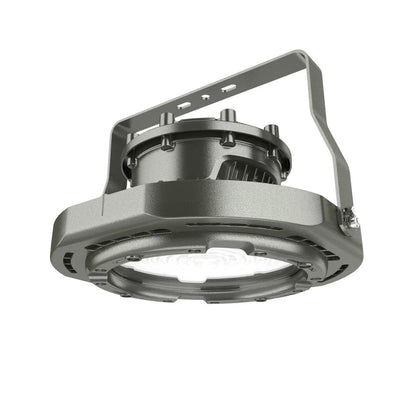
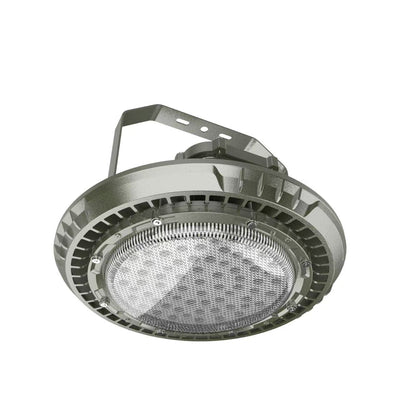
For livestock buildings, cold stores with ammonia, and areas requiring high-pressure cleaning, our ammonia-resistant tri-proof light with IP69K is the appropriate choice. For potentially explosive atmospheres, you will find ATEX-certified high bays.
Frequently Asked Questions About IP Ratings
Is IP65 waterproof?
IP65 is not "waterproof" in the sense of submersion, but rather protected against water jets. The test is carried out with a 6.3 mm nozzle at 12.5 l/min from a distance of 3 m from all directions. For brief submersion, IPX7 would be required; for continuous submersion, IPX8. For typical outdoor and industrial applications, however, IP65 is entirely sufficient.
What is the difference between IP44 and IP54?
Both classes offer the same water protection (splashing water from all directions, 10 l/min). The difference lies in dust protection: IP44 protects against foreign bodies from 1 mm but allows small amounts of dust to enter. IP54 is dust protected – ingress of dust is not fully prevented, but no harmful deposit may form on live parts. In dusty production environments, IP54 is therefore the recommended minimum requirement.
Which IP rating for a warehouse?
This depends on the use. In a dry warehouse without dust generation, IP44 is sufficient. As soon as forklift trucks generate dust clouds or the facility is occasionally wet-cleaned, we recommend IP54 to IP65. For cold stores and deep-freeze warehouses, IP65 is common in practice, as condensation and cleaning water are present.
Is IP65 sufficient for outdoor use?
For covered outdoor areas such as entrances or canopies, IP44 or IP54 is often already sufficient. For exposed outdoor applications – facade lighting, car parks, freestanding luminaires – IP65 is recommended. Where luminaires are regularly cleaned with powerful water jets or are exposed to powerful water jets (e.g. external masts, car washes), you should choose IP66. Additionally, note the UV resistance of the housing material, as this is not covered by the IP code.
What does a dual rating such as IP66/IP67 mean?
A dual rating means that the luminaire has passed both tests. IPX6 (powerful water jets, 100 l/min) and IPX7 (submersion) are different tests that do not mutually include one another. A luminaire rated IP66/IP67 is protected against both 100 l/min water jets and 30-minute submersion at 1 m depth. This combination is relevant for areas where flooding and powerful water jets can occur simultaneously.
Which IP rating is recommended for cold stores?
For cold stores and deep-freeze warehouses, IP65 is common and recommended in practice, as condensation, cleaning water, and temperature fluctuations occur. Ensure that the luminaire features a pressure equalisation element that prevents moisture from being drawn into the housing through pressure changes. For areas with regular wet cleaning, we recommend IP66. Also check whether the luminaire is approved for operation at sub-zero temperatures (e.g. −20 °C).

Our team supports you with a free DIALux light planning service – tailored individually to your premises and requirements. We determine the appropriate IP rating, calculate the optimum number of luminaires, and provide you with a no-obligation quotation at direct import prices that are 2 to 4 times lower than comparable branded products. Delivery throughout the EU, 5 years' warranty on all luminaires.
Request Free Light Planning