LED Lifetime Explained: L70, L80, B10 and Real-World Durability
What 50,000 hours really means: L and B values decoded, hours converted into years per shift pattern, what shortens LED lifetime and how to check data sheet claims.
"50,000 hours" appears on almost every LED data sheet. What the number actually means is rarely explained. An LED seldom fails suddenly; it slowly gets dimmer. That is why lifetime is stated with L and B values, and those values decide whether your hall is still lit to standard after eight years.
- L value = how much light remains after the stated hours. L80 means at least 80% of the initial luminous flux.
- B value = how many luminaires may fall below that. B10 means at most 10%, B50 means up to half.
- L80B10 50,000 h is a far stricter claim than L70B50 50,000 h, although both say "50,000 hours".
- 50,000 hours is around 20 years in single-shift operation, around 12 years in two shifts and just under 6 years running 24/7.
- The weakest component is almost always the driver, not the LED. Heat is the biggest lifetime killer.
Why an LED doesn't "burn out"
An incandescent lamp or fluorescent tube has a clear end of life: the filament or electrodes fail and the lamp goes out. An LED instead loses luminous flux slowly over the years as phosphor and chip age. The luminaire keeps working, it just stops being as bright. In practice the question is not "when will it go out?" but "when is it too dark for the task?".
L and B values explained
| Rating | Meaning | Assessment |
|---|---|---|
| L70B50 | After X hours, half of the luminaires still give at least 70% light | Minimum rating, typical for lamps |
| L80B50 | Half still give at least 80% light | Solid for commercial use |
| L80B10 | 90% of luminaires still give at least 80% light | Good for industry and halls |
| L90B10 | 90% of luminaires still give at least 90% light | Very high quality, for designs with little reserve |
Some manufacturers also state a C value: the share of luminaires that fail completely by that point. If the B value is missing, B50 is usually meant. Never compare data sheets on hours alone.
Where the hours come from
Nobody actually tests a luminaire for 50,000 hours; that would be almost six years of continuous operation. The LEDs are tested to the LM-80 method for at least 6,000 hours, and the curve is then extrapolated using TM-21. That projection may not exceed six times the actual test duration. Reputable claims therefore name a test basis; dubious ones just quote a round number.
How many years is 50,000 hours?
| Operation | Hours per year | 50,000 h equals | 100,000 h equals |
|---|---|---|---|
| Office, 1 shift (10 h, 250 days) | 2,500 | approx. 20 years | approx. 40 years |
| Warehouse, 2 shifts (16 h, 250 days) | 4,000 | approx. 12.5 years | approx. 25 years |
| Production, 3 shifts (24 h, 300 days) | 7,200 | approx. 7 years | approx. 14 years |
| Continuous 24/7 (car park, tunnel) | 8,760 | approx. 5.7 years | approx. 11.4 years |
| Sports pitch (evenings, approx. 4 h, 250 days) | 1,000 | approx. 50 years | – |
For comparison: a T8 fluorescent tube on a magnetic ballast typically lasts 15,000–20,000 hours, a mercury vapour lamp 12,000–16,000 hours and a sodium vapour lamp 24,000–32,000 hours. Anyone still changing lamps from a cherry picker in a 10 m hall saves not only electricity with LED but above all maintenance call-outs (see LED Payback Period Calculator).

What shortens lifetime in practice
1. Heat
Heat is the most important factor. As a rule of thumb for the electrolytic capacitors in the driver, every 10 °C of extra operating temperature roughly halves their life. Check the permitted ambient temperature range (Ta) in the data sheet. Our high bays, for example, are rated for −20 to +55 °C. Directly under an uninsulated hall roof in summer it can get close to that; suspend the luminaire rather than mounting it straight under the sheeting.
2. The driver
The LED chips usually outlast the electronics that power them. That is why a branded driver (such as Philips or Sosen) with surge protection pays off. Outdoors and on long cable runs, voltage spikes from lightning or switching are a common cause of failure; there the driver should withstand at least 4 kV, ideally 6 kV or more.
3. Dirt, moisture and aggressive air
Dust on heatsinks hinders heat dissipation, while moisture and ammonia attack electronics. For such environments choose the right protection rating (IP Ratings Explained) and corrosion-resistant housings.
4. Cheap retrofit lamps
A small lamp with an E27 base has little room for cooling. Integrated LED luminaires with a large aluminium heatsink therefore usually reach much longer lifetimes than screw-in lamps.
Switching cycles are not a problem
Unlike fluorescent tubes, frequent switching hardly affects an LED. Motion and presence sensors are therefore the most sensible addition for saving operating hours.
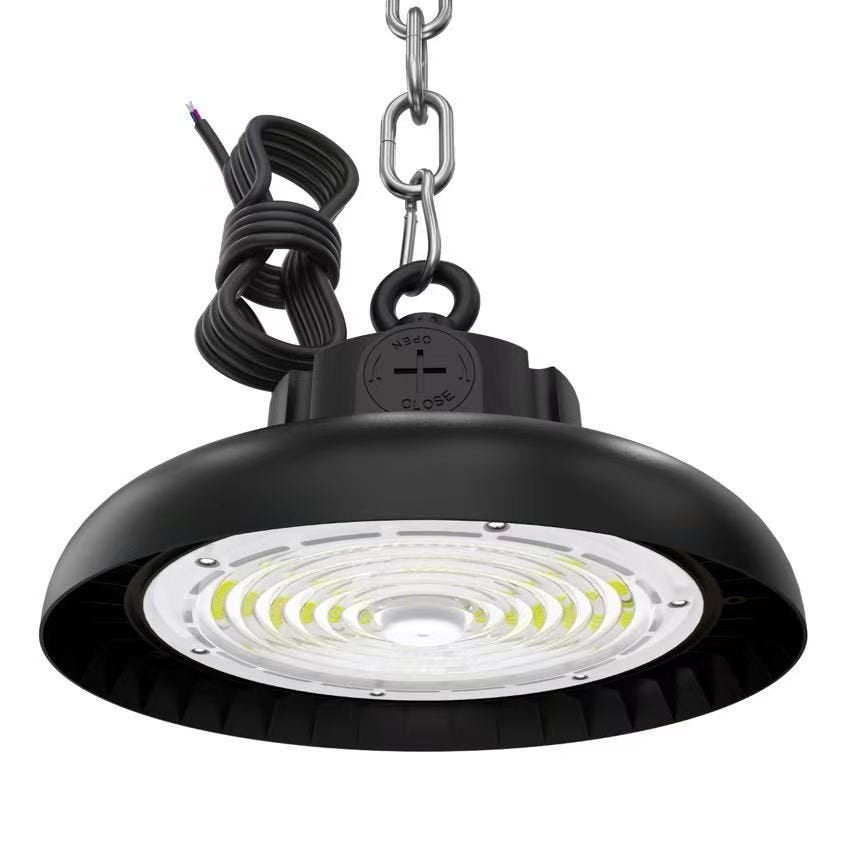
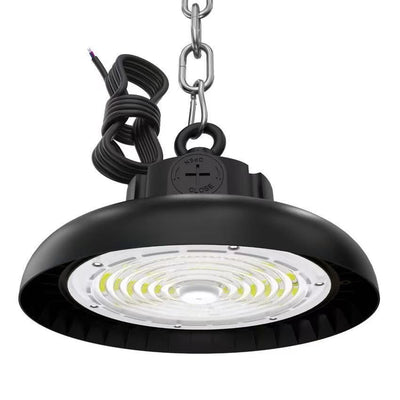
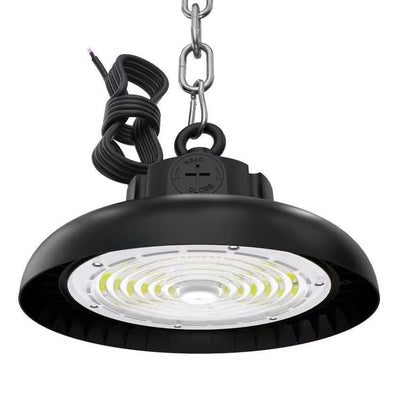
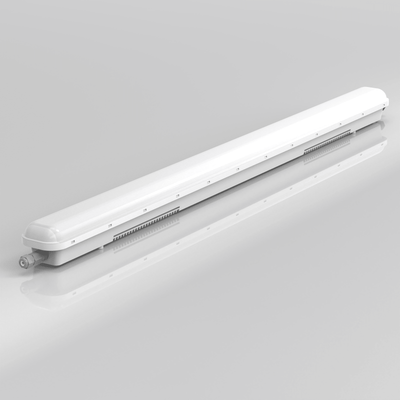
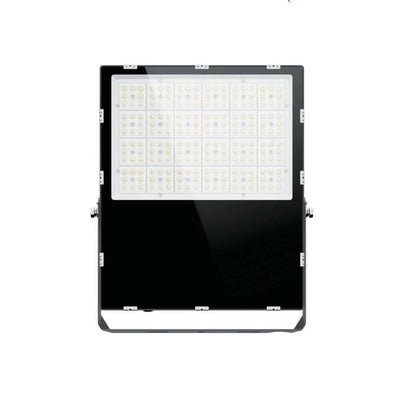
Luminaires with branded drivers and 50,000 hours lifetime
Lifetime in lighting design: the maintenance factor
Because an LED installation loses light over time, designs to EN 12464-1 are based not on the new value but on the maintained value. The maintenance factor, typically 0.7 to 0.8, accounts for lumen depreciation and soiling. In concrete terms: if you need 300 lux permanently, you design for around 375–430 lux when new. A luminaire rated L80B10 allows a higher maintenance factor than one rated L70B50, so you need fewer luminaires for the same result. Reference values per area can be found under How Much Lux Do You Need?
A practical side effect: dimmable luminaires can be dimmed to the level actually needed at the start and turned up gradually over the years (constant light output). That saves electricity and compensates for the light loss.
Lifetime is not the same as warranty
Lifetime is a statistical forecast for luminous flux. A warranty is a promise covering defects. We give a 5-year warranty on the complete luminaire, including driver and LED module. That covers early failures, exactly the phase in which faulty components show up. A 50,000-hour claim without a warranty behind it is worth little.
Checklist: how to check lifetime claims
- Ask for L and B values: "50,000 h" alone is not enough. Ask for Lxx Byy.
- Check the ambient temperature: Does the claim apply at 25 °C or also at your hall temperature?
- Look at the driver: Manufacturer, surge protection, warranty on the driver.
- Compare warranties: 5 years on the complete luminaire is a good commercial standard.
- Consider the mounting position: Distance from the roof, air circulation, cleaning of heatsinks.
Frequently asked questions
How long do LED lights really last?
High-quality LED luminaires reach 50,000 to 100,000 operating hours before the luminous flux falls to 70–80%. In single-shift operation that is around 20 years, running continuously around 6 years. Simple retrofit lamps are often rated at 15,000 to 25,000 hours.
What does L70B50 mean?
After the stated number of hours, at least half of the luminaires still deliver 70% of their initial luminous flux. It is the weakest common rating; L80B10 is considerably more demanding.
Does an LED switch off after 50,000 hours?
No. It keeps working, just with less light. Whether it then needs replacing depends on whether the illuminance is still sufficient for the task.
What fails most often in LED luminaires?
The driver. Heat, voltage spikes and low-grade capacitors are the most common causes. A branded driver with surge protection and good heat dissipation extend lifetime the most.
Does frequent switching cause damage?
Hardly at all. LED luminaires tolerate a very high number of switching cycles. Sensors that turn off the light when nobody is there even extend lifetime in years, because fewer operating hours accumulate.
Is it worth replacing an old installation that still works?
Usually yes, if fluorescent, mercury vapour or sodium vapour technology is still installed. On top of the lower electricity use, lamp replacement costs disappear. How quickly that pays off is shown in our guide Modernising LED Lighting.
We select luminaires with the right driver and temperature range for your project, design with the correct maintenance factor in DIALux and prepare a no-obligation quote at direct-import prices 2–4× below comparable branded products. 5-year warranty, EU-wide delivery in 2–5 working days.
Request a quote