LED Lighting Trips the Breaker or RCD? Inrush Current and Leakage Explained
Why LED lighting trips circuit breakers and RCDs: inrush current of LED drivers, maximum number of drivers per B16 or C16 breaker, leakage currents per RCD, switch-on transients and practical solutions for electricians.
New LED lighting installed, and the breaker trips the moment the lights are switched on. Or the RCD drops out at random, sometimes days later. Both are common with LED, and both have a clear cause: the inrush current of LED drivers and the small leakage currents of their filters. This guide explains which device trips and why, how many luminaires you can put on one circuit and what to change so the installation stays on.
- First find out which device trips: the circuit breaker (MCB) reacts to overcurrent, the residual current device (RCD) to current leaking to earth. The causes and fixes are different.
- LED drivers draw a very short, high inrush current when switched on – often tens of amperes for less than a millisecond. With many drivers on one circuit, the peaks add up and a B-curve breaker trips.
- The driver datasheet states the maximum number of drivers per breaker (for example B16 or C16). Stay below it, split circuits or use an inrush current limiter.
- Every driver leaks a small current to earth through its EMC filter. Keep the total permanent leakage below about 30% of the RCD rating – roughly 9 mA on a 30 mA RCD.
- Random RCD trips are just as often caused by the installation itself: moisture in outdoor junction boxes, damaged cables or a neutral shared between two RCD groups.
Breaker or RCD: which one trips?
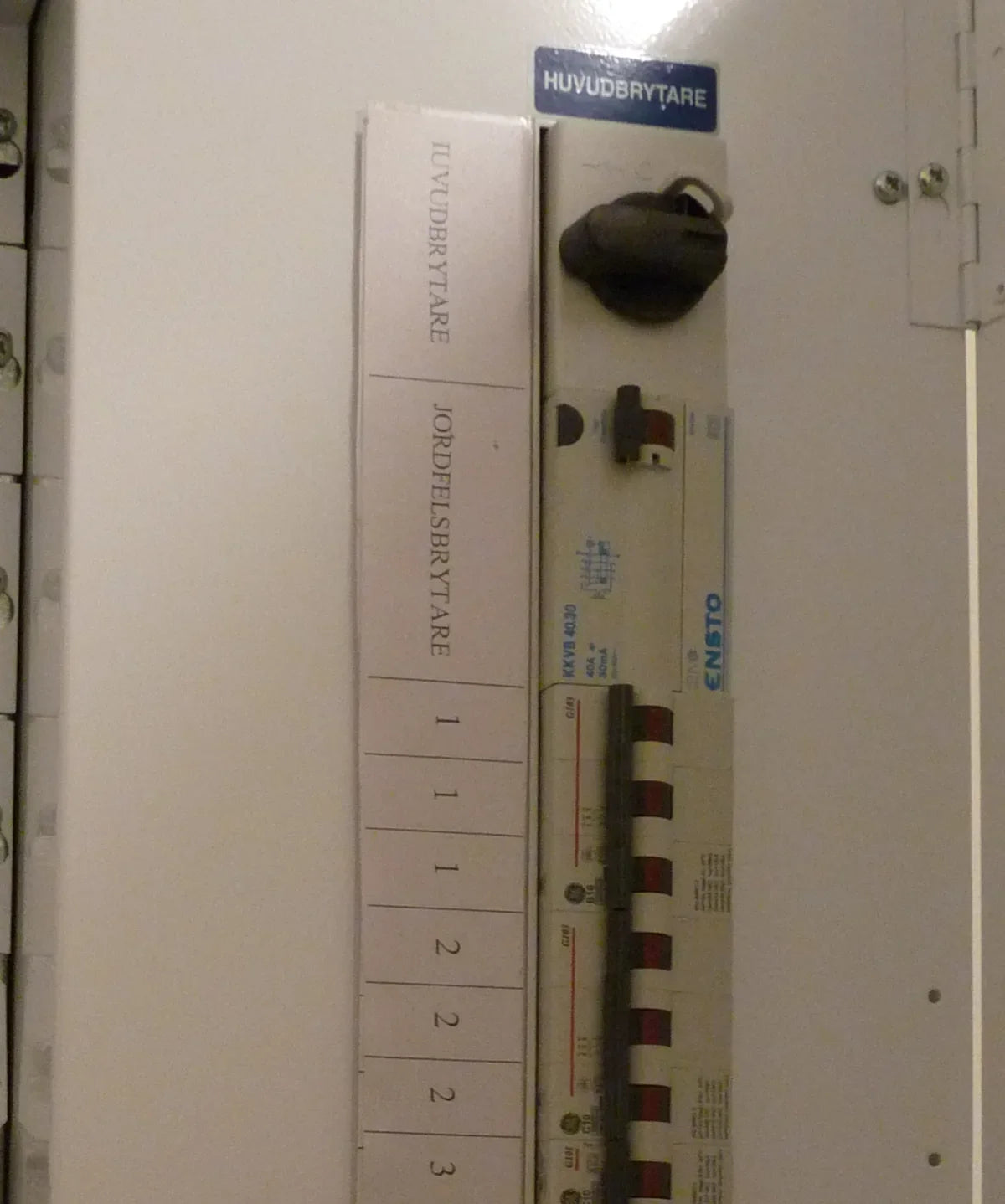
A distribution board holds two kinds of protective devices that trip for completely different reasons:
| Device | Reacts to | Typical LED cause |
|---|---|---|
| Circuit breaker (MCB), e.g. B16 or C16 | Overcurrent and short circuit in the phase conductor | Inrush current of many drivers switched on at the same time |
| Residual current device (RCD), e.g. 30 mA or 300 mA | Difference between the current going out and coming back – current leaking to earth | Sum of filter leakage currents, switch-on transients, moisture or wiring faults |
| Combined device (RCBO) | Both | Look at which indicator flagged, if the device has one |
Note exactly when it happens. A trip at the moment of switching on points to inrush current or a switch-on transient. A trip in operation, at night or after rain points much more often to leakage or moisture.

Why LED drivers have a high inrush current
An LED driver converts mains voltage to the DC current the LEDs need. At its input sits a smoothing capacitor and, in most drivers, a power factor correction stage. At the moment of switching on, that capacitor is empty and briefly behaves almost like a short circuit. For a fraction of a millisecond the driver draws a current many times higher than its operating current.
Driver datasheets state this as a peak value and a duration, for example 50 A at 250 µs for a driver of around 150W. That pulse is far too short to heat cables, but it can be enough to trigger the magnetic release of a circuit breaker. The peak is highest when the luminaire is switched on at the top of the sine wave, which is why the problem can appear only once in a while.
On one luminaire this is harmless. With twenty high bays on one circuit, switched by one contactor, the peaks of all drivers arrive at the same moment.
How many LED drivers per circuit breaker?
Good driver manufacturers state in the datasheet how many drivers may be connected to one breaker. These values are based on the inrush current and the trip characteristic of the breaker. An example of how such a table looks:
| Breaker | B10 | B16 | C10 | C16 |
|---|---|---|---|---|
| Max. drivers (example, approx. 150W driver) | 5 | 8 | 9 | 14 |
The values in this example are illustrative. Always use the table of the exact driver in your luminaire, because figures vary widely by brand and wattage. Note that the limit from inrush current is often reached long before the continuous current of the circuit is anywhere near the breaker rating: eight drivers of 150W draw only about 5–6 A in operation.
The type of breaker matters too. A B-curve breaker trips magnetically at three to five times its rated current, a C-curve breaker at five to ten times. A C-curve therefore tolerates more drivers, but it may only be used if the loop impedance of the circuit still ensures disconnection within the required time. That check belongs to the electrician and the applicable wiring rules – such as AREI in Belgium, NEN 1010 in the Netherlands, DIN VDE 0100 in Germany or NF C 15-100 in France.
Solutions for breakers that trip on switch-on
- Split the load. Spread the luminaires over more circuits so that each circuit stays below the maximum number of drivers.
- Switch in stages. Switch groups of luminaires with a short delay, for example via separate contactors or a lighting control system, so that the inrush peaks do not coincide.
- Use an inrush current limiter. A limiter module in the circuit damps the switch-on peak and allows many more drivers per breaker.
- Choose suitable switching devices. Contactors, relays and motion detectors must be rated for LED loads; otherwise their contacts can weld. Check the stated LED or capacitive load rating, not just the current in amperes.
- Choose drivers with low inrush current. Some drivers limit their inrush current actively. Compare the datasheet values before you buy. See LED drivers explained.
Why RCDs trip with LED lighting
Every LED driver contains an EMC filter that suppresses interference. Part of that filter consists of small capacitors from the conductors to the protective earth. Through them a small current flows permanently to earth – typically a fraction of a milliampere per driver. The datasheet lists this as leakage current or touch current.
For one luminaire this is negligible. An RCD, however, sees the sum of all drivers behind it. RCDs may trip at any value between 50% and 100% of their rated residual current. A 30 mA RCD can therefore trip from about 15 mA. That is why a margin is common practice: keep the permanent leakage below about 30% of the rated value.
| RCD rating | Guide value for total permanent leakage | Example: drivers at 0.5 mA each |
|---|---|---|
| 30 mA | approx. 9 mA | approx. 18 drivers |
| 100 mA | approx. 30 mA | approx. 60 drivers |
| 300 mA | approx. 90 mA | approx. 180 drivers |
Other equipment on the same RCD – computers, chargers, machines with frequency converters – adds its own leakage. Count it in.
On top of the permanent leakage come switch-on transients: at the moment of switching, the filter capacitors briefly charge, which causes a short pulse to earth. Overvoltages from switching operations or lightning nearby do the same. Very sensitive RCDs can react to this. RCDs with increased surge immunity – sold under names such as "SI", "HI" or "KV" depending on the manufacturer – are designed to ignore such short pulses while still protecting fully.
Solutions for RCDs that trip
- Spread the luminaires over several RCDs or protect each circuit with its own RCBO, so the leakage per device stays low.
- Use the right RCD type. Type A is the usual choice for electronic loads such as LED drivers; type AC is not suitable for many modern devices. Consider a variant with increased surge immunity where switch-on transients cause problems.
- Measure instead of guessing. A leakage current clamp around phase and neutral together shows the actual leakage of a circuit in operation.
- Check the wiring. A neutral conductor that is connected behind a different RCD than its phase, or neutrals shared between groups, makes an RCD trip regardless of the luminaires.
- Look for moisture. Outdoor luminaires with leaking cable glands or junction boxes below the required IP rating often cause trips after rain or at night due to condensation. See IP ratings explained.

Testing: take care with insulation measurements
An insulation resistance test at 500 V DC is part of commissioning. LED drivers contain electronics and surge protection components that can give misleading readings or be damaged during such a test. Follow the instructions of the driver or luminaire manufacturer: often the test is done with phase and neutral linked together against earth, or the luminaires are disconnected during the test. More on commissioning in Connecting LED light fittings step by step.
Planning a new installation
- Collect the driver data: inrush current, maximum number per breaker type and leakage current.
- Divide the circuits so each stays below the maximum number of drivers for its breaker.
- Calculate the leakage per RCD including other equipment, and keep it below about 30% of the rating.
- Choose switching devices rated for the LED load and, for large groups, plan staged switching or an inrush limiter.
- Check the power quality as well: with many drivers, power factor and harmonics also matter for cable and neutral loading. See Power factor and THD.
For hall lighting, the LED high bay guide helps with luminaire selection, and CE, ENEC, TÜV and GS explained covers which documents to request.
LED high bays with Sosen driver – CE, ENEC, RoHS, IP65, 5-year warranty:


Frequently asked questions
Why does my breaker trip only when the LED lights are switched on?
Because LED drivers draw a very high current for a fraction of a millisecond when their input capacitor charges. With many drivers on one circuit, the peaks add up and trigger the magnetic release of the breaker, even though the operating current is low.
How many LED luminaires can I put on one B16 breaker?
That depends on the driver, not on the wattage alone. The driver datasheet states the maximum number per breaker type. For larger drivers it is often fewer than ten per B16 – far below what the operating current would allow.
Should I simply replace the B breaker with a C breaker?
Only if the electrician has verified that the circuit still disconnects within the required time with a C-curve. That depends on cable length and loop impedance. Splitting the circuit or using an inrush limiter is often the safer solution.
Why does the RCD trip at night or after rain?
That usually points to moisture: condensation in outdoor luminaires, junction boxes or cable glands creates leakage to earth. Check the IP rating and sealing of all connections in the circuit.
Which RCD type is suitable for LED lighting?
Type A is the usual choice for electronic loads such as LED drivers. Where switch-on transients cause problems, a type A with increased surge immunity can help. The applicable wiring rules determine the required sensitivity.
Can an LED driver be faulty if the RCD trips?
Yes, a driver with an insulation fault can cause leakage to earth. Disconnect the luminaires one by one or measure with a leakage clamp to find out whether one luminaire or the sum of all of them is the cause.
Tell us which luminaires and how many you plan per circuit. We look up the inrush and leakage data of the drivers and prepare a free DIALux light plan. EU-wide delivery in 2–5 working days, up to 5 years' warranty.
Request advice and a quote