Hospital and Healthcare Lighting: Lux Levels, Hygiene and Night Operation
LED lighting for hospitals, care homes and medical practices: lux values, Ra 90 for examinations, hygiene and IP ratings, glare control, night dimming and savings.
In hospitals, care homes and medical practices, lighting has to do many jobs at once: doctors need bright, true-colour light for examinations, patients a calm, glare-free environment, and at night corridors must be safe to walk without disturbing sleep. Add hygiene and round-the-clock operation. This guide shows the EN 12464-1 values and what matters for luminaires in healthcare.
- Patient room: general lighting approx. 100 lux, reading approx. 300 lux, bedside examination approx. 1,000 lux.
- Examination and treatment rooms: 500 lux general, 1,000 lux at the examination point, Ra ≥ 90.
- Corridors: approx. 200 lux by day, approx. 50 lux dimmed at night.
- Luminaires with smooth, disinfectable surfaces and at least IP44; IP65 in hygiene areas.
- Corridors often run 24/7, so LED and controls pay back particularly quickly here.
Lux values in healthcare
| Area | Illuminance | Ra min. |
|---|---|---|
| Patient room, general lighting | approx. 100 lux | 80 |
| Patient room, reading light | approx. 300 lux | 80 |
| Bedside examination | approx. 1,000 lux | 90 |
| Examination and treatment room, general | approx. 500 lux | 90 |
| Examination point | approx. 1,000 lux | 90 |
| Nurses' station | approx. 300 lux | 80 |
| Corridors day / night | approx. 200 / 50 lux | 80 |
| Waiting area, practice reception | approx. 200–300 lux | 80 |
The values are based on EN 12464-1. Operating theatres have their own, much higher requirements and dedicated surgical lights, which are not covered here.

What matters in luminaires
- Colour rendering: Diagnosis and wound assessment require Ra 90 so that skin tone, redness and blood colour are recognised correctly.
- Hygiene: Smooth, closed surfaces that can be disinfected. IP65 in hygiene areas and washrooms.
- Glare control: Patients lying down look straight at the ceiling. Glare-free panels with UGR<19 or indirect light are essential (see UGR Value Explained).
- Flicker-free: High-quality drivers avoid headaches and interference with medical equipment (see LED Drivers Explained).
- Night operation: Dimmed, warm light in corridors and floor-level orientation lights disturb sleep less.
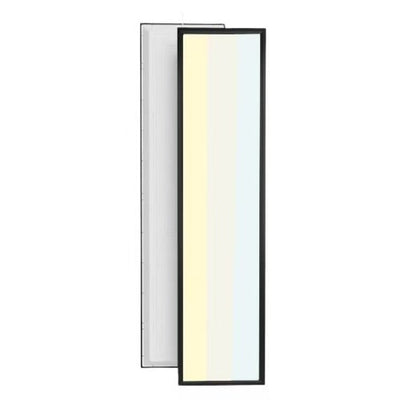
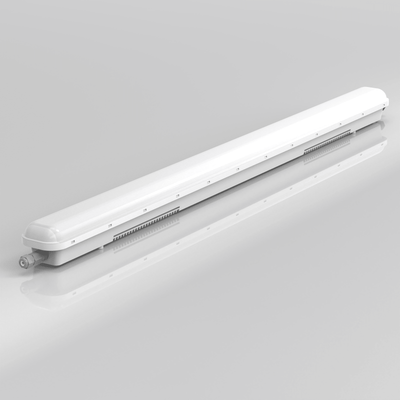
Luminaires for hospitals and practices


Medical practices and care homes
In medical practices, treatment rooms need the same values as in hospitals, while waiting areas can be homelier (3000K, 200–300 lux). In care homes, higher brightness during the day helps older people with orientation and reduces the risk of falls; in the evening, light should be warmer and dimmed. Emergency lighting is mandatory in all facilities (see Emergency Lighting).
Worked example: ward with a 24/7 corridor
Corridor with 40 fluorescent fittings 2 × 36W (approx. 85W), 8,760 hours a year, €0.30/kWh. Replaced by 40 LED luminaires of 36W, dimmed to 30% for 10 hours at night (averaging approx. 70% output): saving around 40 × (85W − 25W) × 8,760 h = 21,024 kWh, around €6,300 a year.
Frequently asked questions
How many lux does an examination room need?
500 lux general and 1,000 lux at the examination point, with colour rendering of Ra 90 or higher.
Which colour temperature in patient rooms?
3000K for a calm atmosphere, directional 4000K light for examinations. Tunable-white systems combine both.
What protection rating do hospital luminaires need?
In normal rooms IP20 to IP44 with a disinfectable surface; IP65 in hygiene and wet areas.
How bright must hospital corridors be at night?
Around 50 lux, dimmed and ideally warm white, so staff can work safely without waking patients.
Does this also apply to medical practices?
Yes, treatment areas have the same requirements. Waiting rooms and reception can be lit more homely.
Send us floor plans and room use. We prepare a free DIALux lighting plan to EN 12464-1 and a no-obligation quote at direct-import prices 2–4× below comparable branded products.
Request a lighting plan