Portugal: Network Access Tariffs Set to Fall in 2027 – What Businesses on Medium and Special Low Voltage Should Check
Portugal's regulator ERSE proposes lower network access tariffs for 2027: medium voltage −13.5%, special low voltage −13.2%. The final decision is due by 15 December 2026. What businesses should check.
On 15 October 2026 the Portuguese energy regulator ERSE proposed lower network access tariffs for 2027 on every voltage level in mainland Portugal: −13.5% for medium voltage, −13.2% for special low voltage, −8.1% for high voltage and −1.3% for very high voltage. These are proposals, not final tariffs: ERSE has to approve and publish the final tariffs by 15 December 2026, to apply from 1 January 2027. The network tariff is only one part of an electricity bill, and ERSE itself expects wholesale electricity prices to rise in 2027, so the effect on your own invoice depends on your contract.
- ERSE proposed on 15 October 2026 to lower the 2027 network access tariffs on all voltage levels (mainland Portugal), compared with the tariffs set for January 2026.
- Medium voltage (MT) and special low voltage (BTE) customers benefit most: −13.5% and −13.2%.
- The proposal is not final. ERSE approves and publishes the final tariffs by 15 December 2026, valid from 1 January 2027.
- ERSE expects wholesale electricity prices to rise in 2027, partly because of the Middle East conflict through the natural gas price.
- In the liberalised market, suppliers pass on the access tariffs and usually revise their prices in January. The final price also depends on the energy component and the supplier’s margin.
- LED does not depend on the tariff: the kWh you stop using are saved whatever the price. The euro value of each kWh depends on your total price per kWh.
What ERSE proposed for 2027
| Voltage level (mainland Portugal) | Access tariff 2026 vs 2025 (set) | Access tariff 2027 vs 2026 (proposal) |
|---|---|---|
| Very high voltage (MAT) | −2.9% | −1.3% |
| High voltage (AT) | −0.8% | −8.1% |
| Medium voltage (MT) | +1.8% | −13.5% |
| Special low voltage (BTE) | +2.7% | −13.2% |
| Normal low voltage (BTN) | +3.5% | −13.7% |
The 2027 figures do not include the reductions of general economic interest costs (CIEG) that electro-intensive customers receive. Normal low voltage (BTN) covers contracted power up to 41.4 kVA; special low voltage (BTE) is low-voltage supply above that, which is typical for larger shops, workshops and warehouses. Medium voltage is typical for large industrial sites. The Azores and Madeira have their own tariffs: for normal low voltage ERSE proposes increases of 0.9% and 1.1% there. The figures in this article are for mainland Portugal.
Why ERSE expects lower network tariffs
ERSE gives three reasons. The cost difference for electricity produced under guaranteed remuneration falls, because higher market prices allow that energy to be resold on better terms and because several guaranteed-remuneration schemes end, so the quantities fall. Tariff containment measures of about EUR 303 million are included. And the tariff debt of the electricity system falls by EUR 529 million to EUR 552 million at the end of 2027, the lowest value since 2010.
Why your invoice may still not fall
The network access tariff is one of three blocks in the regulated price, next to the energy component and the commercialisation component. In the liberalised market, where about 5.85 million customers were supplied in June 2026, suppliers apply the access tariffs to their customers and usually revise their prices in January, but the final price also depends on how the supplier buys energy and on its margin. ERSE itself says that wholesale electricity prices should rise in 2027, partly through the Middle East conflict and its effect on natural gas prices. For the roughly 780,000 customers in the regulated market, ERSE proposes an average increase of 1.5% for normal low voltage between December 2026 and January 2027. ERSE advises comparing offers at the start of the year with its price simulator.

What this means for lighting
A change in the tariff does not change how much electricity your lighting uses. What it changes is what each kWh costs you. That is why we do not give a euro saving from the tariff itself: use the price from your own invoice.
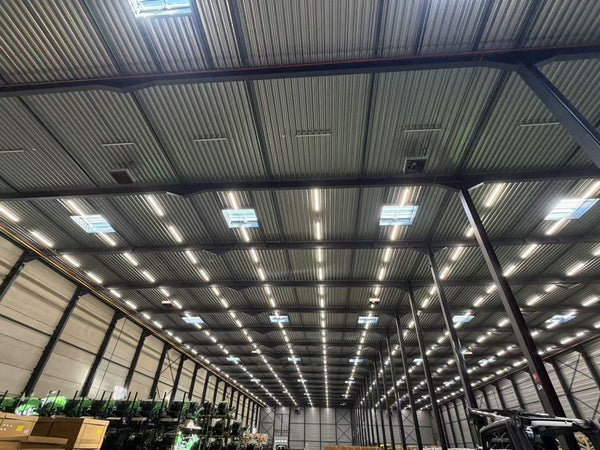
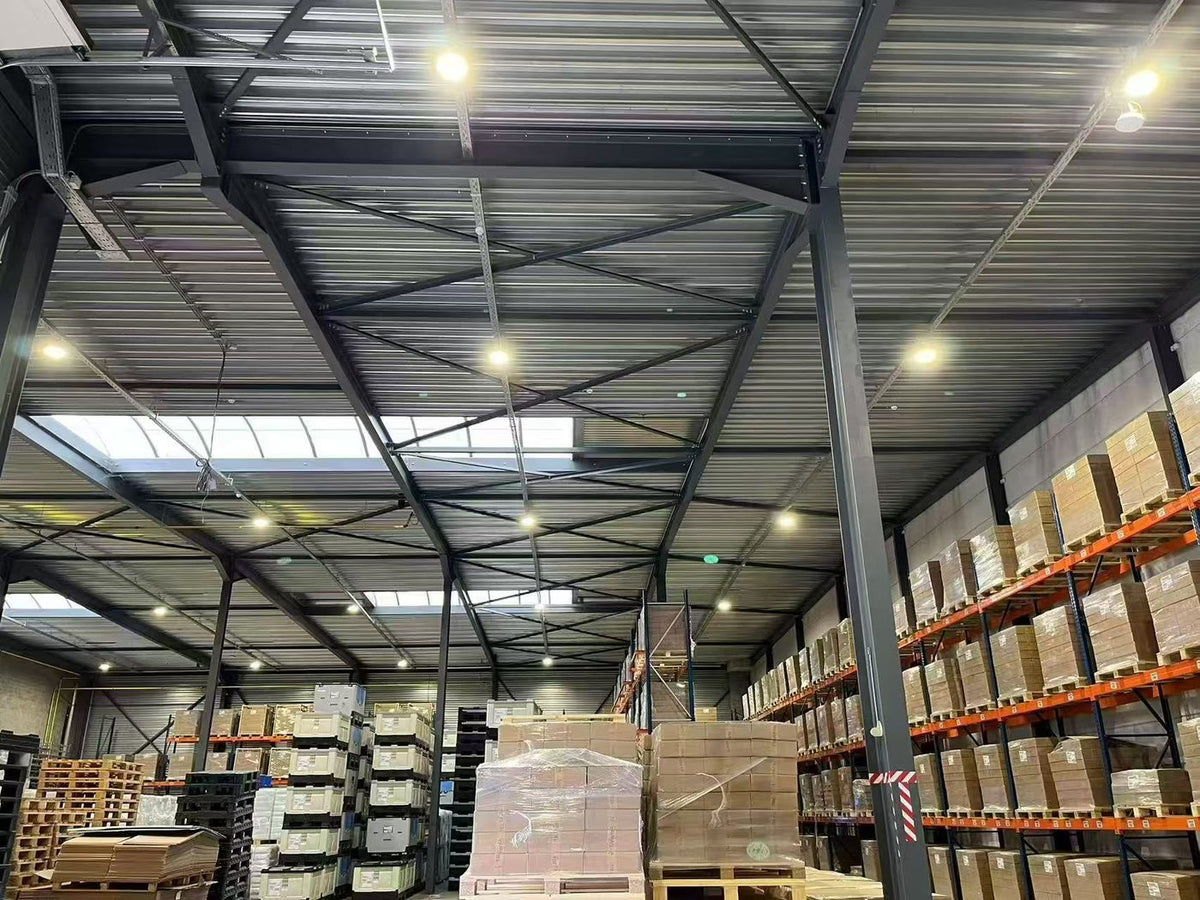
Worked example (illustrative assumptions): a hall with 40 discharge luminaires of 400W (about 440W with ballast), replaced by 40 LED luminaires of 150W, at 4,000 operating hours per year.
| Item | Value |
|---|---|
| Energy saving | (440 − 150) W × 40 × 4,000 h ÷ 1,000 = 46,400 kWh per year |
| Value of each EUR 0.01 per kWh of your total price | 46,400 kWh × EUR 0.01 = EUR 464 per year |
| Example at EUR 0.12 per kWh (illustrative price, excl. VAT) | 46,400 kWh × EUR 0.12 = EUR 5,568 per year |
The prices are examples, not Portuguese market prices: please use your own contract. Practical checks for January: look at which voltage level your supply is on (MT, BTE or BTN), ask your supplier whether and how the new access tariffs are passed on, and compare offers early in the year. You can recalculate the payback of a lighting project with your own values in the guide LED Payback Period Calculator. Which LED luminaire replaces which lamp is shown in Replacing HQL, HQI and Sodium Lamps with LED. For planning a hall see LED Lighting for a Commercial Hall, for controls DALI and Lighting Control, and the general benefits are summarised in Modernising LED Lighting.
LED luminaires for hall refurbishment
-
 Cloche LED industrielle 150W 22500lm 4000K IP65 driver Philips dimmable 120°
€53,95
-
 Cloche LED industrielle 100W 15000lm 4000K IP65 driver Philips dimmable 120°
€43,95
-
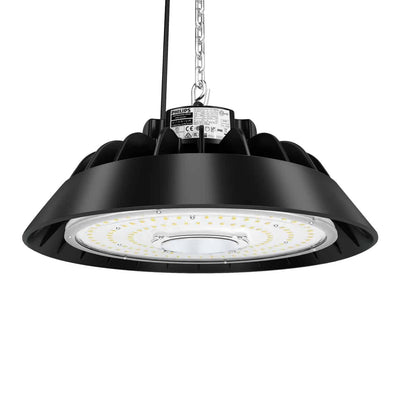 Cloche LED industrielle 200W 30000lm 4000K IP65 driver Philips dimmable 120°
€65,95
-
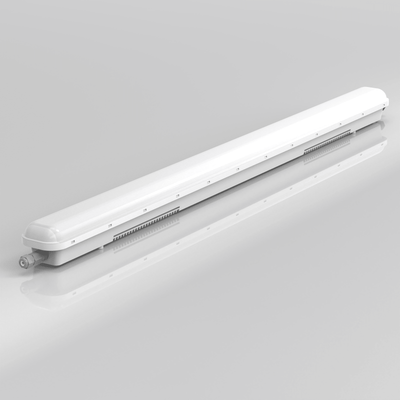 Réglette LED Étanche 150 cm 55W 4000K Blanc Neutre
€49,95


Frequently asked questions
What is the network access tariff?
A regulated charge for the collective use of the electricity networks, set by ERSE. It is included in the final price paid by all consumers, in the regulated and in the liberalised market.
Who benefits most from the proposed 2027 tariffs?
According to ERSE, customers on medium voltage (−13.5%) and special low voltage (−13.2%) benefit most among business customers. High voltage (−8.1%) and very high voltage (−1.3%) see smaller reductions.
Are these tariffs final?
No. They are a proposal of 15 October 2026. ERSE approves and publishes the final tariffs by 15 December 2026, to apply from 1 January 2027.
Will my electricity bill fall in 2027?
Not necessarily. The access tariff is only one part of the bill. ERSE expects wholesale electricity prices to rise in 2027, and in the liberalised market the final price also depends on your supplier’s energy purchases and margin. Compare offers in January.
Does LED still pay off if network tariffs fall?
Yes. LED reduces the number of kWh your lighting uses, and those kWh are saved whatever the tariff. A lower price per kWh lengthens the payback somewhat, so recalculate it with the price from your own invoice.
Last checked: 24 November 2026, Nick Cuppens, Clightstore. Sources: ERSE, 11 questions and 11 answers on the proposal for 2027 tariffs, ERSE press release on the proposal for 2027, ERSE press release on the 2026 tariffs and Jornal de Negócios, 15 October 2026. The opinion of the Tariff Council (Conselho Tarifário) on the proposal was not reviewed.
Send us the number and wattage of your current luminaires. We prepare a free DIALux lighting study and a no-obligation quote at direct-import prices, 2 to 4 times lower than comparable branded products.
Request a quote