DALI and Lighting Control: Sensors, Groups and Extra Savings
Lighting control explained: how DALI works, DALI versus 1-10V, presence and daylight sensors per area, wireless alternatives and extra savings.
Light that only burns when it is needed, and only as bright as necessary: that is the core of modern lighting control. With DALI, presence detectors and daylight sensors, you can often save a further 30–60% on top of the LED retrofit. This guide explains how DALI works, when simpler solutions make sense and which sensors belong where.
- DALI is a digital lighting bus: up to 64 luminaires per line, individually addressable, in 16 groups and 16 scenes.
- Unlike 1-10V, luminaires can be controlled individually and report faults back.
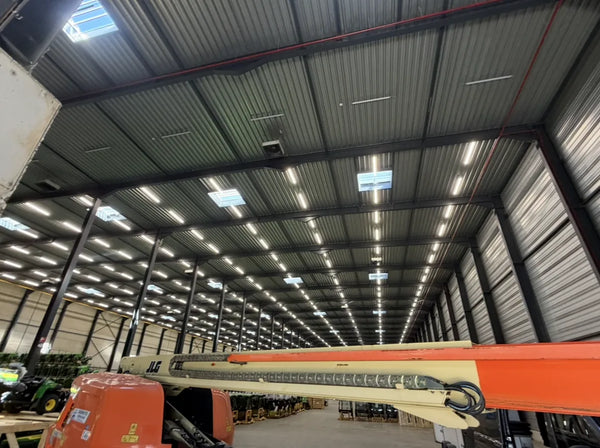
- Presence detectors save the most in corridors, warehouses and washrooms; daylight sensors along windows and under roof lights.
- DALI-2 and D4i are the current standards for control gear, sensors and luminaires.
- For small projects, luminaires with an integrated sensor or a wireless solution are often enough.
How does DALI work?
DALI (Digital Addressable Lighting Interface) connects drivers, sensors and push buttons via a two-wire control line that is polarity-free and can often run in the same cable as the mains supply. Each luminaire gets an address and can be dimmed individually, combined into groups or included in scenes. In large buildings, a DALI network can be linked to the building management system (KNX, BACnet) via gateways.
| Feature | DALI | 1-10V / 0-10V |
|---|---|---|
| Signal | Digital, bidirectional | Analogue, one direction only |
| Individual control | Yes, every luminaire addressable | No, only per circuit/group |
| Feedback | Faults, operating hours, energy | None |
| Regrouping | By software, no new cables | Only by rewiring |
| Cost | Higher | Lower |
Analogue dimming methods and TRIAC are explained in 0-10V, 1-10V and TRIAC.

Sensors: where they pay off most
| Area | Sensor | Typical extra saving |
|---|---|---|
| Corridors, stairwells, washrooms | Presence/motion detector | 40–70% |
| Warehouse aisles, cold stores, underground car parks | Motion detector with base light | 50–70% |
| Offices and classrooms by windows | Daylight and presence detector | 30–50% |
| Halls with roof lights | Daylight sensor | 20–40% |
| Outdoor areas, car parks | Dusk sensor, motion detector, time profile | 20–50% |
An important trick: instead of switching off completely, dim to 10–20% base light. It never goes dark, and the luminaire ramps up instantly on movement.
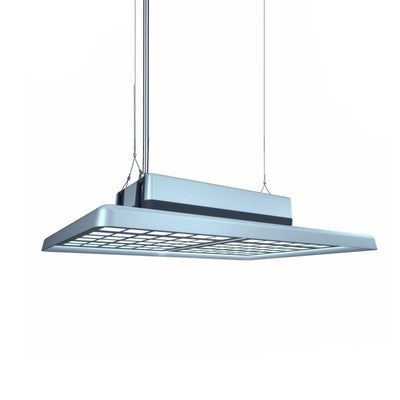
Dimmable luminaires and control
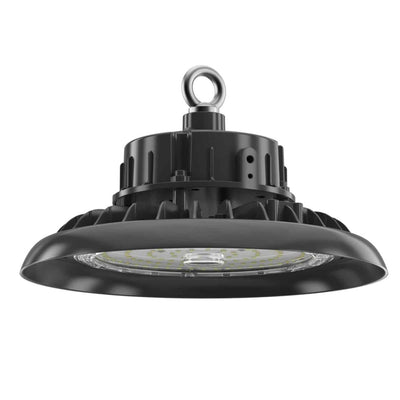

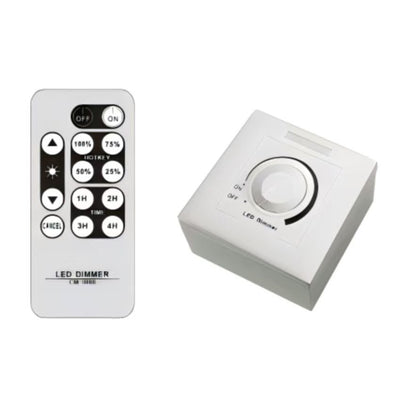
DALI, wireless or integrated sensor?
- DALI (wired): For new builds and larger refurbishments where cables are being laid anyway. Future-proof and flexible.
- Wireless control: For existing buildings without new control cables. Luminaires communicate with each other by radio.
- Luminaires with integrated sensor: The simplest solution for warehouses, garages and corridors. Each luminaire switches and dims independently.
Worked example
Warehouse with 50 LED high bays of 150W, 4,000 operating hours, €0.28/kWh: 30,000 kWh or around €8,400 a year without control. With motion detectors and a daylight sensor averaging 50% output, consumption drops to 15,000 kWh, an extra saving of around €4,200 a year. See LED Payback Period Calculator.
Frequently asked questions
What is the difference between DALI and DALI-2?
DALI-2 is the further developed, more strictly certified version. It also standardises sensors and push buttons, so devices from different manufacturers work together reliably.
How many luminaires fit on one DALI line?
Up to 64 control gear units per line, organised into up to 16 groups and 16 scenes. Larger installations use several lines.
Does DALI need a separate cable?
Yes, two cores for the control signal. They can usually run in the same cable as the mains supply (e.g. 5-core).
Is DALI worthwhile in a warehouse?
In large halls with changing use, yes. For simple warehouses, luminaires with an integrated motion sensor are often enough.
Can I connect existing 1-10V luminaires to DALI?
It is possible with converters, but the luminaires can then only be controlled in groups. In a new design, DALI drivers are worth it directly.
We plan luminaires, sensors and control together in a free DIALux lighting plan and prepare a no-obligation quote at direct-import prices 2–4× below comparable branded products.
Request a lighting plan