Retail Lighting: LED for Shops, Supermarkets and Showrooms
How to light shops, supermarkets and showrooms: lux values, general and accent light, colour rendering, 3-phase track, fresh counters and a savings example.
In retail, lighting helps sell: it guides the eye, makes goods look fresher, more premium or more colourful, and determines how long customers stay. At the same time, shop luminaires run 10 to 14 hours a day, so efficiency directly affects the margin. This guide shows how shops, showrooms and supermarkets are properly lit with LED.
- Sales area: approx. 300 lux (small shops) to 500 lux (large stores), checkouts approx. 500 lux.
- Accent light on goods 3 to 5 times brighter than the general lighting so products stand out.
- Colour rendering Ra ≥ 80; for fashion, food and cosmetics ideally Ra ≥ 90.
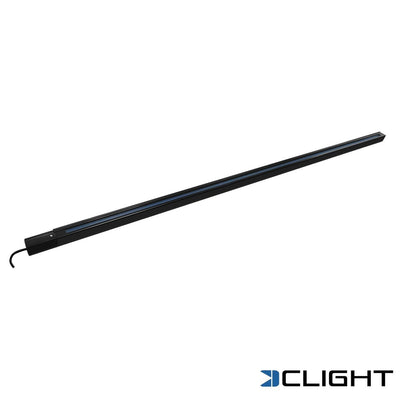
- 3-phase track makes lighting flexible when ranges and shelving change.
- Fresh counters need adapted light that must not warm the goods.
Lux levels in retail
| Area | Illuminance | Colour rendering |
|---|---|---|
| Sales area, small shop | approx. 300 lux | Ra ≥ 80 |
| Sales area, supermarket, large store | approx. 500 lux | Ra ≥ 80 |
| Checkout area | approx. 500 lux | Ra ≥ 80 |
| Accent lighting on goods, shop window | 3–5 × general lighting | Ra ≥ 90 |
| Back-of-store storage | approx. 100–200 lux | Ra ≥ 60–80 |
The values are based on EN 12464-1. What colour rendering means is covered in LED Colour Temperature.

General light and accent light
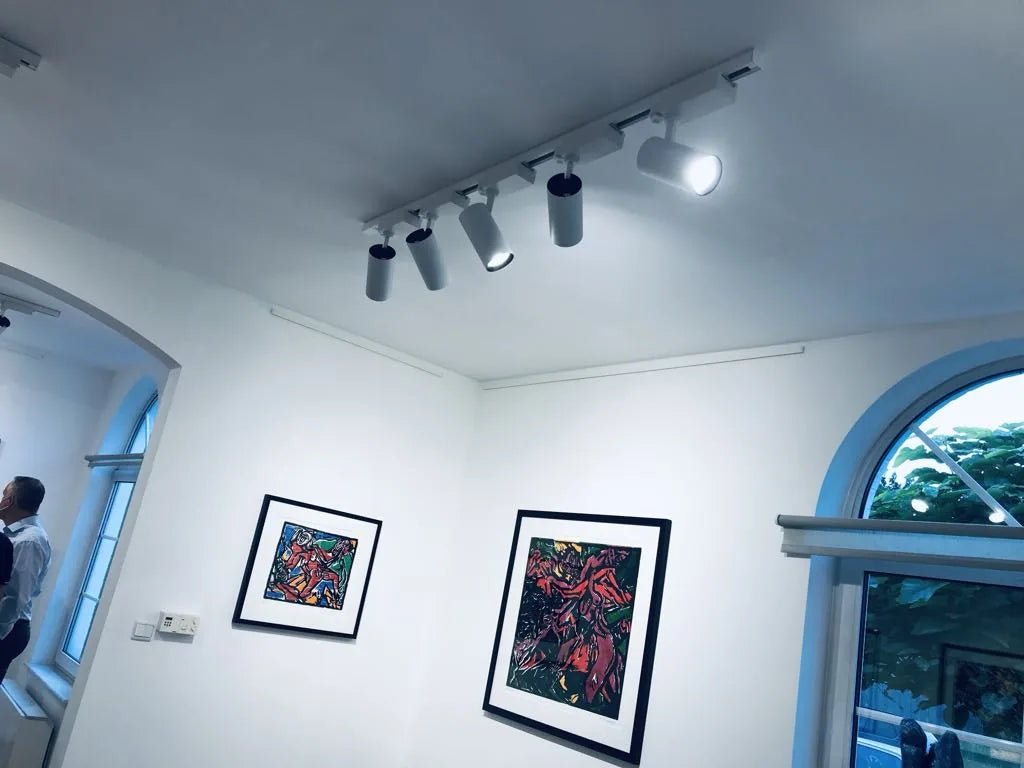
Good shop lighting works on two levels. General lighting from panels, trunking or downlights provides orientation. Accent lighting from spotlights highlights products, promotional areas and shop windows. An evenly bright shop without accents quickly looks like a warehouse; too much accent without general light feels dark and confusing.
- 3-phase track: Spotlights can be moved without an electrician and split across three circuits.
- Narrow optics (15–24°) for individual products and shop windows, wider (36–60°) for shelves and tables.
- Colour temperature: 3000K for fashion, furniture and home; 4000K for supermarkets, electronics and DIY stores.
Luminaires for shops and showrooms


Supermarket: freshness and efficiency
- Fruit and vegetables: High colour rendering makes colours look natural, without artificial exaggeration.
- Meat and deli counter: Special light spectra emphasise reds; it is important that the light adds no heat and hardly any UV to the goods.
- Bakery: Warm white light (2700–3000K) makes bread and pastries look appetising.
- Chiller cabinets: LED works efficiently in the cold and does not warm the goods.
- Storage and deliveries: Robust tri-proof lights with motion sensors (see Cold Store Lighting).
Showroom and car dealership
The same principles apply in showrooms, with more weight on accent light and colour rendering. Vehicles, furniture or machinery look far more premium under directional light. How car showrooms are lit is described in Vehicle Workshop and Showroom Lighting.
Worked example
Shop with 60 halogen spotlights of 50W and 30 grid luminaires 4 × 18W (approx. 80W), 3,500 hours a year, €0.28/kWh. Replaced by 60 LED track spotlights of 10W and 30 LED panels of 36W: saving (60 × 40W + 30 × 44W) × 3,500 h = 13,020 kWh, around €3,650 a year. Plus less heat in the shop and therefore lower air-conditioning costs.
Frequently asked questions
How many lux does a shop need?
Around 300 lux on the sales floor in small shops and around 500 lux in large stores, plus accent light on goods at 3 to 5 times that value.
Which colour temperature is best for shops?
3000K for fashion, furniture and home accessories; 4000K for supermarkets, electronics and DIY stores. A consistent colour temperature throughout the shop matters.
Why 3-phase track?
Spotlights can be positioned freely and split across three circuits, for example general light, accent and shop window. When the range changes, you simply reposition them.
What colour rendering does retail need?
At least Ra 80; for fashion, food and cosmetics ideally Ra 90 or higher so colours look true.
How quickly does LED pay back in a shop?
With long opening hours and replacement of halogen spotlights, often within 1–2 years.
Send us the floor plan and range. We prepare a free lighting plan with general and accent light and a no-obligation quote at direct-import prices 2–4× below comparable branded products.
Request a lighting plan