Dutch Energy Saving Obligation 2027: When Is LED Lighting Mandatory?
From 50,000 kWh a year the Dutch energy saving obligation applies. In 2027 the payback limit is set to rise from five to seven years. What that means for fluorescent and hall lighting.
In the Netherlands you are legally required to save energy if your site uses 50,000 kWh of electricity or 25,000 m³ of natural gas or more per year. You must then take every measure that pays for itself within five years, and replacing fluorescent or discharge lighting with LED is often one of them. Under current plans that period becomes seven years on 1 July 2027.
- The energy saving obligation applies per site from 50,000 kWh of electricity or 25,000 m³ of natural gas (equivalent) per year.
- Today, measures with a payback of up to five years are mandatory; the proposal for 1 July 2027 is seven years.
- The Recognised Measures List names replacing T8 and discharge luminaires with LED luminaires, each with its own conditions.
- The change is not final yet and the new list has not been published.
- An LED retrofit in a hall usually pays back in one to three years and therefore often falls under the obligation already.
- The next reporting date for the information duty is 1 December 2027.
Who does the energy saving obligation apply to?
The obligation applies to companies and institutions that use 50,000 kWh of electricity or 25,000 m³ of natural gas (equivalent) or more per year at one site. A 1,000 m² hall with old lighting and a few machines reaches that limit quickly. Below it, there is no obligation and no reporting.
Besides the duty to carry out measures there is the information duty: every four years you report to RVO which measures you have taken.
What changes on 1 July 2027?
| Item | Now | Planned from 1 July 2027 |
|---|---|---|
| Payback period | Measures up to 5 years are mandatory | Up to 7 years |
| Recognised Measures List | List of 2023 | Updated list, not yet published |
| Threshold | 50,000 kWh or 25,000 m³ | Unchanged |
| Reporting | Every four years | Next date 1 December 2027 |
This is proposed legislation. The draft decree has been with the Dutch parliament since 1 September 2026, and until the new rules take effect the limit is five years.
Which lighting measures are on the list?
For lighting, the current Recognised Measures List includes these measures:
- Replace luminaires with T8 tubes by LED luminaires.
- Replace pendant and surface-mounted luminaires (high bays) with discharge lamps by LED luminaires.
- Replace outdoor luminaires with discharge lamps by LED luminaires.
- Apply a control so that lighting does not burn unnecessarily outside operating hours.
Each measure has its own conditions, such as a minimum number of burning hours or a natural replacement moment. If you carry out all measures that apply to your situation, you meet the obligation.

Worked example: a 1,000 m² hall
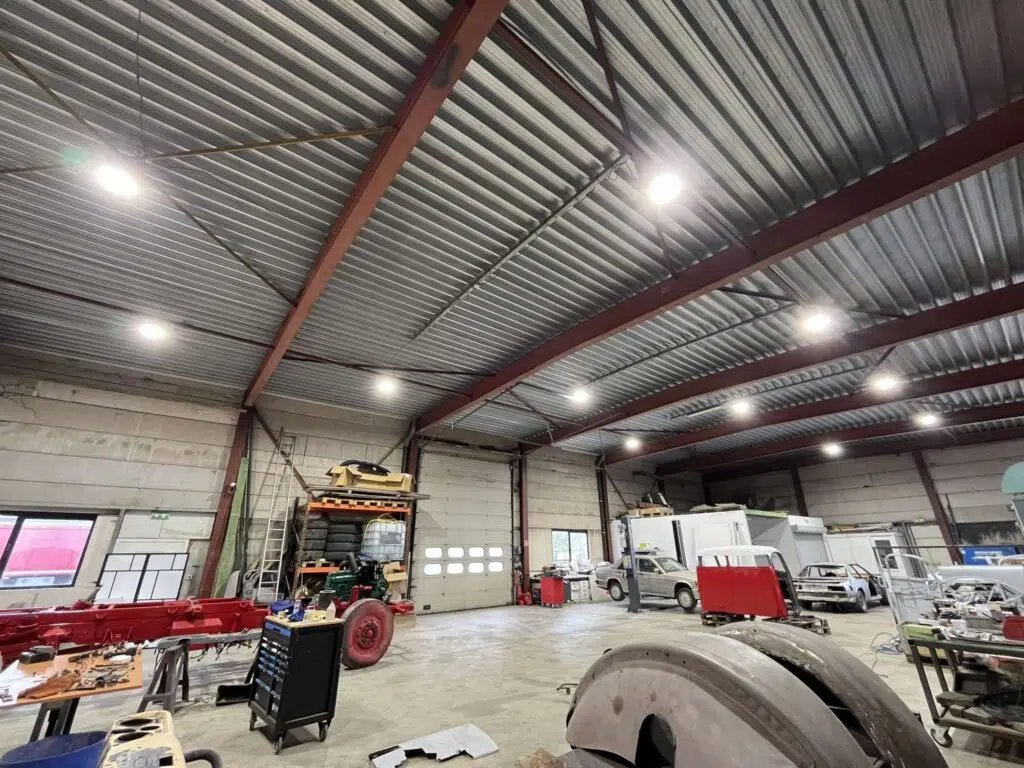
The figures come from one of our own projects: a 1,000 m² hall where 44 twin fluorescent fittings made way for 30 LED high bays of 100W.
Annual saving (kWh) = (old power − new power in W) × burning hours ÷ 1,000
| Item | Value |
|---|---|
| Old power | 44 × 130W = 5,720W |
| New power | 30 × 100W = 3,000W |
| Burning hours | 2,400 hours per year |
| Saving | 6,528 kWh per year |
| Saving at € 0.25 per kWh (example rate) | € 1,632 per year |
| Luminaires | € 1,979 |
| Payback on the luminaires | approx. 1.2 years |
Installation is not included. Even if it costs as much as the luminaires, the payback stays around 2.4 years. Calculate with your own rate and hours in the LED payback period calculator.
Rising grid tariffs improve the business case
The Dutch regulator ACM expects households and businesses to pay on average 20% more for electricity transport in 2027 and decides on this in November 2026. Every kilowatt-hour you save becomes worth more, and more measures fall within the legal payback period.
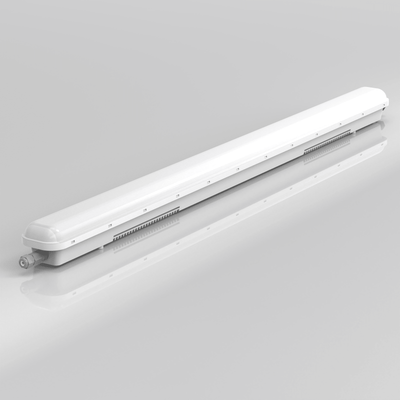
Luminaires for replacing fluorescent and discharge lighting


What you can do now
- Check your consumption per site on your annual statement: are you above 50,000 kWh or 25,000 m³?
- Take stock of your lighting: lamp type, number of luminaires, power and burning hours per room.
- Have a lighting study made. Clightstore calculates free of charge with DIALux how many luminaires you need.
- Carry it out and keep the evidence: invoice, data sheets and photos for your report of 1 December 2027.
Frequently asked questions
Is LED lighting mandatory for companies in the Netherlands?
Not in general. It becomes mandatory if your site falls under the energy saving obligation and the replacement pays for itself within the legal period.
From what consumption does the obligation apply?
From 50,000 kWh of electricity or 25,000 m³ of natural gas (equivalent) per site per year.
What changes on 1 July 2027?
Under the proposal the payback period goes from five to seven years and an updated measures list is published. This is not final yet.
Can I keep my fluorescent tubes?
Yes, there is no ban on using existing fluorescent lighting. If you fall under the obligation, replacement can be mandatory.
Is there a subsidy for LED lighting?
For replacing ordinary luminaires there is no national subsidy or EIA tax allowance in the Netherlands.
Does this obligation also apply in Belgium?
No, this is Dutch legislation. In Flanders the Fluvius relighting premium runs until the end of 2026.
Last checked on 13 November 2026. Sources: IPLO, developments energy saving obligation 2027, Staatscourant 2023, 15844 (Recognised Measures List) and ACM, tariff proposals 2027.
Send us your floor plan and current lighting. You receive a free DIALux lighting study and a quote, so you know what the retrofit costs and saves.
Request a free lighting study