LED Floodlight or Stadium Light? Differences for Sports Fields, Yards and Courts
LED floodlights and stadium or sports field lights compared: power, beam angle, mast height, glare, prices, a training pitch example and which type suits yards, sports fields, tennis and padel.
A 200W LED floodlight costs about €65; a 500W LED sports field light about €260. Both are bright, both are IP66, and both are mounted outdoors. So why not light a football pitch with a row of cheap floodlights? Because the difference is not the wattage but the optics: a floodlight spreads its light wide and close by, a stadium or sports field light sends it far and precisely from a high mast. This guide explains the difference, when each type is the right choice and why the wrong one costs more in the end.
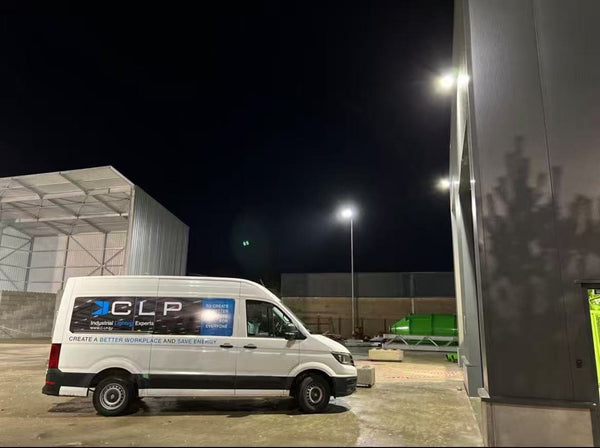
- LED floodlight: 10–400 W, wide beam (90–120°), mounted at 3–12 m. For yards, facades, car parks, loading areas and small courts.
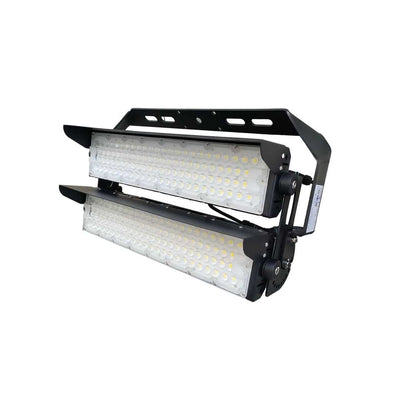
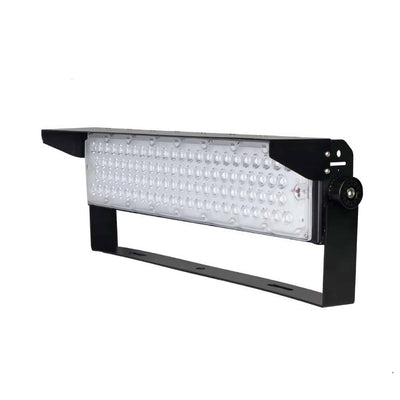
- LED sports field / stadium light: 250–1,500 W, narrow or asymmetric optics (20°–60°, P50), mounted on masts of 15–40 m. For football, hockey, athletics and large areas.
- Floodlights are cheaper per lumen, but from a high mast most of their light lands outside the pitch and glares players.
- Tennis and padel courts sit in between: dedicated asymmetric floodlights (e.g. 120×45°) on 8–10 m poles.
- Rule of thumb: mast above 12 m or a large pitch = sports field light; below that = floodlight.
What is the difference?
| LED floodlight | LED sports field / stadium light | |
|---|---|---|
| Power | 10–400 W | 250–1,500 W |
| Beam | Wide, 90–120° | Narrow 20–60° or asymmetric (e.g. P50) |
| Mounting height | 3–12 m (wall, pole) | 15–40 m (masts) |
| Glare control | Limited | Optics and visors designed to limit glare (GR value) |
| Standard | General outdoor lighting | Planned to EN 12193 lighting classes |
| Typical use | Yards, facades, car parks, loading bays | Football, hockey, athletics, large arenas and terminals |
| Example (Clightstore, incl. VAT) | 200W, 150 lm/W, 90°: €64.95 | 500W, 170 lm/W, 40°: €261.95 |

Why optics matter more than watts
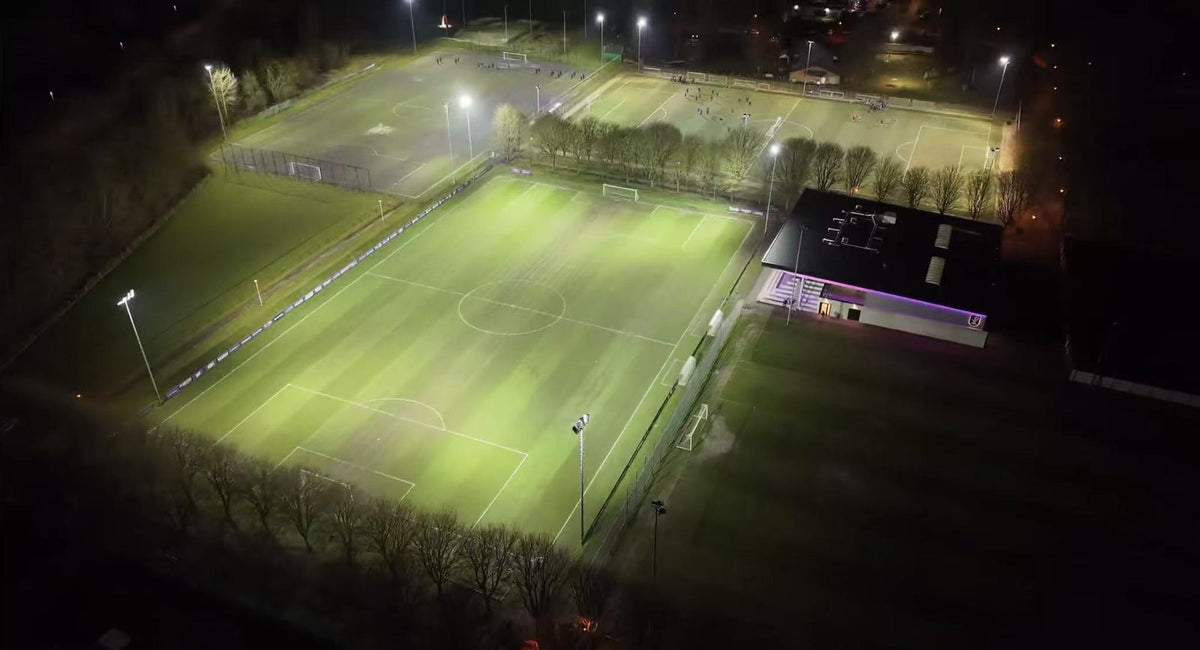
Light spreads out with distance. A floodlight with a 120° beam mounted at 18 m lights a circle tens of metres wide, far beyond the touchline, and the light that does reach the pitch is spread thin. On top of that, players looking up see a large bright surface: glare. A sports field light uses a narrow or asymmetric optic so that the light from a mast at the side of the pitch is aimed precisely at the playing area, with little spill behind the mast and controlled glare. That is why a few high-output sports lights on four or six masts can do what dozens of floodlights cannot.
How light distribution works on sports fields is explained in detail in Light Distribution on Sports Fields, and the lux levels per class in How Many Lux Does a Football Pitch Need?
Example: a training pitch
A training pitch of 100 × 64 m (6,400 m²) at class III needs about 75 lux. As a rough estimate, allowing for light that does not land on the pitch, that takes around 950,000 lumens.
- With sports field lights (500W, 85,000 lm, narrow optic): about 12 luminaires on 4–6 masts. Most of the light lands on the pitch with good uniformity.
- With wide floodlights on the same masts: considerably more luminaires would be needed, because a large share of a 120° beam falls outside the pitch, and the result would still be patchier and more glaring.
These numbers are a first estimate; the exact number of luminaires, masts and aiming angles comes from a light study.
Sports field lights


When a floodlight is the right choice
- yards, loading bays and company premises,
- facades, signs and buildings,
- car parks with poles up to about 8–10 m,
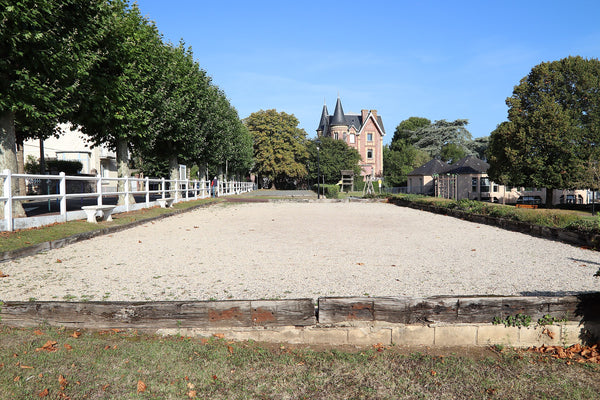
- small training areas, horse paddocks and riding arenas at low mounting heights.
Which wattage suits which area is shown in LED Floodlights: Which Wattage for Which Area?
The middle ground: tennis and padel
Tennis and padel courts are small and the poles are relatively low (about 8–10 m), but players look up constantly. Here, floodlights with an asymmetric 120×45° optic are the best fit: mounted almost flat, they throw the light forward onto the court instead of up into the sky or into the players' eyes. See Tennis Court Lighting and Padel Court Lighting.
Floodlights and tennis court lights
-
 LED Floodlight 200W 30000lm 4000K IP66 Sosen Driver 90°
€64,95
-
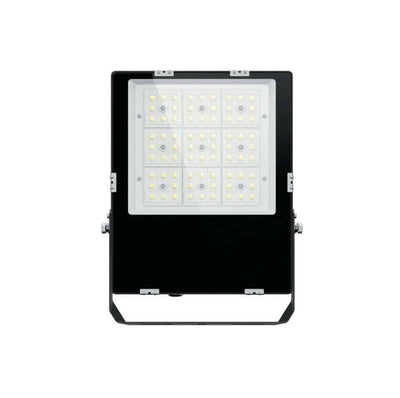 LED Floodlight 200W 34000lm 4000K IP66 Sosen Driver Asymmetric 1m Cable
€125,95
-
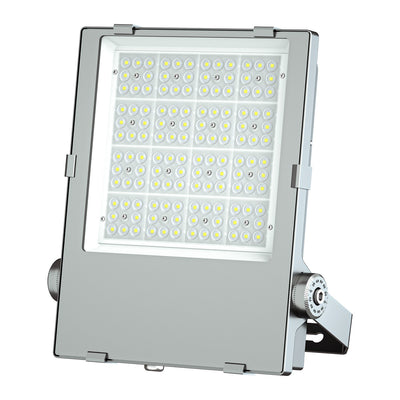 LED Floodlight 240W 40800lm 4000K IP66 Sosen Driver 100-240W Adjustable 120x45° Sports Field
€169,95
-
LED Floodlight 400W 68000lm 4000K IP66 Sosen Driver 160-400W Adjustable 120x45° Sports Field
€321,95

Frequently asked questions
Can I light a football pitch with ordinary LED floodlights?
For a small kickabout area at low height, yes. For a full-size pitch with masts of 15 m and more, ordinary floodlights waste most of their light outside the pitch and cause glare. Sports field lights with narrow or asymmetric optics are much more effective.
What does P50 mean on a sports field light?
P50 refers to an asymmetric optic: the light is directed forward and downward from the mast onto the pitch, with little spill behind the mast. It suits masts placed along the side of the pitch.
Which beam angle do I need for a sports field?
The higher the mast and the further away the area to be lit, the narrower the beam: around 20–30° for far points from high masts, 40–60° for nearer areas. A light study determines the mix.
Are sports field lights dimmable?
Many models are dimmable via 1-10V or DALI, so you can use a lower level for training and full output for matches.
Do you provide a light study for sports fields?
Yes. Send us the pitch dimensions, mast positions and heights and the level of play, and we will prepare a light study and a quote.
Send us the dimensions and mast positions. We prepare a light study and a no-obligation quote at direct-import prices, 2–4× below comparable branded products. 5-year warranty.
Request a sports lighting quote