Sweden: Business Electricity Prices Rising Fastest in the EU – What It Means for Lighting Costs
Swedish business electricity prices rose 18.8% in the first half of 2026, the largest increase in the EU, and in southern Sweden (SE4) the spot price averaged close to SEK 3/kWh in early November. What it means for li...
Electricity prices for Swedish businesses rose by 18.8% in the first half of 2026 compared with a year earlier, the largest increase in the EU according to Eurostat. In southern Sweden (price area SE4) the spot price then went further up: it averaged SEK 1.57 per kWh in October and about SEK 2.99 per kWh from 1 to 14 November. In the north (SE1 and SE2) the same weeks cost only 10 to 30 öre. Where your site is located therefore decides how much a saved kWh is worth.
- Eurostat: non-household electricity prices in Sweden rose 18.8% in the first half of 2026 (national currency), Finland 18.7%. In 19 EU countries they fell.
- Sweden is still below the EU average in level: about 12 eurocents per kWh against 18 for businesses using 500 to 2,000 MWh a year.
- SE4 (Skåne, Blekinge, Halland, Kronoberg, Kalmar): SEK 1.57/kWh average in October, about SEK 2.99/kWh in the first 14 days of November, spot price only.
- The electricity tax was lowered to 36.0 öre per kWh in 2026 (43.9 in 2025). For companies using 20 to 500 MWh a year, taxes still made up 41% of the electricity cost.
- Nuclear outages were one of the drivers TT named in early November. All six Swedish reactors are expected back in operation from 5 December if the announced dates hold.
- A lower connected load saves spot price, grid charges and electricity tax on every kWh.
The numbers behind the price rise
| Item | Value |
|---|---|
| Non-household electricity price, first half of 2026 vs first half of 2025 | Sweden +18.8%, Finland +18.7%, Bulgaria +14.2% (Eurostat, national currencies) |
| Price level, first half of 2026 (500 to 2,000 MWh a year) | Sweden about 12 eurocents/kWh, EU average 18 eurocents/kWh |
| SE4 spot price, October 2026 | SEK 1.57/kWh, the year's high at that time (TT) |
| SE4 spot price, 1 to 14 November 2026 | about SEK 2.99/kWh; the highest daily average so far was SEK 4.44 on 10 November (Kollaelpris, via Hurbra) |
| SE4 spot price, whole of 2025 | SEK 0.67/kWh (TT, August 2026) |
| SE1 and SE2, November to date (9 November) | 17 and 11 öre/kWh (TT) |
The spot prices are Nord Pool prices without electricity tax, VAT, grid fees and retailer margin. According to Företagarna, the SE4 average in early November was more than three times the level of the same period a year earlier, and on 9 November the price peaked at SEK 7.50 per kWh between 17:15 and 17:30. TT names three drivers: almost half of Nordic nuclear capacity was offline, which limits transmission between price areas and makes the south more dependent on imports; record gas prices on the continent after supply disruptions linked to the conflict with Iran; and weak wind. The figures are from 9 to 14 November, the month is not over, and prices change daily.
Tax, support and what you actually pay
| Item | Level |
|---|---|
| Electricity tax (energiskatt på el), 2026 | 36.0 öre per kWh, down from 43.9 öre in 2025 (Skatteverket) |
| Reduced rate | 0.6 öre per kWh for manufacturing industry and some other activities. Check with Skatteverket whether your activity qualifies. |
| Tax share for companies using 20 to 500 MWh a year | 41% of the electricity cost; the electricity itself under one third (Företagarna) |
| Government high-cost protection for SE4 | Activated on 30 October because the October average exceeded SEK 1.50/kWh. The government speaks of support to households; the amount has not been decided. |
Företagarna states that small businesses generally do not get the low industrial electricity tax and do not qualify for the household support. We could not confirm from the sources what, if anything, will be offered to businesses. Please check your own electricity contract and grid fee as well: the numbers above are only the spot price and the tax.

What it means for lighting
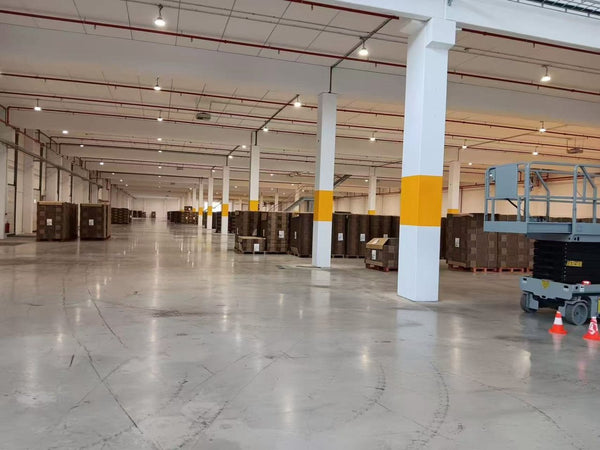
Lighting runs for thousands of hours a year, and every kWh it uses carries the spot price, the grid charge and, for most businesses, the electricity tax. That is our own reasoning: the sources we read do not analyse lighting. What the numbers show is that a kWh saved in SE4 is now worth much more than a year ago, and that the evening peak (17:15 to 17:30 on 9 November) can be several times the daily average. The usual measures are replacing old discharge lamps (HQL, HQI, sodium) and fluorescent fittings with LED, and reducing burning hours with sensors and dimming.
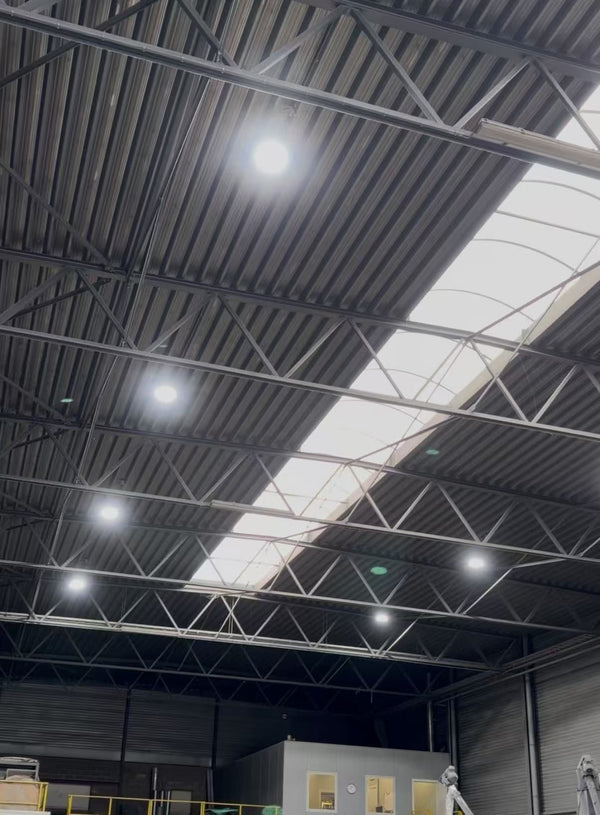
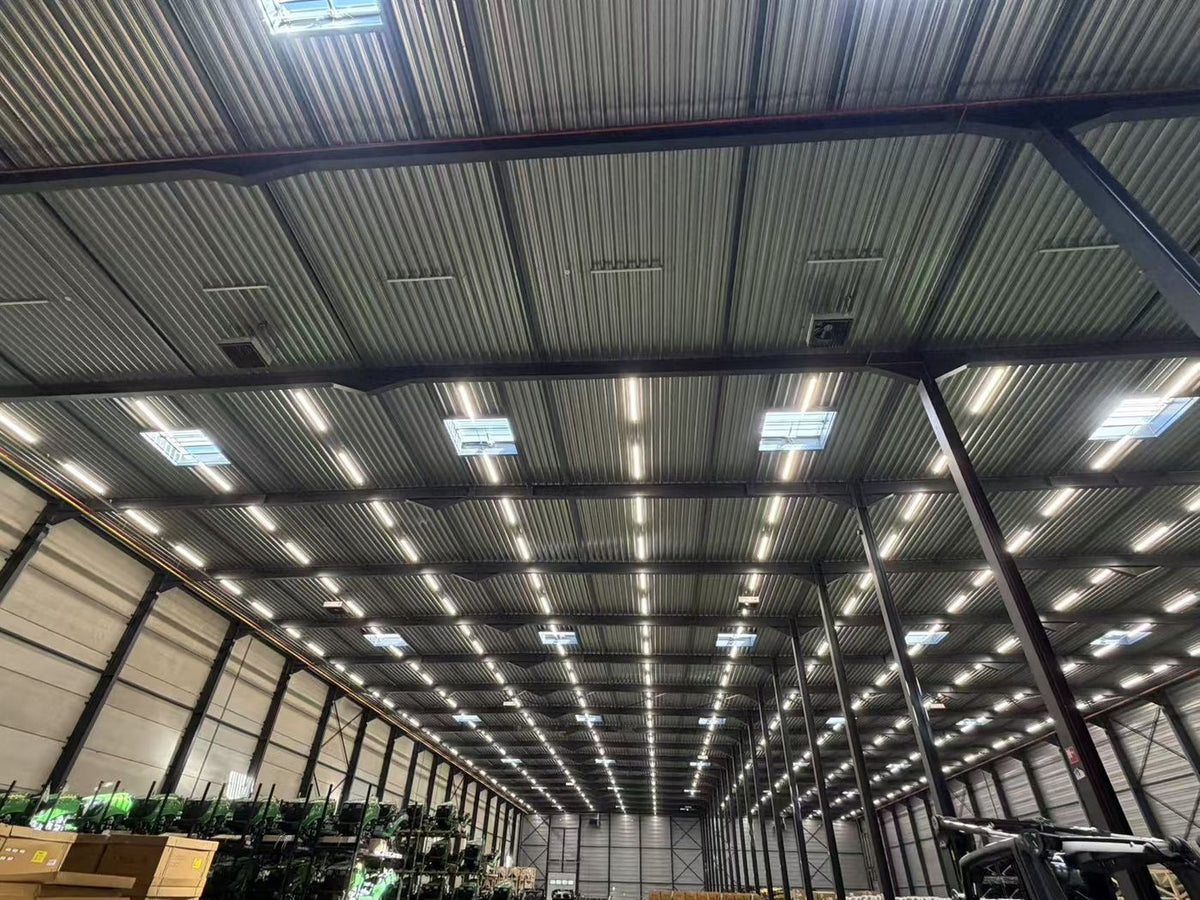
Worked example (illustrative assumptions): a hall with 40 discharge luminaires of 400W (about 440W with ballast), replaced by 40 LED luminaires of 150W, at 4,000 operating hours per year.
| Item | Value |
|---|---|
| Energy saving | (440 − 150) W × 40 × 4,000 h ÷ 1,000 = 46,400 kWh per year |
| Spot price value at SEK 0.67/kWh (SE4 average 2025) | SEK 31,088 per year |
| Spot price value at SEK 1.57/kWh (SE4 October 2026) | SEK 72,848 per year |
| Electricity tax on the same 46,400 kWh at 36.0 öre/kWh | SEK 16,704 per year (not for activities with the 0.6 öre rate) |
These are spot price and tax only. Grid fees, the retailer margin and VAT depend on your contract and are not included, and the spot price will not stay at one level all year. Please use your own contract price and your own operating hours. You can recalculate in the guide LED Payback Period Calculator. Which LED luminaire replaces which lamp is shown in Replacing HQL, HQI and Sodium Lamps with LED. For planning a hall see LED Lighting for a Commercial Hall, for sensors and dimming DALI and Lighting Control, and the general benefits are summarised in Modernising LED Lighting.
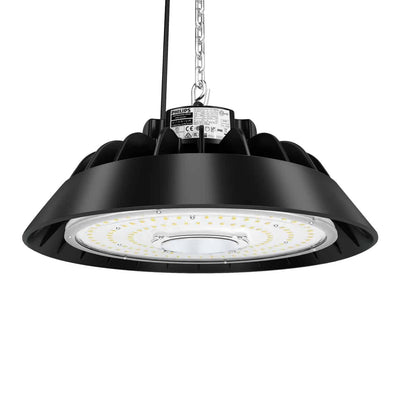
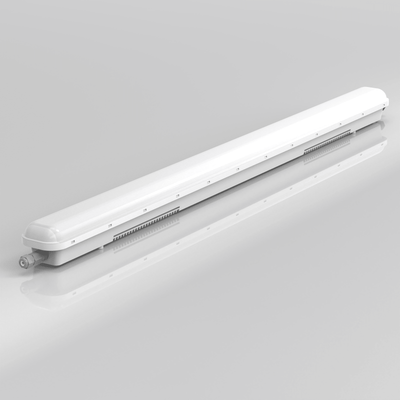
LED luminaires for hall refurbishment


Frequently asked questions
How much have electricity prices for Swedish businesses risen?
By 18.8% in the first half of 2026 compared with the first half of 2025, the largest increase in the EU according to Eurostat. In SE4 the spot price averaged SEK 1.57/kWh in October and about SEK 2.99/kWh from 1 to 14 November, against SEK 0.67/kWh for the whole of 2025.
Why is electricity so much more expensive in southern Sweden?
TT names the nuclear outages, which limit transmission capacity between the price areas and make the south more dependent on imports, together with high gas prices on the continent. In the north there is a large surplus of power, so SE1 and SE2 cost only 10 to 30 öre in the same weeks.
Is the Swedish electricity tax lower in 2026?
Yes, it is 36.0 öre per kWh in 2026 against 43.9 öre in 2025. Some activities, such as manufacturing industry, pay 0.6 öre. Ask Skatteverket which rate applies to your activity.
Do businesses get the government high-cost support for SE4?
The government's announcement of 30 October speaks of support to households, and the amount has not been decided. Företagarna says small businesses do not qualify for the household support. Check the latest decision.
Does LED lighting help when electricity is this expensive?
A lower connected load reduces the kWh you buy in every hour, so the saving grows with the price and with the tax. Sensors and dimming additionally reduce the hours at full output. The exact saving depends on your contract, your hours of use and your current luminaires.
Last checked: 22 November 2026, Nick Cuppens, Clightstore. Sources: Företagarna, 9 November 2026, TT via Realtid, 9 November 2026, Eurostat figures via Brussels Times, Balkan Green Energy News, 9 November 2026, Hurbra (Kollaelpris data for 1 to 14 November), TT via Realtid, 19 August 2026, Skatteverket (electricity tax), Swedish government, 30 October 2026 and TT via TV4, 18 November 2026.
Send us the number and wattage of your current luminaires. We prepare a free DIALux lighting study and a no-obligation quote at direct-import prices, 2 to 4 times lower than comparable branded products.
Request a quote