Netherlands: The End of Net Metering on 1 January 2027 and What It Means for Sports Club Floodlights
Net metering ends in the Netherlands on 1 January 2027. Why evening floodlights weigh heavily for sports clubs with solar panels, and what an LED retrofit can save.
On 1 January 2027 the Dutch net metering scheme (salderingsregeling) ends. Sports clubs with solar panels feed power into the grid during the day, but their floodlights burn in the evening, when the panels produce nothing. After the change, the power a club buys in the evening is no longer offset against what it fed in. An LED retrofit does not solve that on its own, but it cuts the number of kilowatt-hours the club has to buy at the full tariff.
- Net metering stops on 1 January 2027. You can still net until 31 December 2026 (Rijksoverheid).
- From 2027 the supplier pays a fee for the power you feed in. Until 2030 it must be at least 50% of the bare supply tariff, and suppliers may only charge the costs they actually incur.
- The law applies to small businesses with a connection of up to 3x80 amperes (Ondernemersplein).
- Research by EnergyC for De Groene Club estimates that an average club with 60 panels pays about €6,500 more per season (Solar Magazine, September 2025).
- Pitch floodlights typically burn from about 17:00 to 22:00, in autumn and winter as well (Sportstroom).
- LED floodlights typically use around half the power of old metal halide installations, so the evening consumption falls with them.
What changes on 1 January 2027
| Item | What applies |
|---|---|
| Net metering | Ends on 1 January 2027. Until 31 December 2026 you can still net fed-in power against your consumption |
| Fed-in power | Your supplier pays a fee for all power you feed in. Until 2030 it must be at least 50% of the bare supply tariff (without taxes) |
| Feed-in costs | Suppliers may only charge the costs they incur to process the fed-in power. The ACM supervises this |
| Power you use directly | Power from your own panels that you use immediately stays untaxed |
| Who it covers | Small businesses with a connection of up to 3x80 amperes, among others (Ondernemersplein). For larger connections, check your contract |
The exact fee and the feed-in costs depend on your supplier and contract. Ask your supplier what your club will receive from January.

Why floodlights hit sports clubs hardest
A club's solar panels produce most in the day and in summer. The club's own consumption peaks in the evening and in autumn and winter, when the floodlights are on, and many facilities are quiet for part of the summer. Until now the annual netting covered that gap. From 2027 the club receives a fee for the power it feeds in and buys the evening power at the full tariff, so the difference between the two grows.
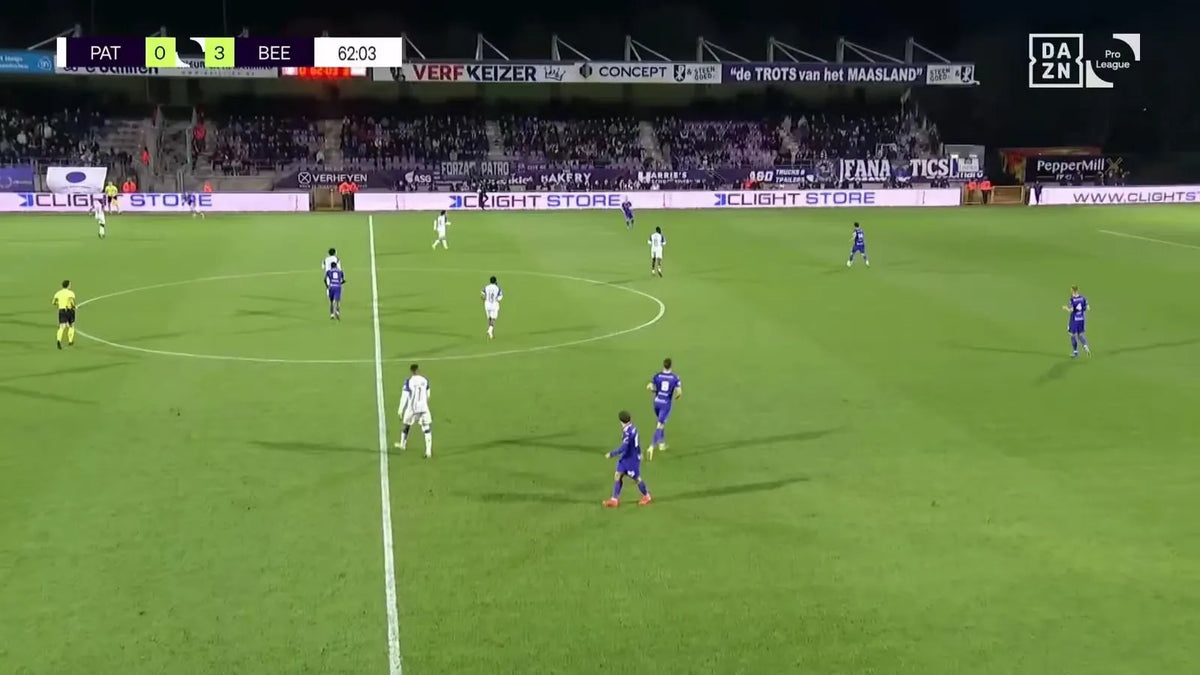
According to Solar Magazine, about a third of Dutch sports associations now have solar panels, up from 3% in 2016. Sportstroom, which buys energy collectively for more than 3,000 clubs, says the pitch floodlights go on at about 17:00 and off at 22:00, which falls in the hours when electricity is most expensive. That figure is Sportstroom's own statement, not an independent study.
What LED can do about it
LED does not give the club its netting back, and the €6,500 above relates to a club with 60 panels, not to its lighting alone. What LED does is reduce the evening kilowatt-hours the club has to buy: a modern LED floodlight delivers the same light with roughly half the connected power of an old metal halide one, and dimming during training lowers the use further.
Worked example (illustrative assumptions): a club pitch of lighting class II is lit by 16 metal halide floodlights of 2,000W, for 500 hours a year. They are replaced by 16 LED floodlights of 1,000W.
| Item | Value |
|---|---|
| Old installation | 16 × 2.0 kW × 500 h = 16,000 kWh a year |
| LED installation | 16 × 1.0 kW × 500 h = 8,000 kWh a year |
| Energy saving | 8,000 kWh a year |
| Saving at €0.22/kWh (example tariff) | €1,760 a year, plus the saved lamp replacements |
The hours, the wattage and the tariff are assumptions: use your own meter data and the price of your contract. A pitch is lit for far fewer hours than a hall, so the payback is longer than in industry. How long exactly is in How Many Lux Does a Football Pitch Need?, and the principles of the layout are in Light Distribution on Sports Fields. Other sports are covered in Tennis Court Lighting and Sports Hall Lighting. Dimmable floodlights with training and match settings are explained in DALI and Lighting Control.
A battery can shift daytime solar power to the evening. Sportstroom points out that whether it pays off depends on the club, and a facility that is closed for part of the summer uses it less. Run the numbers for your own club first.
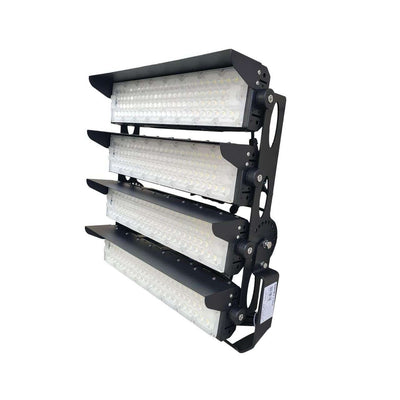
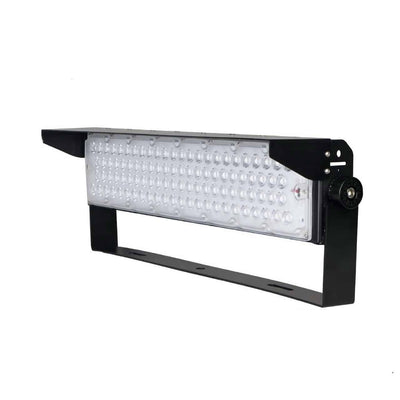
LED sports field lights for club pitches


Is there support?
Amateur sports associations can look at the DUMAVA scheme, and BOSA no longer covers new energy-saving measures. The conditions and the dates of the next round change, so read LED funding in 2026: what changed and what remains and check the RVO page before you order.
Frequently asked questions
When does net metering end?
On 1 January 2027. Until 31 December 2026 you can still net fed-in power against your consumption.
Does this apply to my sports club?
It applies to small businesses with a connection of up to 3x80 amperes, among others. Check your connection and your contract with your supplier.
Will my lighting costs go up in 2027?
The price of the evening power itself is set by your contract. What changes is that you can no longer offset it against what your panels fed in. The fewer kilowatt-hours the floodlights use, the less of this you buy.
How much do LED floodlights save?
Typically around half of the power compared with old metal halide floodlights of the same light output. In the example above that is 8,000 kWh a year, and more with dimmed training sessions.
Does a battery make sense for my club?
It can, but it depends on how much of the evening consumption the daytime surplus can cover and how long the facility is closed. Calculate this with your own consumption data.
Is there a subsidy for LED field lighting?
Possibly through DUMAVA. See the guide linked above and the RVO page for the current round.
Last checked: 20 November 2026, Nick Cuppens, Clightstore. Sources: Rijksoverheid, salderingsregeling, Ondernemersplein, afschaffen salderingsregeling, Solar Magazine (23 September 2025) and Solar Magazine (21 January 2026).
Send us the pitch size and the mast positions. We prepare a free DIALux light plan and a non-binding quote at direct-import prices, 2 to 4 times below comparable branded floodlights. Delivery throughout the EU, up to 5 years' warranty.
Request free light planning